In a search for awe and beauty in the midst of loss and sadness, today we are transforming simple flowers into unique, expressive creations.
Exploring photography techniques, being out in nature, focusing on learning helps soften the grief of losing our Bengie which is still very raw. Soft focus, the use of blur seem the most fitting ways of photographing and channeling emotions at the moment. So for this post I share my experiments with a mix of Intentional Camera Movement, the use of neutral density filters and zoom burst exercises.
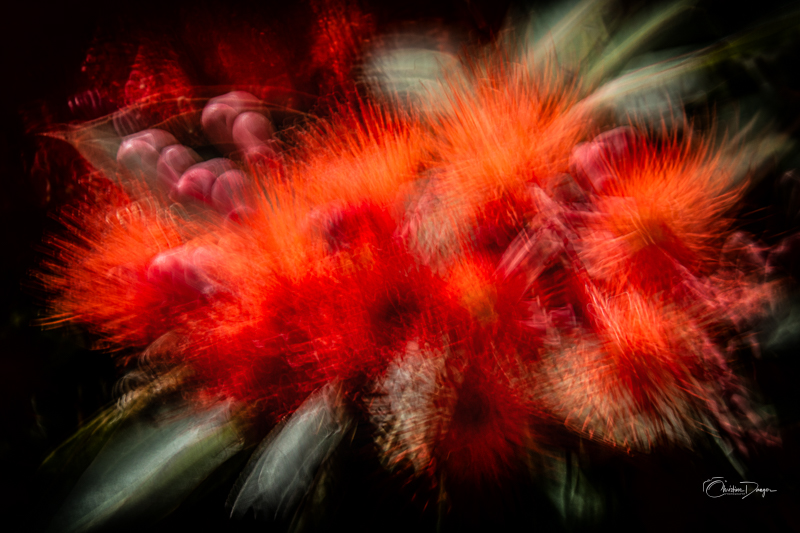
ICM is not only fun with seascapes or landscapes, but also with botanicals. This week I have played with a few different blossoms. With my trusted Tamron telephoto lens, the one that has hardly ever left the Canon 7DII camera body in the past 10 years, I wondered what would happen if I zoomed the lens in or out while the shutter was open. Here is what I found. Click on each image for more details.
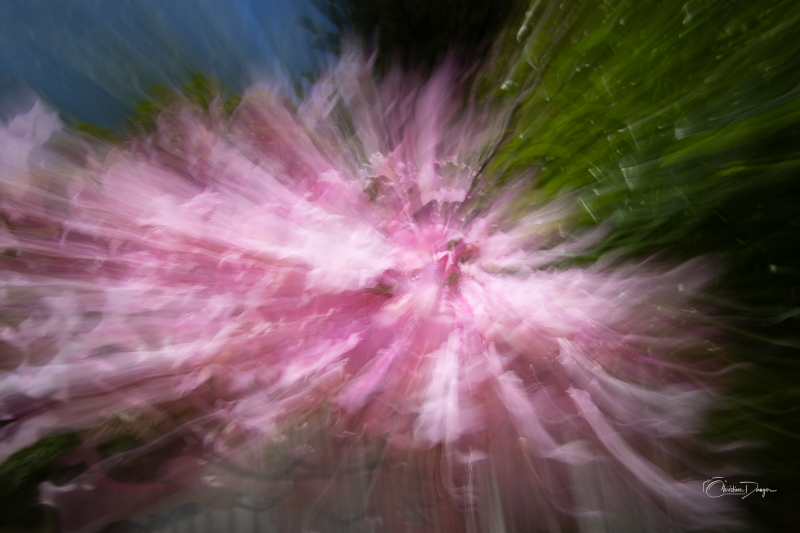
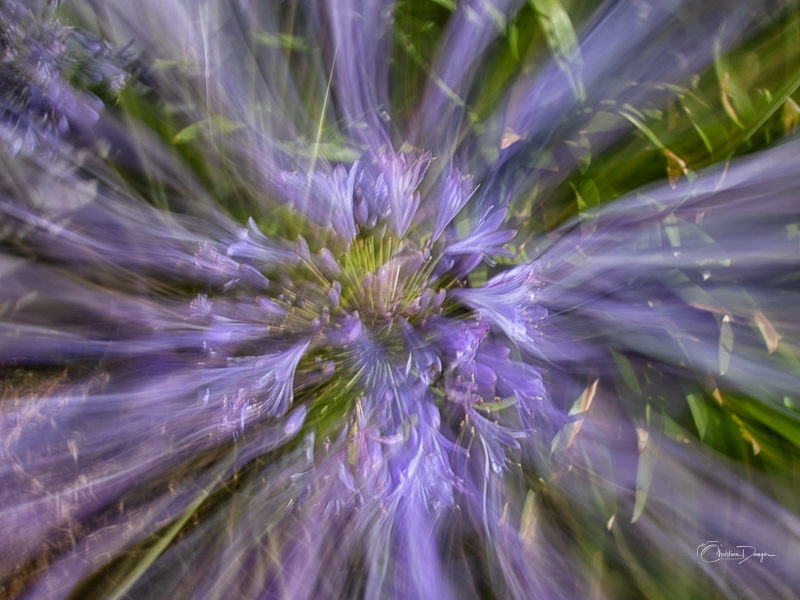
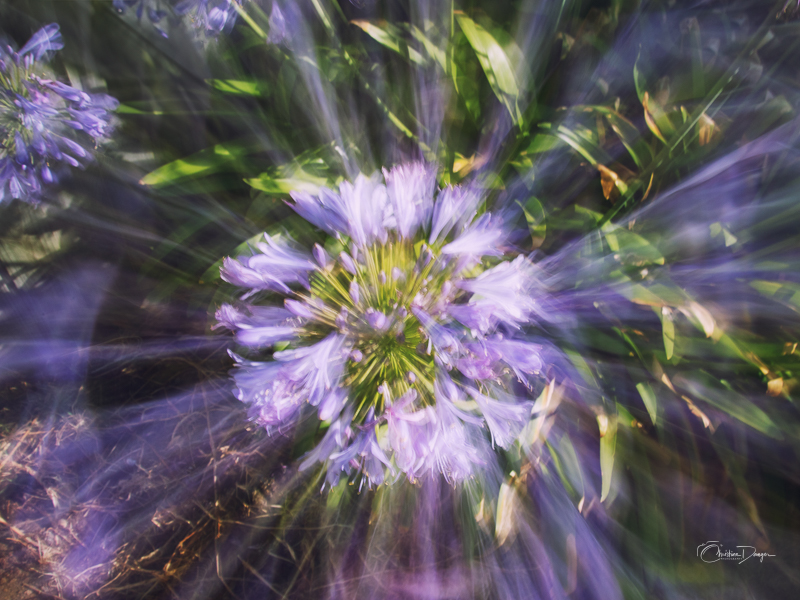

As you can see the zoom burst creates radial blur and produces interesting trails of light and colour, radiating from the point where I focused. It draws attention to the centre of the plant and creates abstract, almost watercolour-like patterns.
The camera was in shutter priority mode and I used a 6 stop Neutral Density filter. An ND filter reduces the amount of light entering the camera lens, acting like sunglasses. It allows for creative control in bright conditions by enabling longer exposures and wider apertures without blowing out highlights. But we are just talking about fractions of a second! I did not use an ND6 for the red berries, and you can see white areas – overexposure in the highlights. Not a good thing!
I played around with the timing, how long I focused on the centre of the flowers before zooming in or out, how much zoom I used, and how long the shutter was open for. Less than a second did not allow enough time to create the burst, more than 1.5 second introduced too much blur. I got my best results with a shutter speed of one second and an 18-50mm zooming range.
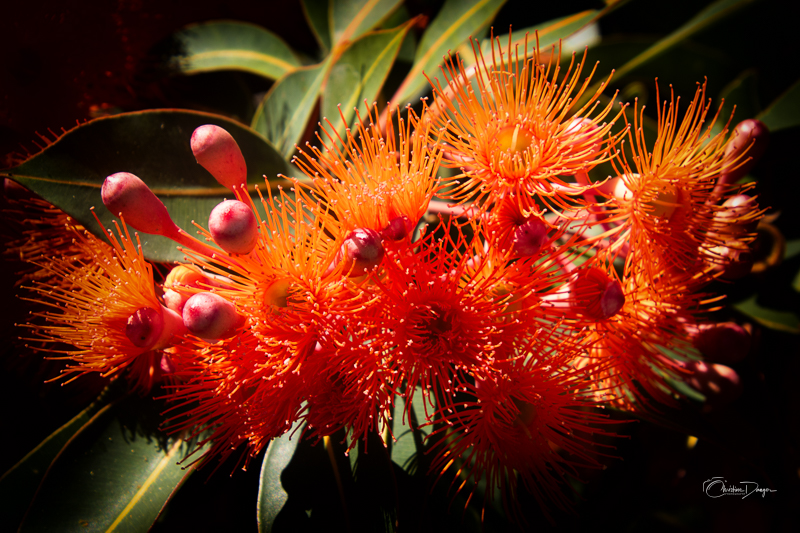
I had some fun with the bright orange eucalyptus blossoms of the Corymbia ficifolia too!
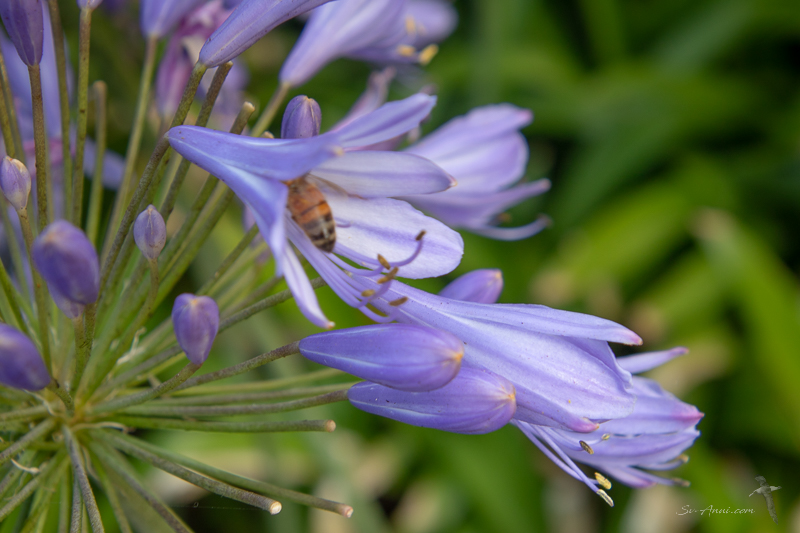
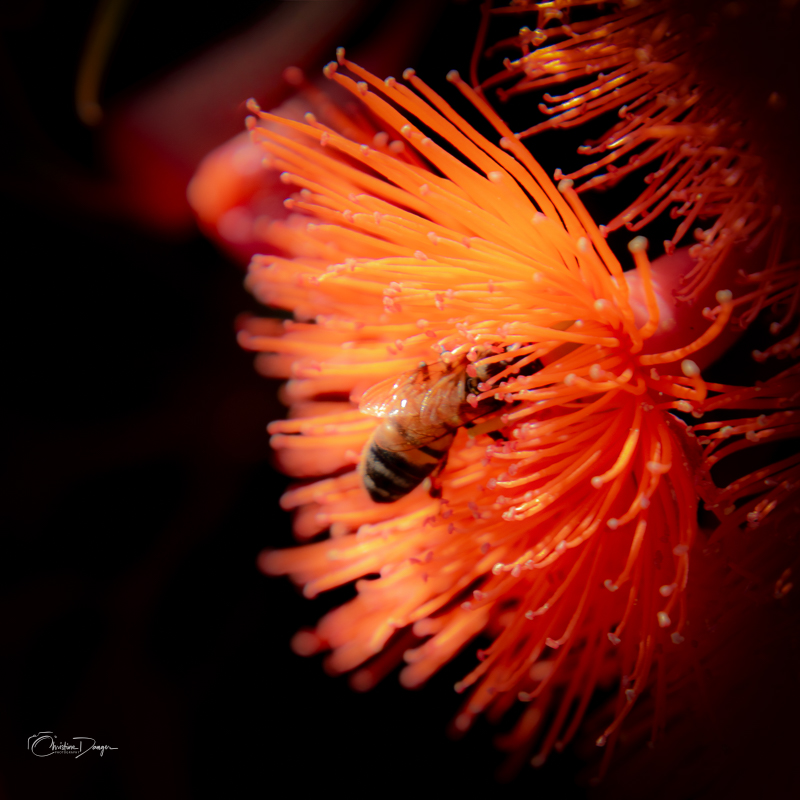
Another experiment was capturing the bees landing on flowers. With these I put the camera in aperture priority mode and for the Agapanthus I used a 0.9 Graduated Neutral Density filter to manage the light (a filter, which has a gradient from dark to clear). No intentional camera movement here, but I did not use a tripod to stabilise the camera so there is a slight softness to the images which I like.
As is often the case with my posts these days, they are a record of my photographic trials and errors for my own reference, but I hope you find these experiments interesting.


 Sv-Anui
These are very beautiful! I like the second photo in the top set best, lovely. 🥰 Hugs for you guys, I’m sure Bengie loved you both too. 🙏🏻❤️😻
Thanks John, what is it that you liked?
The outward flowing color, it looks pink to me but I am colorblind. ❤️
Ok, that’s the zoom burst effect with a blue agapanthus!
Thanks, that’s blue? It looks absolutely pink to me! It’s lovely.
Yes, the one on the top right is a blue, the one on the left is pink.
Oh my gosh, they both look pink to me but in very different shades. If you could see the world through my eyes, you may freak out! 😂
Good morning Chris and Wade – lovely to wake up to your post. As you know I am only a ‘must take a photo of the kids – they look cute’ type of photographer but I am interested and do read the info a few times over 🙂 ! The ‘blurry’ photos are not quite ‘me’ but I am glad to find out how you achieve the effects – bees, well love both pics even without being able to replicate! Trust that life is acceptable and increasingly interesting . . . tho’ many thoughts still dwell on the other side of that Bridge . . .
Glad you found something you liked in that offering, Eha. Still very fragile about Bengie. We get triggered so easily! But progressing on the home reno front. We’ll probably post about that next week.
*smile* Am looking forwards to that already . . . that IS one of my interests!