Today let’s talk about both fatigue and recovery. Most people think “you have finished your treatment, you should be close to recovery” or even wish you “a speedy recovery”. Well we are here to tell you there is nothing speedy about cancer recovery. Fatigue makes sure of that!
So what is fatigue?
Fatigue is different to normal tiredness because it is more severe, not the result of recent physical or mental activity, and generally doesn’t get better with rest or sleep. Tiredness occurs after exerting yourself, working in the garden, or going on a long bike ride or taking a bush walk… It generally gets better after a rest and a good night’s sleep.
Fatigue, and radiation fatigue in particular is the type of weariness that saps your energy and stops you in your tracks like nothing else. You feel it in your bones. When the wave hits you, you just want to stop and lie down there and then. Whatever you were able to do before seems so distant. You simply haven’t got the strength, stamina or resistance. Fatigue does not allow you to engage in what you normally did before… it won’t for ages! And it fluctuates. You might feel slightly better one day and dare to do more or push harder, only to run out of fuel in your energy tank at the least convenient moment. You crash and send yourself backwards in your progression too, so it really is not worth demanding too much of yourself!
Where does it come from?
Fatigue comes from a range of things:
- From the emotional upheaval right at the beginning with your cancer diagnosis when you feel overwhelmed and scared, with the sense that your body is letting you down.
- From suffering from a cancer that affects your hormone levels like breast cancer or prostate cancer.
- From the aftermath of surgery, anaesthetic drugs, opiates and other pain medication.
- From the body inflammatory response on the immune system when going through chemotherapy and/or radiotherapy.
- From your body giving it all it can to fight the damage done to its healthy cells.
There is so much going on that it is often hard to discern causality. And it gets worse as your sleep patterns, your diet, your cognitive ability, your thinking are all affected and take you down a kind of vortex.
The fallacy about recovery
If I hear “I wish you a speedy recovery” one more time I will hiss like Bengie!

Many people think once the cancer treatment is over, recovery follows quite quickly, especially if you look ‘okay’ to them. They expect you to get back to your pre-cancer self in a couple of weeks. Nothing could be further from reality. As we say time and time again, there is nothing speedy about cancer recovery. Fatigue hangs around, particularly when other pre-existing conditions also affect you. It is frustrating. If you have been a person who is a bit of a perfectionist, with high energy, always pushing yourself, discovering you need a couple of naps a day for months after your cancer episode and being forced to seriously curtail what you used to do, can be hard for your self-esteem and sense of well-being. We are now coming to realise that it will take months for Chris to feel a kind of ‘new normal’, to feel that she has recovered. The nurses talk about 6 to 12 months.
What we are learning now is that you must adjust your expectations – downwards – no, really downwards! You have to respect your body has been through a lot and be patient.
We are also learning a key strategy for coping with fatigue is pacing yourself. You need to understand how much is in your ‘energy basket’ and prioritise how you want to spend it, how you should allocate the active time you have in store – each day, every day. And it will vary each day, every day.
Energy and thus recovery has to be built back up and it does not replenish straight after the last intervention. The time for recovery can vary between different people from a few months to for some a few years. God, here is to hoping it’s just a few months!
We also now fully understand the impact of exercise. You must be active not just when you feel reasonable, but especially when you don’t feel like exercising – sounds a bit odd and hard, but you want to keep gentle movement going: a walk on the beach, stretching, swimming… Sitting around not moving is the worst thing you can do for yourself. A little is better than nothing. Exercise adds to your energy physically and mentally. It changes the inflammatory response of your body. If you do this with a class initially or with a coach, it helps. You get energy from the group you are with. From our point of view, if we get into a routine that we can maintain later on our own, that too will help. Meditation and mindfulness also contribute to dampening down the effect of fatigue on the immune system. Tai chi, breath work, meditation all assist. It is a kind of time out to help calm your thinking, lower inflammation and rebuild strength.
Our activity this week
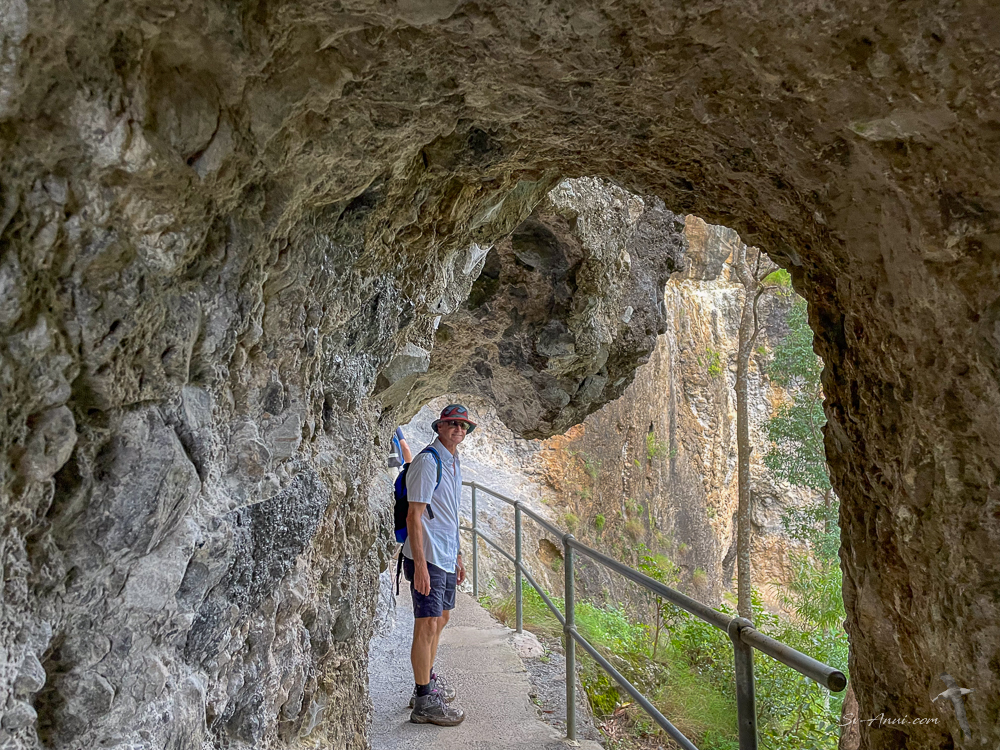
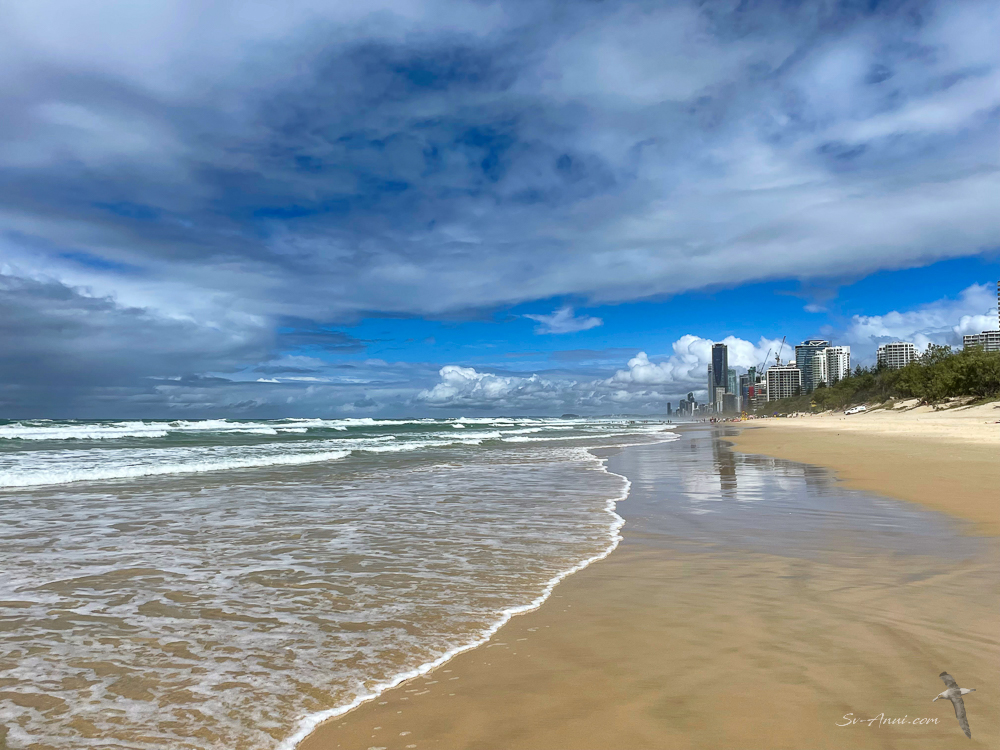
This week as well as our daily gym classes, we did a couple of walks: a 5 kms wander in the rainforest to Caves Walk, Binna Burra, with our friend Bill, and a looong one – 8kms on the beach out to the spit and back… mistake! Paid for it for two days afterwards, hence the reflections on pacing yourself.
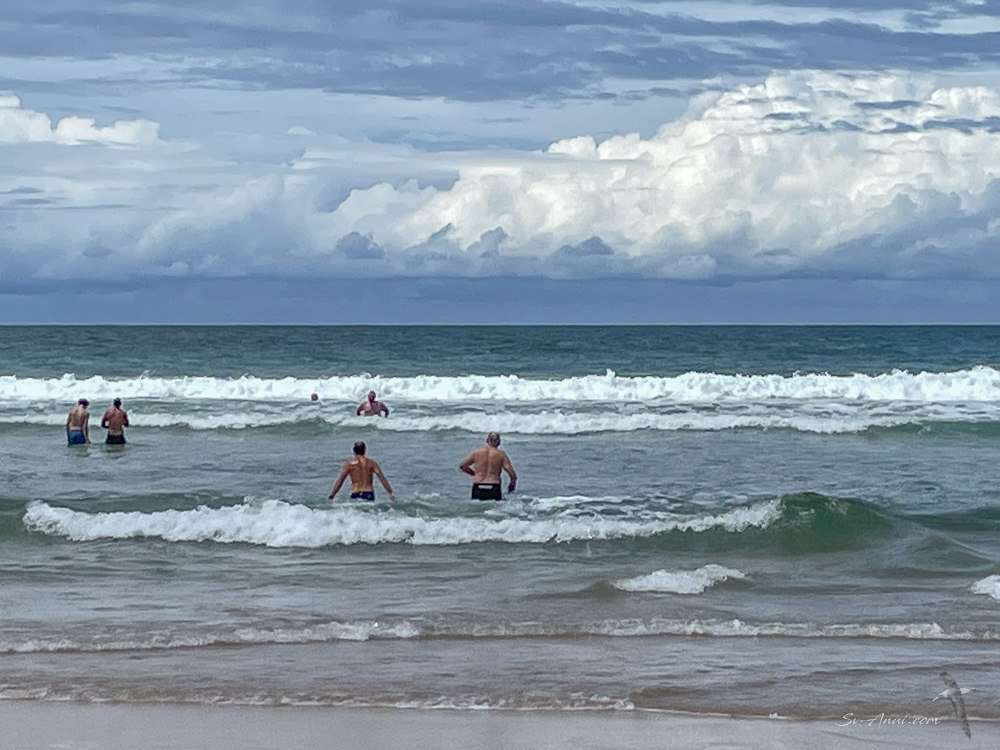
Body surfing and board surfing were also on the program. Here are a few photos:



So there you have it. We are working towards being ready to leave the marina. It is less than three weeks away, so we are both a little nervous about it, but also keen to regain our freedom and slowly take steps to resume our sea wanderers’ life, even if at a slower pace than initially hoped.


 Sv-Anui
The photos are so beautiful, a paradise! The city looks great, I don’t know which city it is though. 😊❤️🇦🇺
The high rises are Surfers Paradise and the place with the white sails is the marina at Main Beach – all on the Gold Coast.
A beautiful coast! Some day I’ll make it to Australia. ❤️
All the best Chris, Keep going!
Thanks Murray.
I like the picture of Benji hissing on your behalf ….. no more get well messages for you Danger Mouse! 🙂
You have described my long covid fatigue pretty much to a tee. For me it’s been 13 months now, a few ups and downs, but on the whole only have about 60% of my ‘normal’ energy levels. It is weird, because there is a level of exertion, that if you exceed this you go down for a few days afterwards. Progressive exercise to my new known limit is what works for me. Yeah, it’s pretty frustrating knowing that some people, get over this in weeks or months, for some it takes years. My mainstay is my faith, takes away any anxiety, leaving me with a quiet acceptance, and a hope that someday, normal body function will resume.
Anyway, got over my sacroiliac/ back injury in 3 weeks, now repairing/ converting an electric disability buggy into a golf cart. Diagnosed and changed the faulty parts, runs like a dream. Next have to buy a small welder to be able to secure the golf bag, Hey, you know what, I’ll probably get well again just as I’m about to take the machine onto a golf course!
Hope you guys are fit enough for this next dry season on the reef! Exceedingly best wishes!
(Note, resistance to trotting out cliched platitudes!)
Oh Elgar, you have our sympathy and understanding! Yap you have to do everything in ‘energy conservation mode’.
We had a laugh at your DIY golf buggy story and we hope by the time it is raring to go you don’t need it anymore… but somehow we think the growing old pains will creep in at some later stage!
Thanks for dodging the platitudes. Most appreciated 😊
Chris, your description of fatigue is very good, I have MS and fatigue is part of the package, has been for a good few years, and is rarely understood by others.. Wishing you all the best
Hi Sue, Sad to hear this. MS would sap your energy and capacity to do what you want. Such a difficult disease to manage and live with. Is photography still an absorbing pursuit for you?
I really enjoyed the photos of your walks, so inviting. it is obviously helping you on your journey. Thinking of you
cheers Sue
>
Hi Susie, glad you did. The exercise helps a lot – feeling slowly better.
Sending hugs, and positive energy, and you were brave doing the Caves Walk…that is ‘up!’
Hi Trish – yes down to the caves then all the way back up! Was originally going to do the full loop but was wasted by the time we reached the top, so our friend Bill walked down the road to pick up the car and we all had lunch at the cafe! Might also explain why I crashed the next day doing the beach walk to the Spit and back! Way too much!