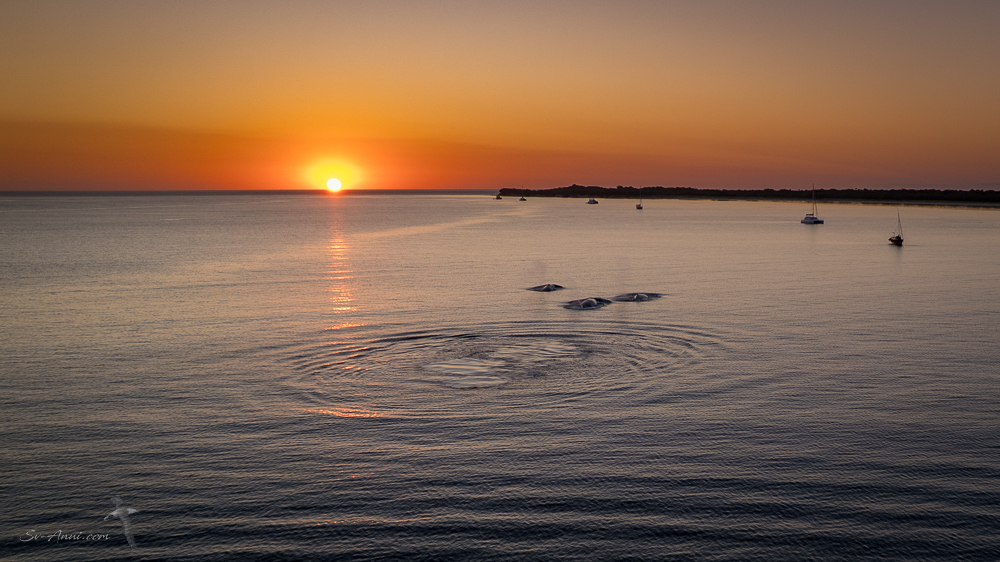
We spent a very enjoyable few days at Rooney Point in Platypus Bay, in the company of humpback whales which are our focus for this post.
For those of you who are not familiar with the how, when and why of humpback whale migrations, here is the low down.

Humpback whales undertake massive annual migrations, travelling thousands of kilometres between polar feeding grounds rich in krill and warm-water breeding grounds to give birth and mate. Here along Australia’s east coast, whales move north from May to August, to find warmer waters in which to breed, and return south with newborns in tow during September to November, with the exact timing influenced by factors such as water temperature and food availability.
The return journey is when you will often see them closer to shore, frolicking, suckling and taking their time with their calves.
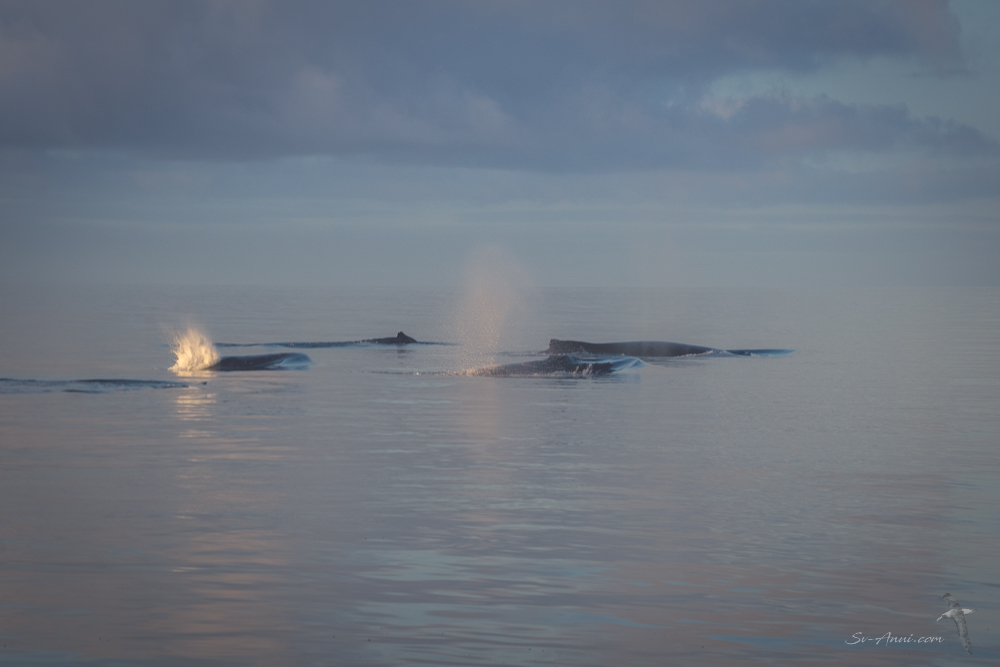
So why the migration? Whales need to survive the very cold Southern Ocean by developing a thick layer of blubber to keep them warm. They build up this fat from their food. However, newborn whales don’t have this protective layer and would not survive if born in the Antarctic. They need warmer water while they build up their insulation layer.
Calves are born after an 11 months’ pregnancy, already weighing up to 900 kgs at birth! They stay close to their mum nursing on rich milk that is 40-50% fat (compared to 2% in human milk), which helps them grow rapidly in their first year.
The sheer difference in size between the calves and the adults is easy to spot when you see a pod swimming past. Adults weigh 40 to 50 tonnes and are 14 to 16 meters long. It is quite daunting when they come close to Anui which in comparison is 16m long and weighs about 11 tonnes! The calves weigh 1 or 2 tonnes and are about 3 to 5 meters long so not as imposing but a lot less predictable in behaviour. They do like to play, investigate and show off! Think of excitable toddlers…

We are particularly fortunate around the curve of Platypus Bay, home of the world’s first Whale Heritage Site. It is a huge area on the northwestern side of K’gari (Fraser Island) where the whales enjoy some of the calmest, most protected waters of their journey.
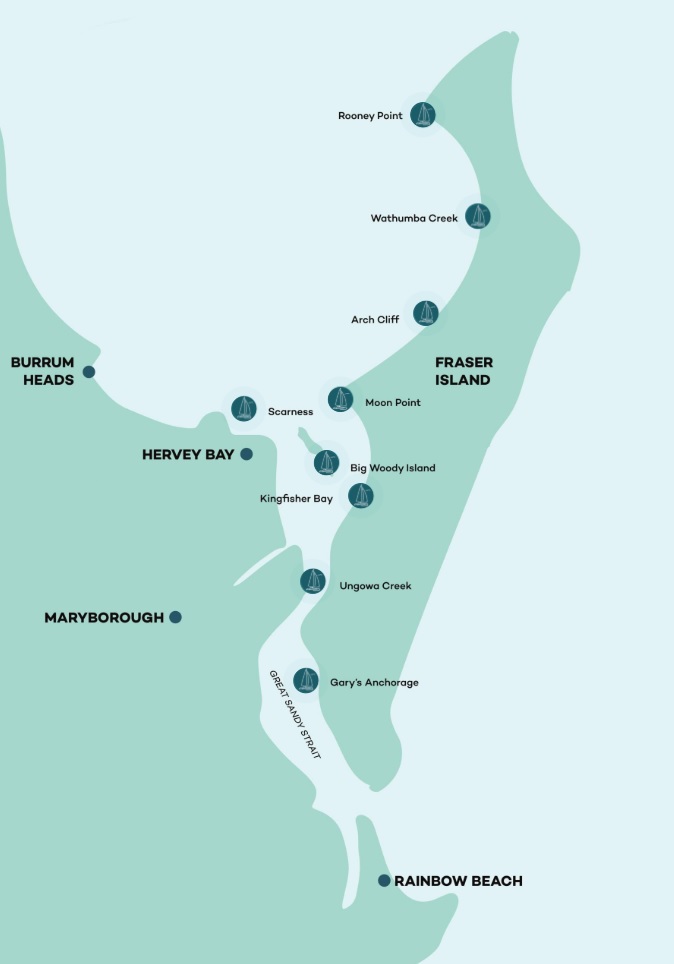
Moon Point, Arch Cliff, Wathumba Creek and Rooney Point are always great anchorages to stop at. This time we chose Rooney Point as this is where the whales come closest to shore, following a deep gutter early in the morning and at sunset. During the day they frolic further out in the bay. Their blows are often what you first hear, but the breaches and tail slaps are also loud attention grabbers which often come in multiples.
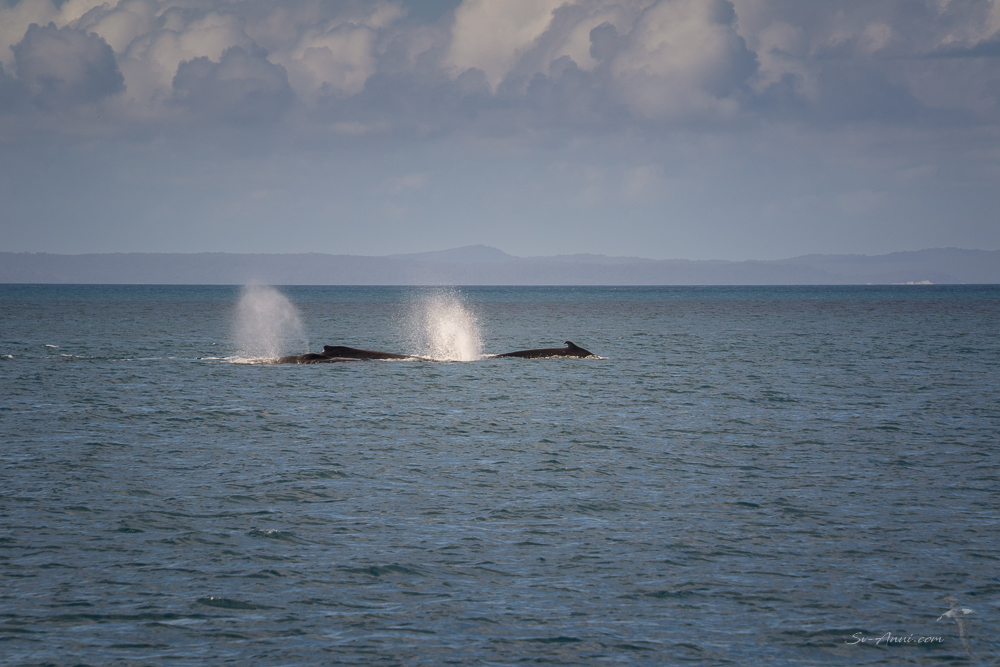
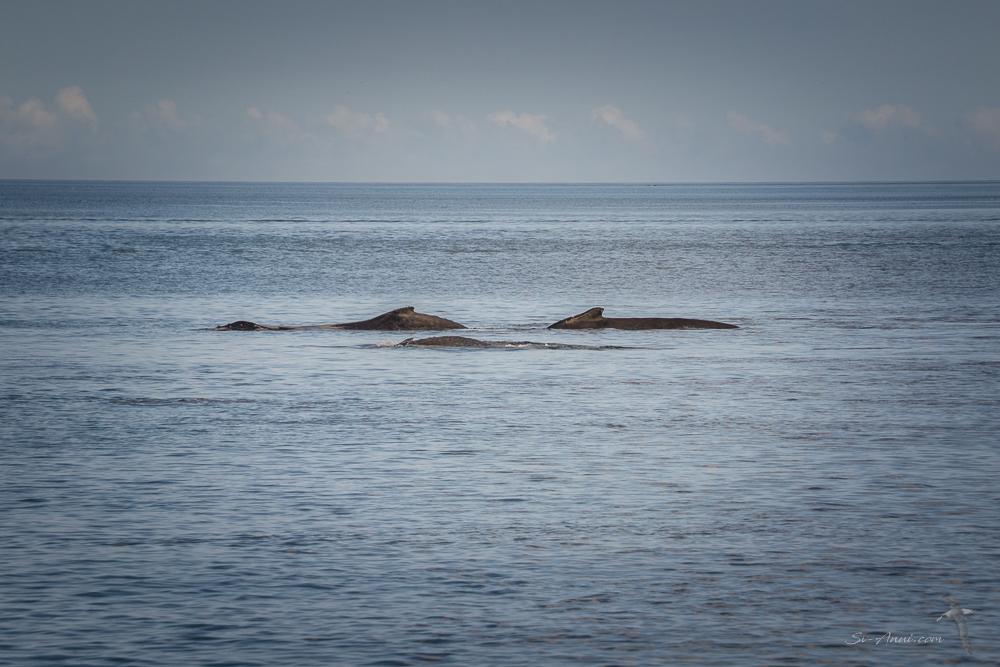
Here is a selection of shots taken while we were there, all with our Canon 7DII SLR and zoom lens. We tried to capture spectacular displays like spy hopping (lifting the head above water to look around), tail slapping, breaching (launching out of the water) and pectoral fin waving, as well as just cruising along, porpoising.


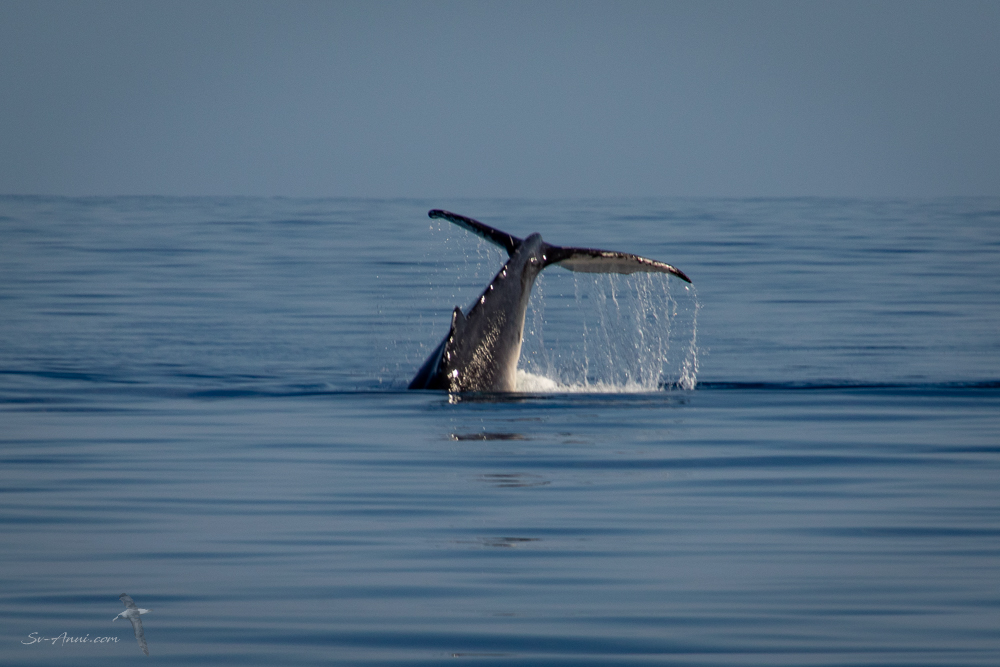
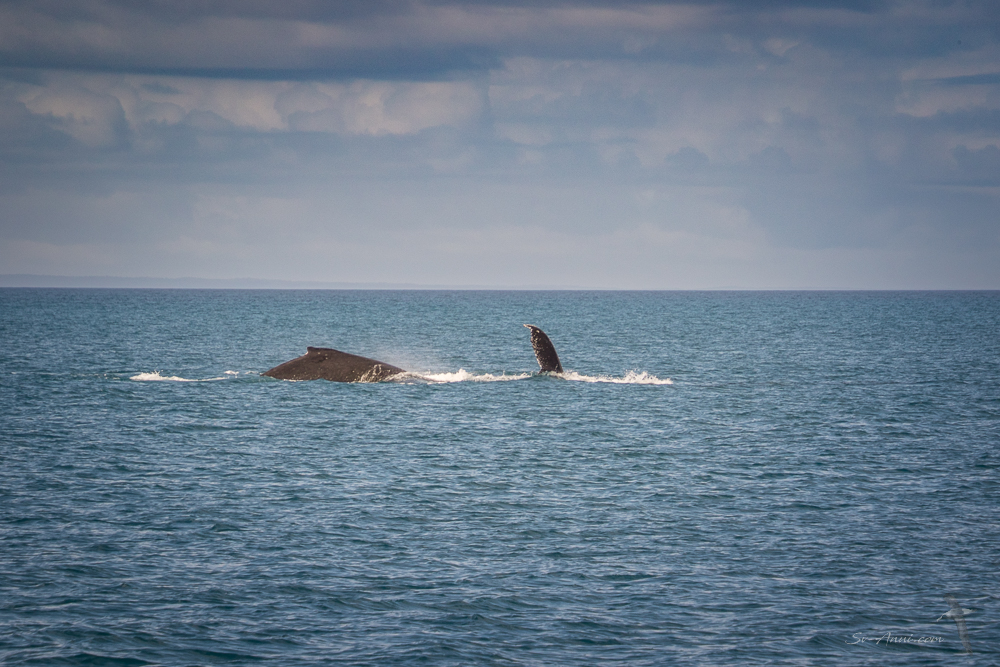

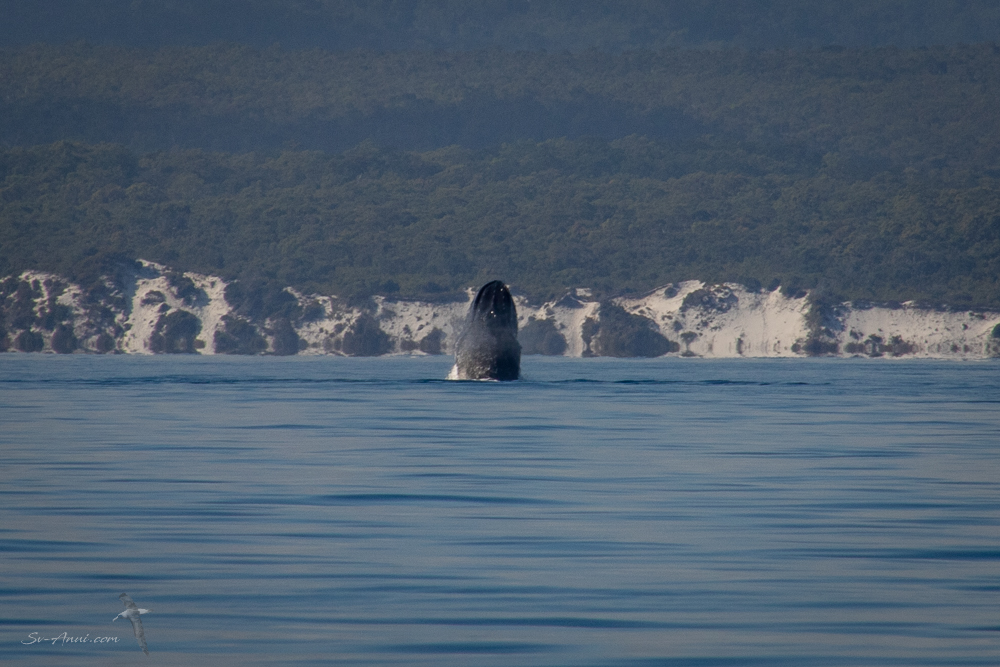

We also used the drone, but it was not as easy to get good images. Not only are the whales harder to track from the air, but unless you are filming with a permit, you also have to stay 100m away from them, which is often too distant and high up. You don’t disturb them, but you can’t see them clearly!
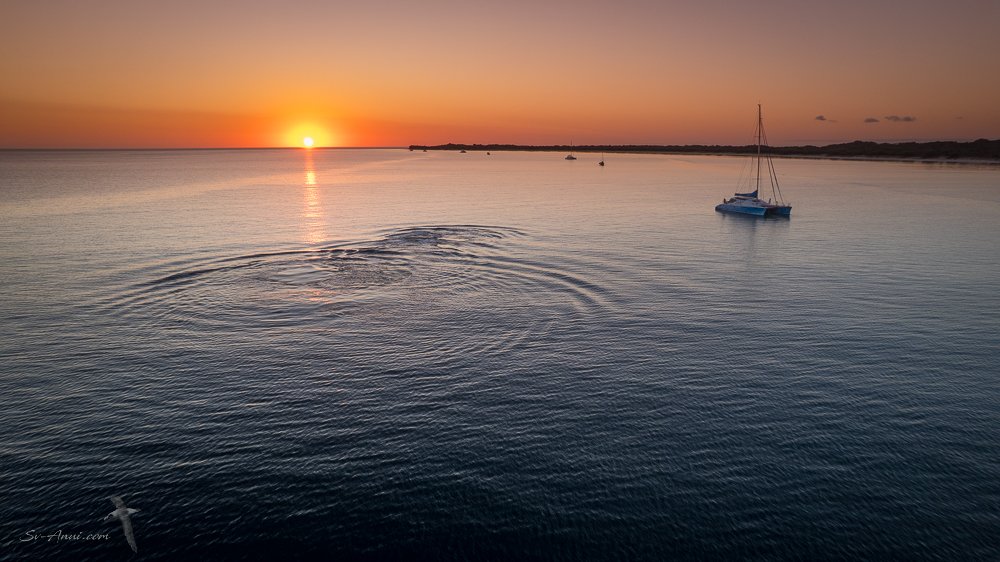
The other fascinating aspect of whale watching is whale listening. You have probably heard of whale songs. The vocalisations are sounds produced for echolocation, communication, navigation, and finding food. These sounds can include clicks, whistles, grunts, moans and may also be used to attract mates or warn of threats. The sounds carry a long way in the water and some of them are really loud. Here is a link to a great video clip recording the haunting songs and playful behaviour of a small pod. Sound up for that one!
But it doesn’t always have to be loud. Researchers have discovered mother humpback whales and their calves communicate to each other through soft squeaks and grunts, which are much quieter than other humpback vocalisations. It is thought that by “whispering”, mums are able to keep track of their calves while the soft sounds make it harder for potential predators like orcas to hear them.
You know how the saying goes: every good thing comes to an end. After 5 days in Platypus Bay, we decided to use the favourable weather conditions to head south in the company of a few travelling pods.
As we post this we are anchored at Peel Island in Moreton Bay, a short distance from the Gold Coast.


 Sv-Anui
Very beautiful photos and creatures!
Whales are mesmerising, but a bit unnerving when we are sailing and they are close!
A fast reply, wow! I was thinking about that, I would not want a whale so close to my boat either!
Great whale shots! We had whale songs all night at Middle Percy. Still lots of whales up here.Chris & SuzanneDiscovery II
Thanks guys, yes there are plenty about… there were several pods congregating around the entrance of Moreton Bay.
What a great experience and post, just magical We recently went on a whale searching trip to Warrnambool, score was one seal and 9 surfers no whales 🤣
Hi Henry,
We never tire of seeing whales and it is a special treat when you are on your own boat.
Back in your happy place in the thick of the action.
Yes, for a short time only but it fun.
Am so glad you are ‘back where you belong’! I only knew the basics of ‘whale life’ and their migration – love your photos and descriptions, especially of the ‘whale language’ 🙂 ! Know what my afternoon study period will be! Oh, those photos . . . and talk of size . . . !
Morning Eha, good to see you still have access to that computer! We never tire of seeing and photographing the whales. Glad you enjoyed the post.
I wish I did ! And that you knew how it ‘went’! Am persevering on a 2011 hard drive which works at about 20% of normal speed and insists I am someone else, somewhere else . . . give me credit for trying 😦 ! It will take a while to get to ‘normalcy’ financially if health allows! Amen!
I can imagine the frustration of working from an old machine especially when not feeling well. Glad you are persevering despite it all.
What a beautiful few days! Humpbacks are such amazing creatures, we used to love watching their migration at Sawtell, usually from a much greater distance. Your experience is truly enviable, thanks for sharing those great pics!
Bon Voyage cobbers!
PS We’re just back from the warm seas of Sardinia (hardly saw any wildlife 😦
We love seeing them and have long wanted to spend a few easy days just whale watching. The peace before the next onslaught! Sardinia sounded good!
Thanks for the great whale photos Chris!
Our pleasure.
Gorgeous photos as always. So great to see you both at Peel Island ❤️
So glad we finally shared an anchorage after so many months of failed attempts. What a year we all have had! Hugs to you both.
Good healing process after what you guys have gone through.
Cheers
Mick & Lyn
Very much so, especially since we have more maintenance to come!