Hinchinbrook Island has been a magnificent escapade. The island feels like an untouched, pristine, primordial world, worthy of taking you on a grand tour. Get your walking boots on and come for a few hikes with us!
It is different for us to be spending time at a mountainous island, able to get ashore for walks in company while Anui is hiding in the mangroves for shelter from 30 knot winds. We thoroughly enjoyed our time there. As this is our own travel journal as well as a blog, this is a longer post with many photos. We hope you enjoy this.
Here is the map of the island. We have marked our track in orange so you can see our stopping points.

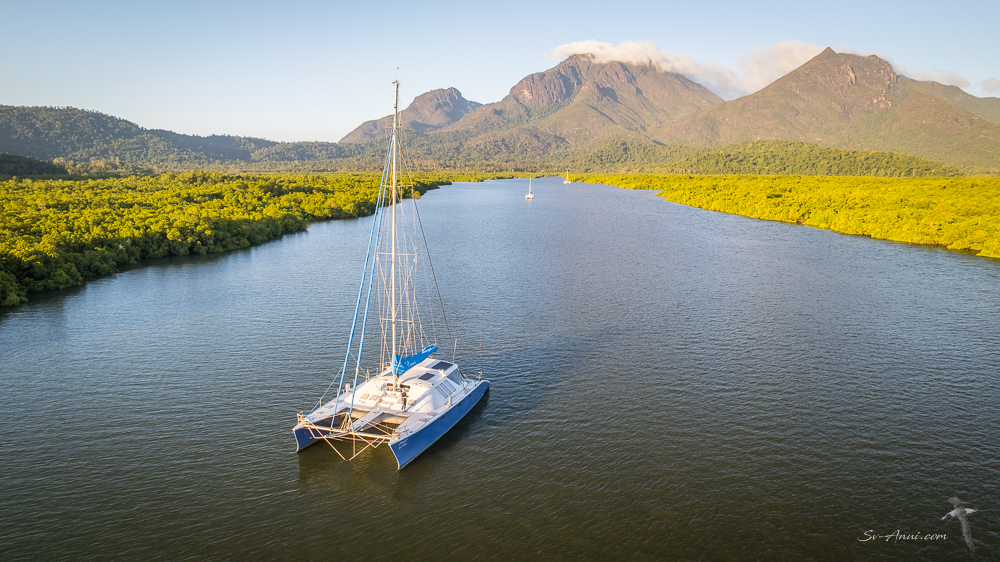
The last of the calm days was on our arrival at Number Seven Creek when we took this stunning aerial image of our anchorage in the golden evening light. For the following days the drone did not get up as it was blowing too hard.
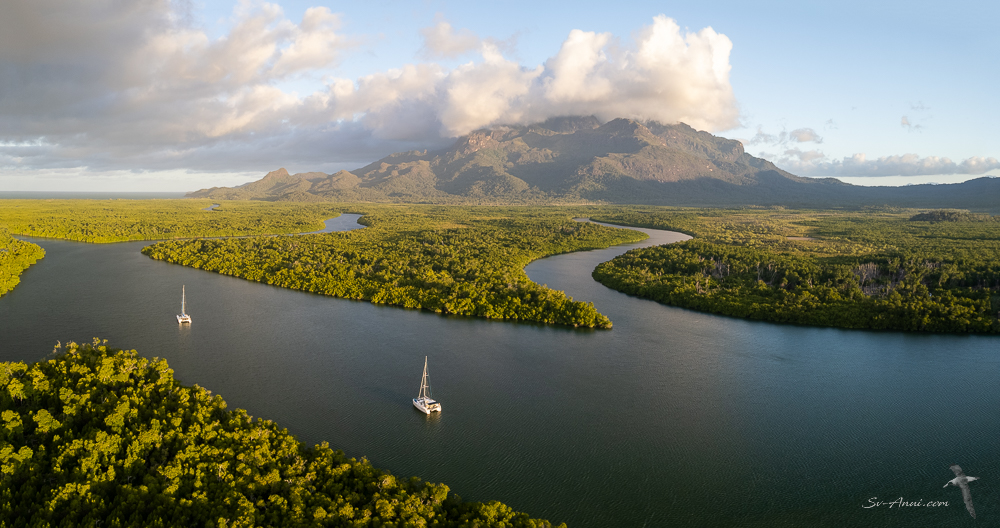
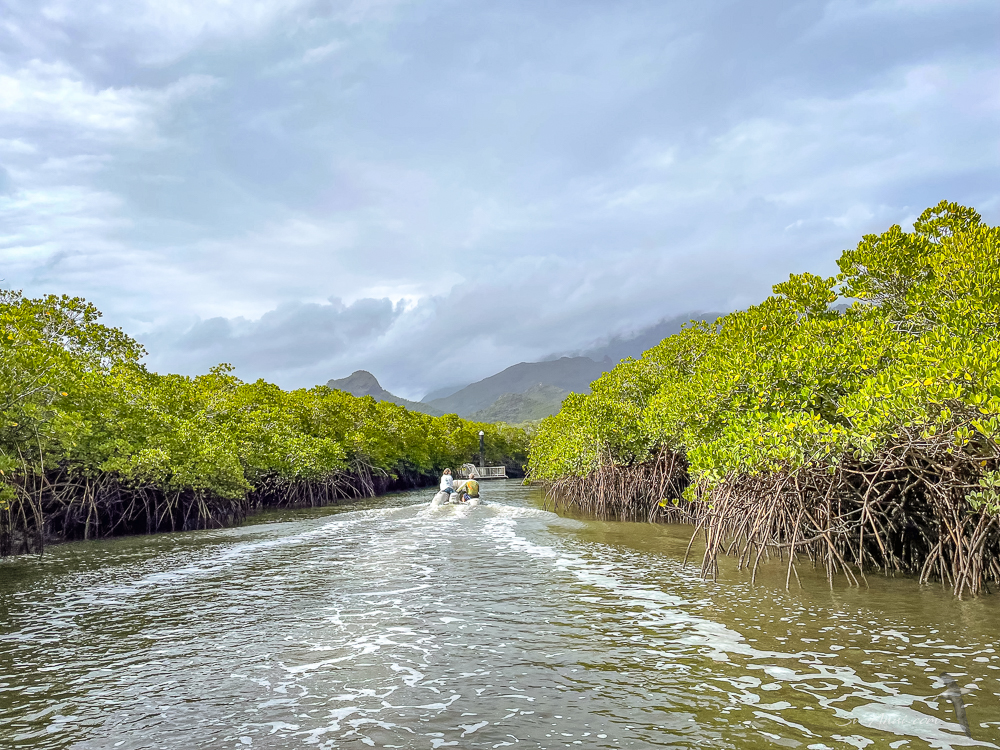
The great thing is that the wind did not stopped us from getting out and having fun; the big boat was very well sheltered, the nasty midges were not attacking us on board, we were able to get ashore at the pontoon at the end of our Number Seven Creek. You can anchor in most other creeks, but can’t get ashore, so the pontoon and board walk to the beach was our ticket to freedom from cabin fever. We enjoyed our daily 2nm dinghy trip from the boat each way, and most of all our walks with our cruising friends from Roo Bin Esque, Graham and Helene: plenty of exercise and chats.

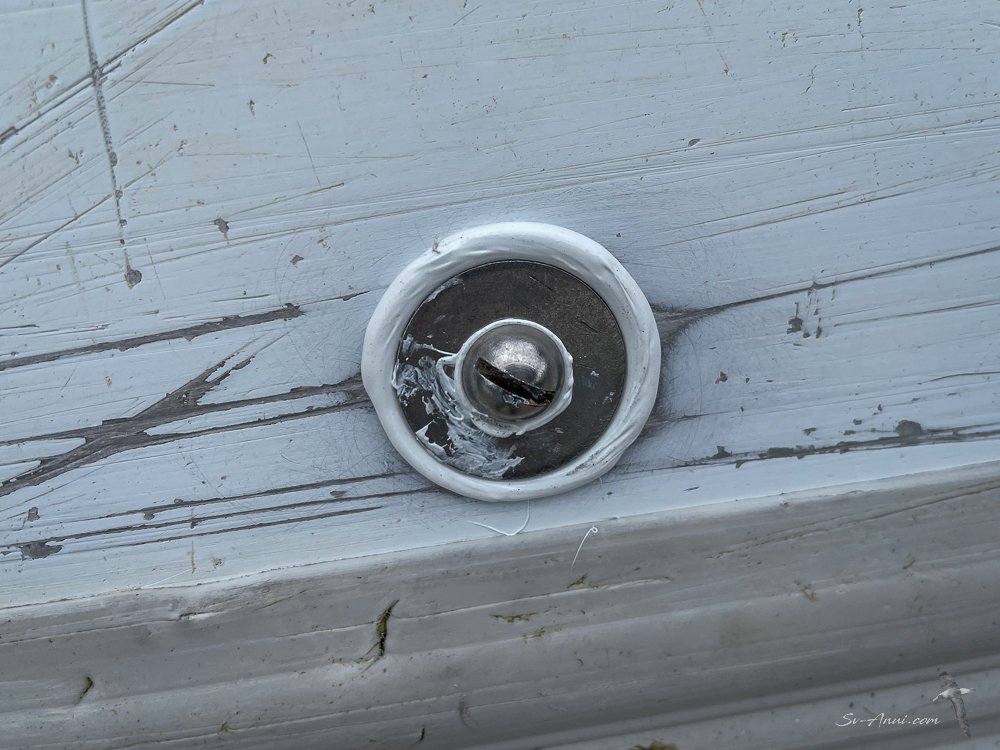
And talking about dinghies, we discovered we had a hole in the aluminium bottom of ours. Yap, it had been a week without maintenance! With help from our friends we took the engine off and the dinghy out of the water at the pontoon. Wade drilled the hole out and tapped a thread, then screwed a bolt with a tight-fitting washer and gooped it all up with marine sealant. Where would we be without Sikaflex? This temporary fix will have to do until we can get the bottom properly welded at the Boat Works later this year!
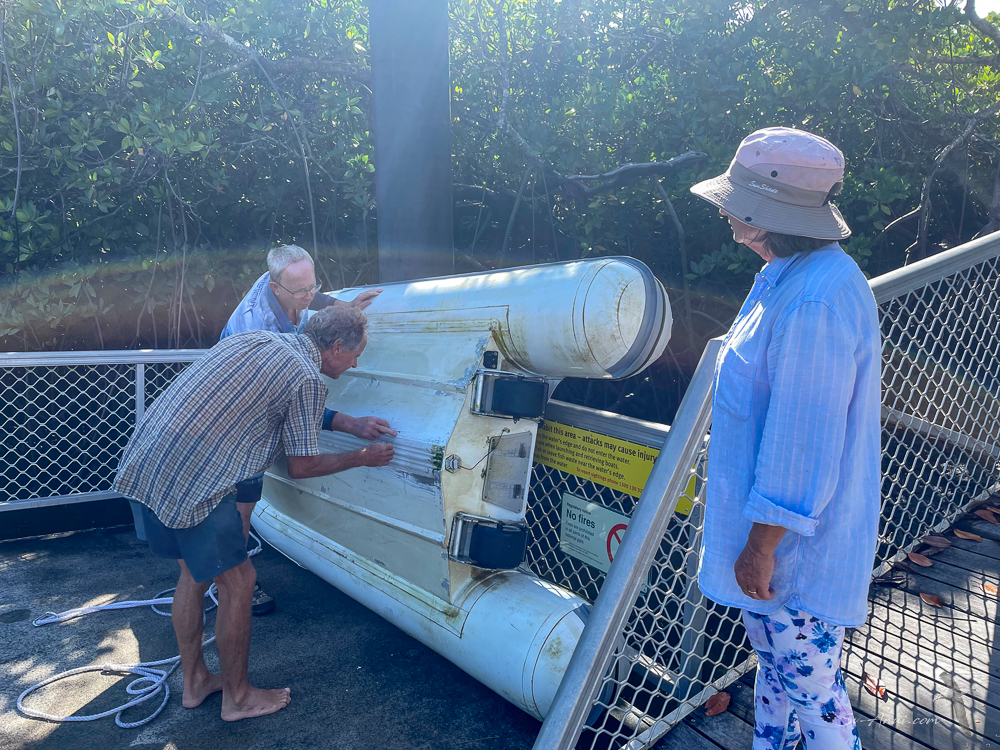

While the repair was drying out, we walked to Ramsay Bay and Nina Beach – 11 kms return. Somebody climbed a coconut tree on Nina Beach, hoping for a fresh coconut but could not reach far enough! We got back to the pontoon, got eaten alive by sandflies while reassembling the dinghy and dropping it back in the water, but returned to Anui happy.


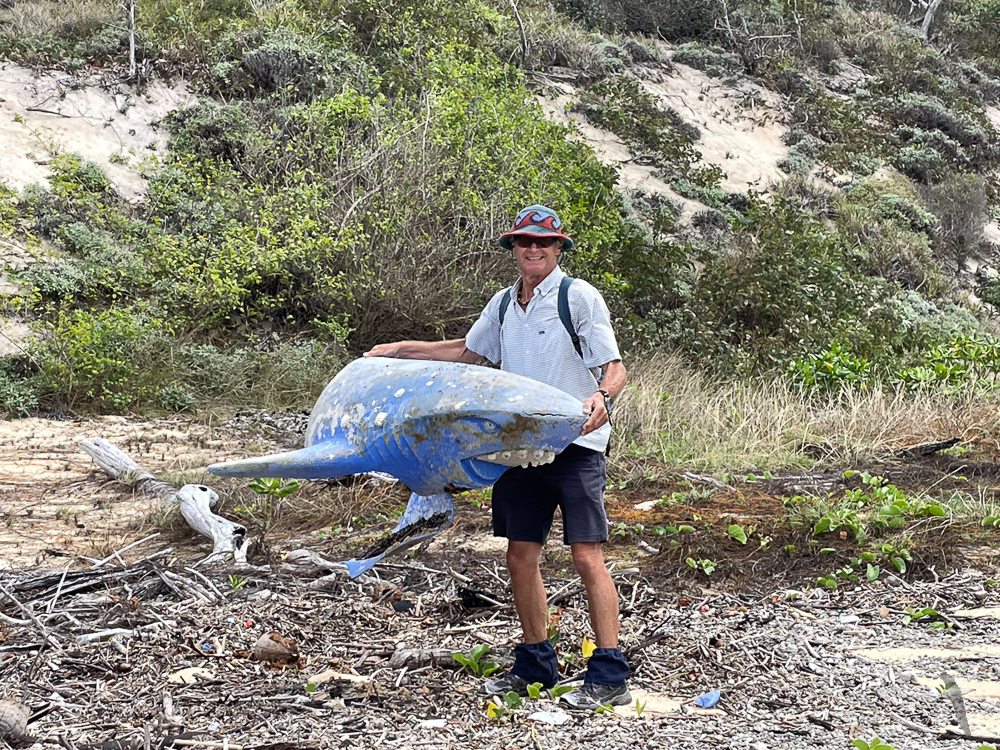
On the next day we dinghied back to the pontoon again. We kept an eye out for croc slides along the creek but did not see any toothy monsters. We then walked from one end of Ramsay Bay to the other and back with one focus: fossicking, looking for treasures on the beach. We came back with a collection of Qantas lures, floats, and lovely shells. We also saw various toys, a huge amount of left thongs, plastic bottles and other rubbish… unfortunately what to expect on an exposed beach. But the best of all our finds was a brand new Highfield dinghy complete with engine, although that was a bit dead. It must have come off somebody’s boat quite recently, washed up on the beach and got dragged under the casuarina trees. We had a serious look at it as it is bigger than our leaky one and in better nick, but it would have been a big job to salvage it and we decided it was too much effort. It has been reported as lost.
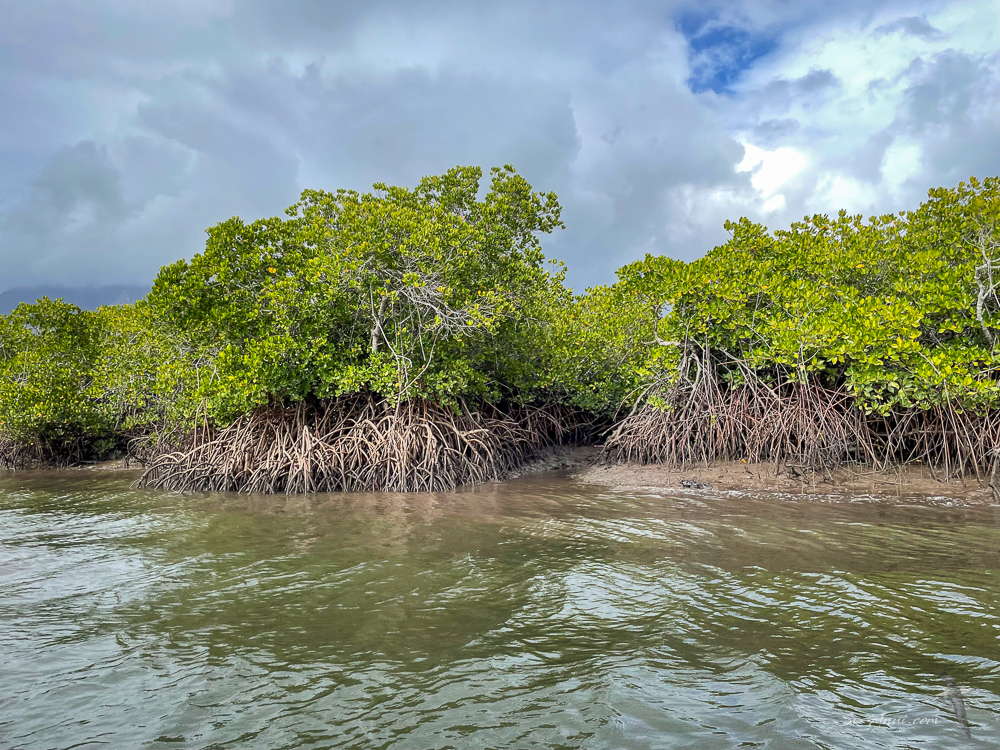

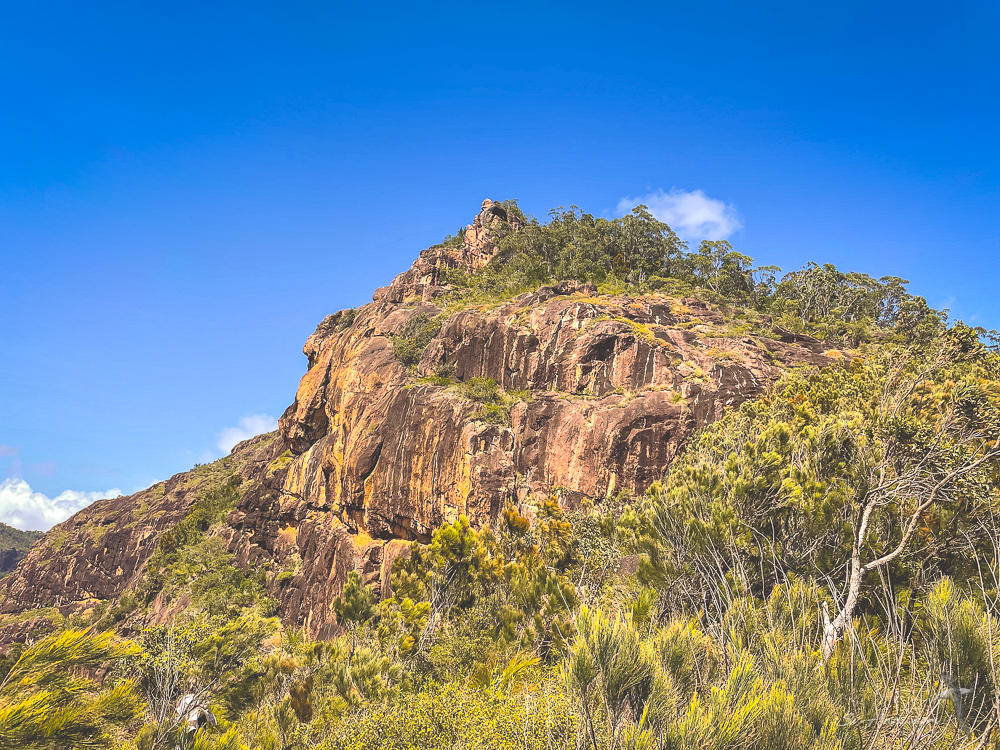
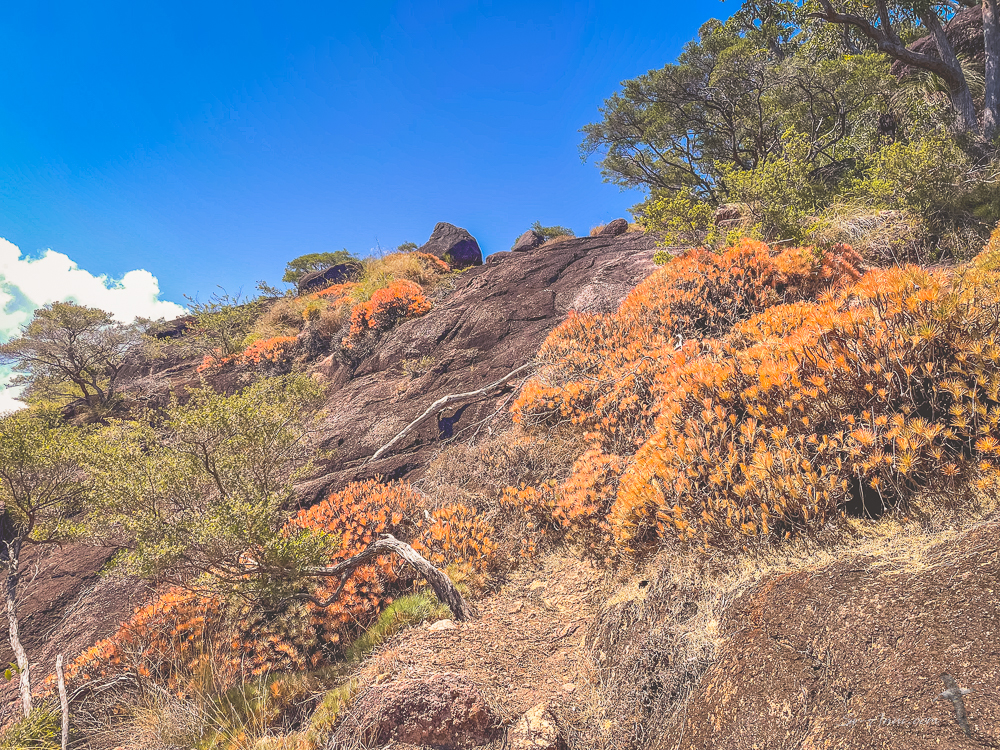
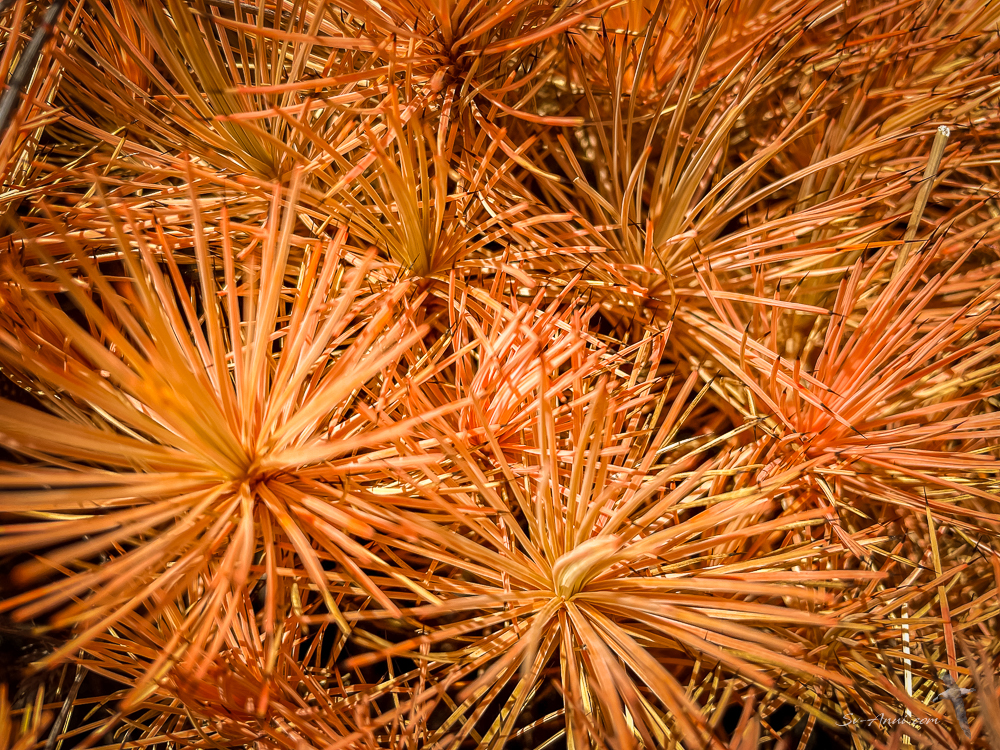
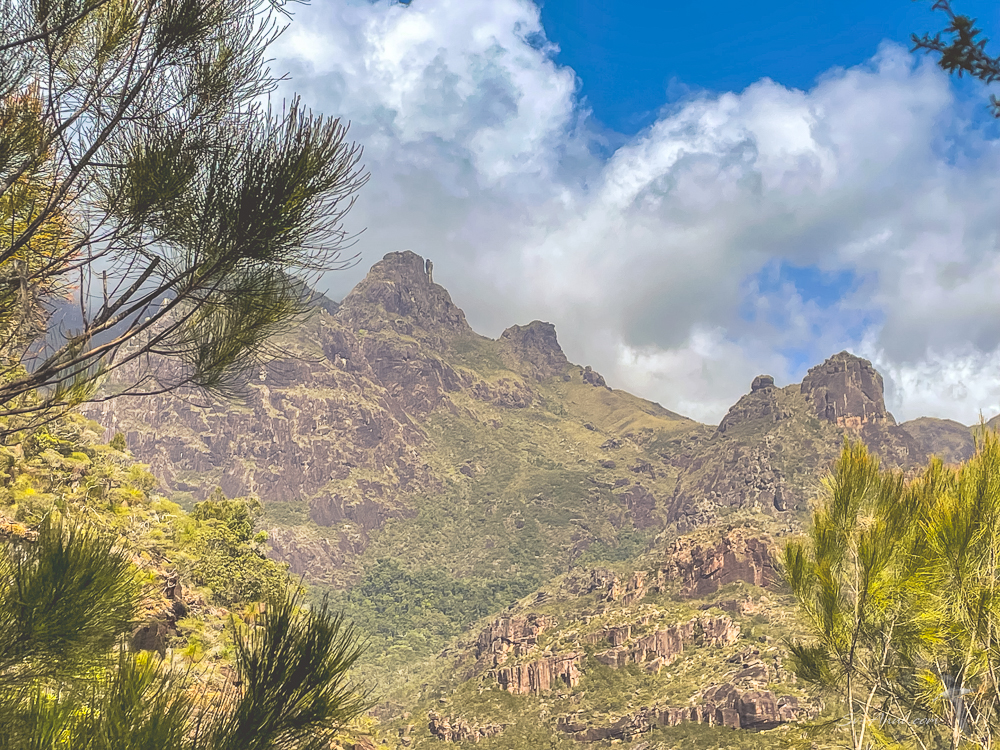
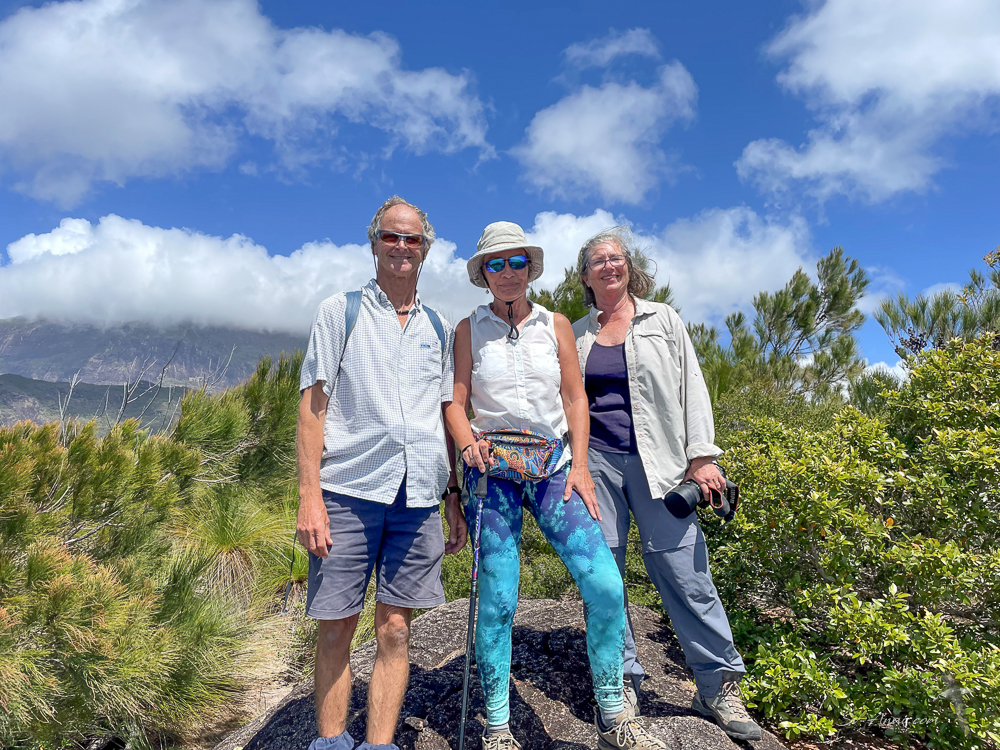
Day three: walk up to Nina Peak, a 12 kms return hike. Although a steep and strenuous climb straight up the rocky pinnacle, the views were to die for. We got to see Mt Bowen up close with its jagged peaks often shrouded in clouds, Ramsay Beach from up high, our anchorage through the mangrove forest, Nina Beach. The vegetation changes were interesting. One plant in particular was very attractive with orange blooms that from a distance looked soft, but were incredibly spiky!
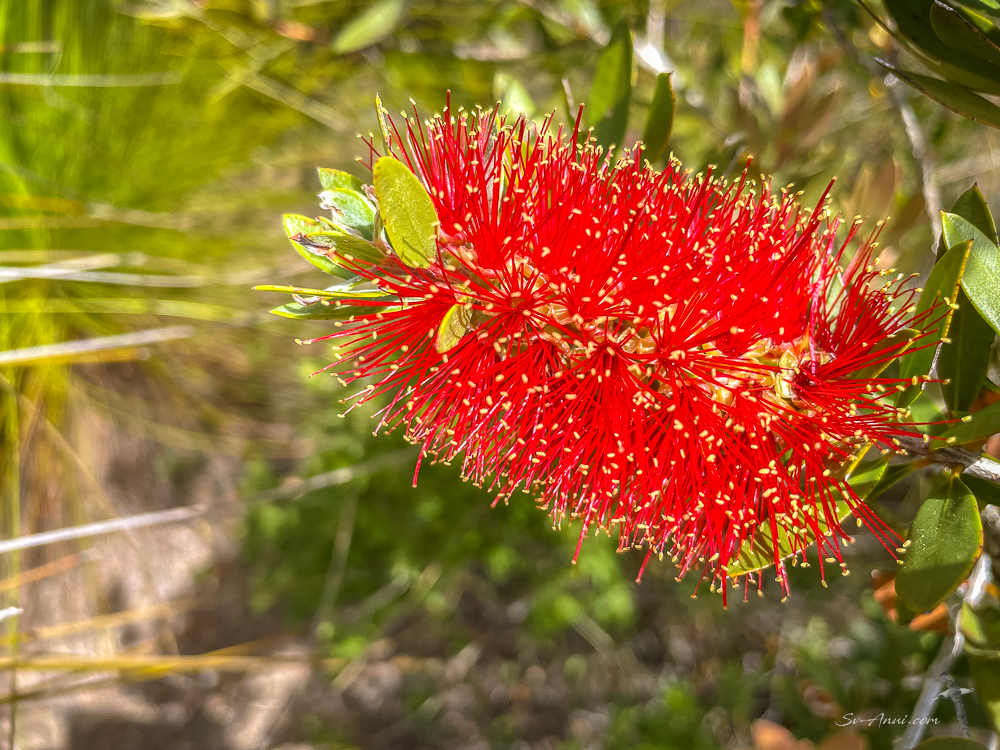
Here is a gallery of our favourite photos.


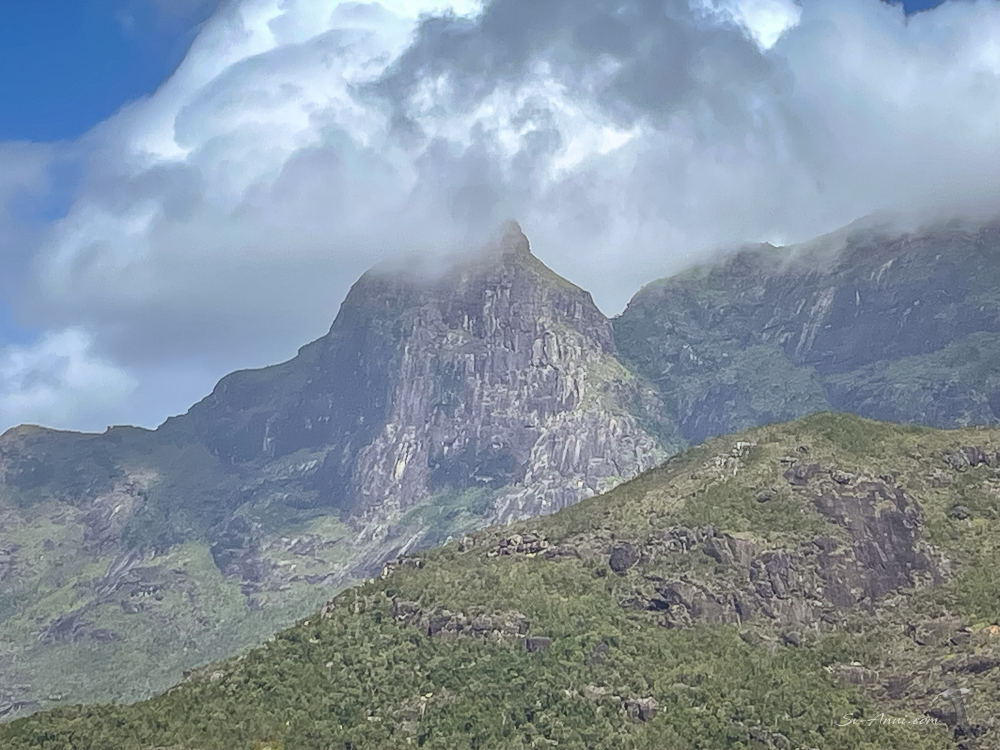
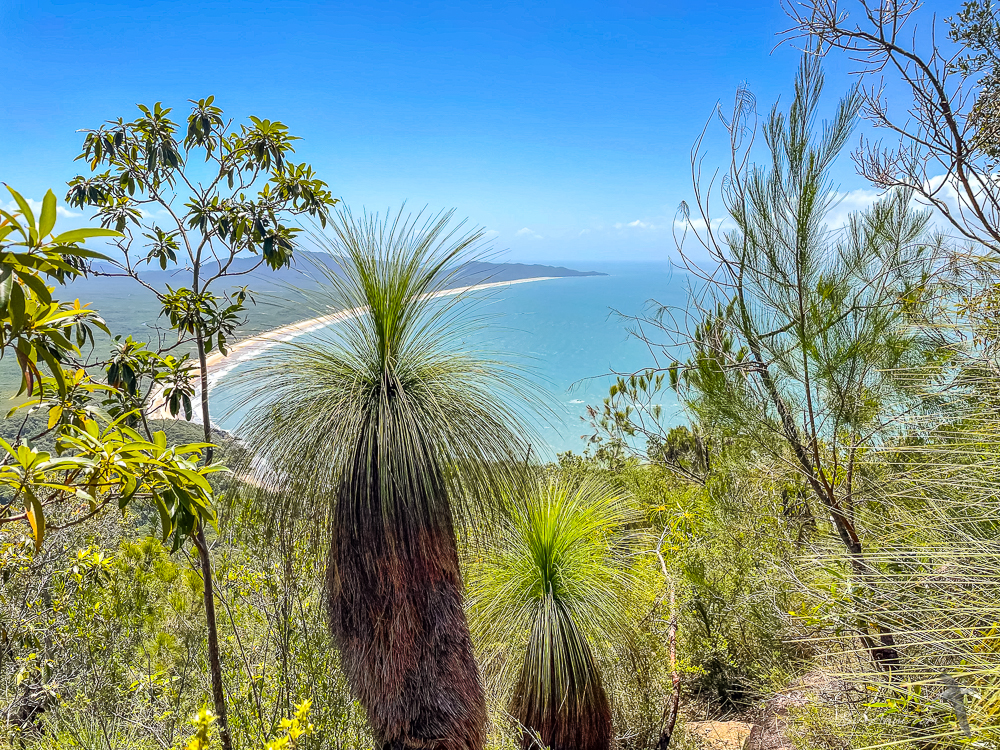
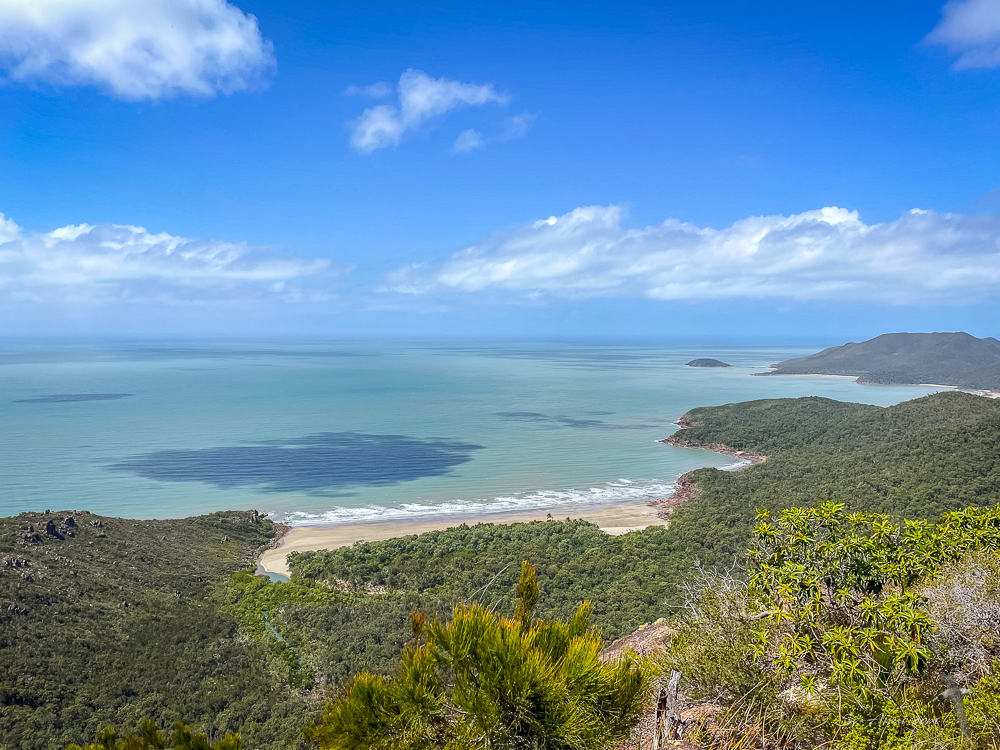
On our return we caught up with another catamaran, Andiamo, who came to visit after spotting us on AIS! We had met these guys in Bundaberg. They were on their way north for a serious adventure: sailing to Papua New Guinea and Indonesia. It was nice to catch up before they leave the country.
On Monday, our fourth day at Hinchinbrook, we left our mangrove creek and motored out of Missionary Bay, around to the Hinchinbrook Passage, bound for Gayundah Creek. The early morning light was gentle, the marbling in the water attractive and we waved goodbye to Andiamo who were on their way out too.


Gayundah Creek is one of the many creeks crisscrossing the mangrove forests on the edge of the Hinchinbrook Channel. It offers easy access to a protected anchorage with a superb backdrop.

It was a nice change of scenery, quite striking, but we were boat bound. However for one night it did not matter. With some calmer weather coming, we figured we would make our way towards the southern end of the Hinchinbrook Channel, ready for an exit from these spectacular but midge infested waterways. Chris counted over 50 bites on each leg… don’t wear shorts in the mangroves!
With the wind much lighter, every bit of the body covered, we got the drone out: once at low tide when we arrived, and again during the golden hour when the sun was setting and the tide was high.
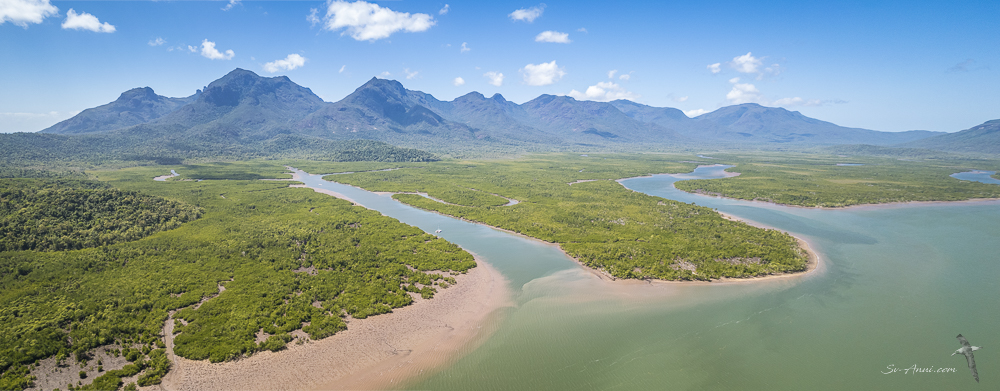

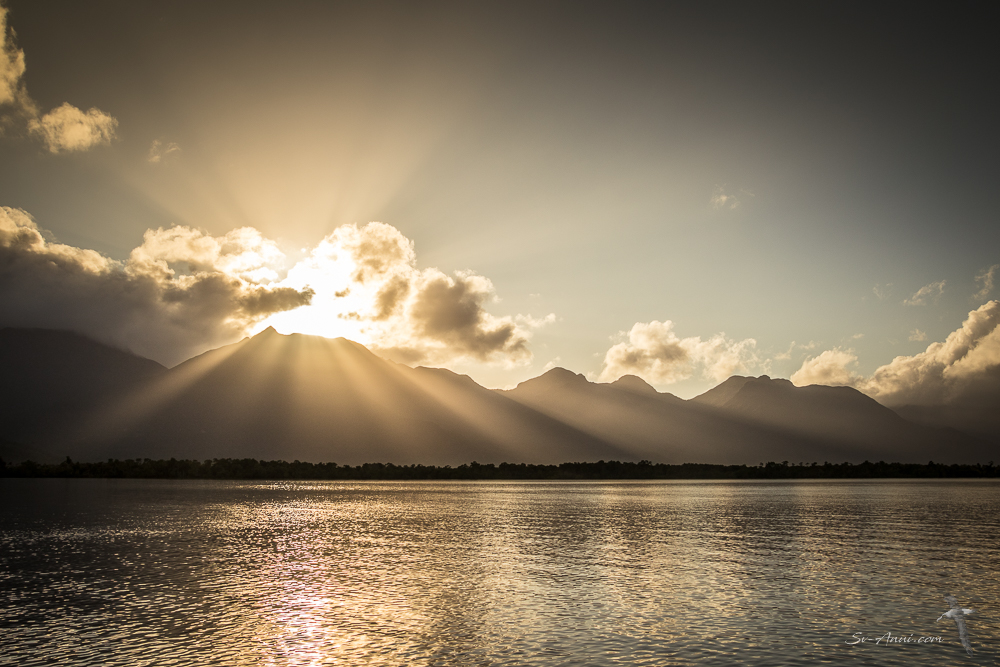
Tuesday, our fifth day, we made our way to Lucinda, at the southern end of the Hinchinbrook Channel and on the mainland side. It was cool at dawn and although we just motored, it was a scenic 2.5 hour passage.
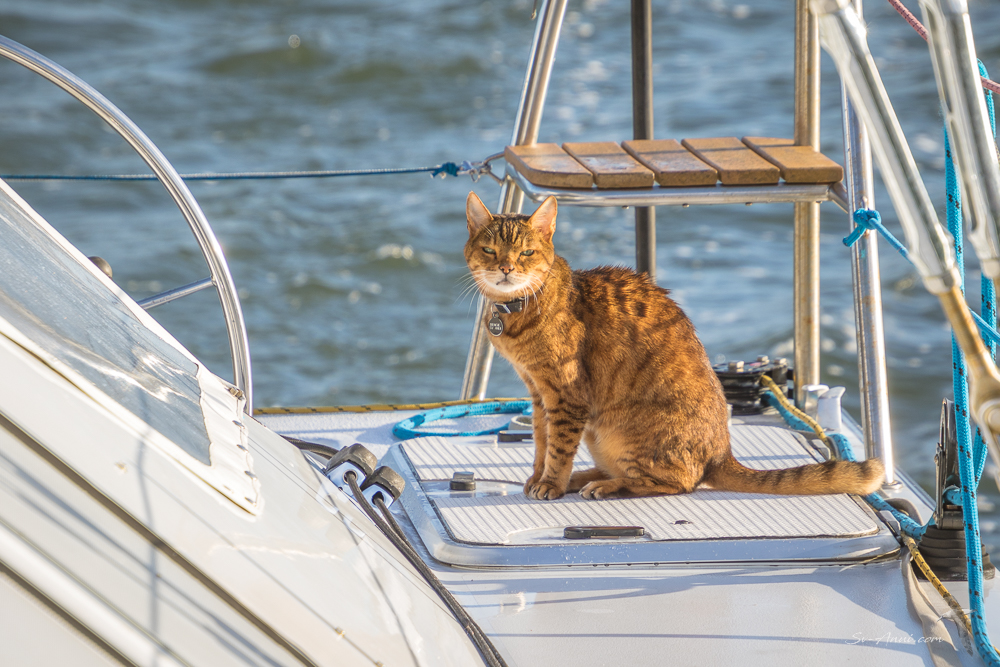
Even Bengie thought so, coming out on deck, sniffing the air.
The hamlet of Lucinda is a small sugar terminal settlement. It boasts a 5.76km long sugar loading jetty stretching far into the ocean, the longest in the Southern Hemisphere. We anchored just west of that.

What Lucinda lacks in charm, it makes up in friendliness. The local storekeeper produces very tasty lunches and sells a few essential supplies. We could not resist the fish and chips. We also got some fuel from nearby Dungeness, easily accessible via dinghy at high tide.


We left Lucinda first thing on Wednesday morning on high tide to get through the shallows and out east to the ocean, bound for the reef where we are meeting up with our friends Neville & Amanda on Bossa Nova.
We really enjoyed Hinchinbrook and would easily explore some more, as long as it is during blowy weather. Without the wind, the sandflies are just too ferocious!
And now we are back at the reef for a week of calm weather. We may well return to Hinchinbrook when the wind picks up again as we are not ready to head further north yet.


 Sv-Anui
Wow man, that island is a paradise, sans the flies! Beautiful! I’m glad that the dinghy didn’t sink, and it’s sad about the other dinghy. I’ve never seen a jetty that long, wow! Be safe, guys. 😎🇦🇺
Hi John, yes apart from the mozzies and sandflies, we were really impressed and being a national park only accessible by boat, few people visit it.
I guess the jetty at Lucinda has to be that long because of the extensive sand and mud flats.
Oh, okay, I thought it was that long because of the shallow draft boats that came for the product. Such a beautiful place!
How did the leg muscles cope with the extra work out Hinchinbrook? A much bigger and more challenging island than usual especially with the bitey creatures, big and luckily not seen and small and very active. Paradise!
Hi Ann, we are really glad we back tracked for a bit! It is a stunning place. Tough climb at Nina Peak… very sore thighs for a couple of days!
Glad you got to explore Hinchinbrook in a bit more detail. North Zoe creek is my favourite anchorage on the coast. Its where my ashes are going to be spread, when the time comes!
Yes, Zoe Bay is spectacular. The northern creek is too hard for Anui to get into but it would be a breeze with Asteroid!
Priceless naure both from far away and in your footsteps . . .
It was really special. Glad you liked it!
It was really special.
Gorgeous Island …. pity about the midges! It’s obvious you’ve left the fast pace city life behind you guys …. had time to count your midge bites! Looks like you’ve really enjoyed land-lubbering for a change ….
It really looks like a wonderful place except for the mozzies and the midges. I hope you will be careful when sailing off Cairns, you are likely to have your boat bitten by the sharks especially if you have a rubber hull, which you luckily do not.
Yes, we heard about that… unfortunate and another story that does not allay people’s fear of sharks!