With a promise of calm weather, we left Hinchinbrook Island and headed offshore. We have spent the most wonderful five days in company at a couple of new to us reefs: Kelso and Duncan. It was a once in a Blue Moon event in more ways than one!
Warning: This reef trip stands out as an outstanding week and consequently we have put together a longer post with numerous images. So make yourself comfortable and we hope you enjoy the virtual snorkels. Do click on individual photos in the galleries to see them in detail.
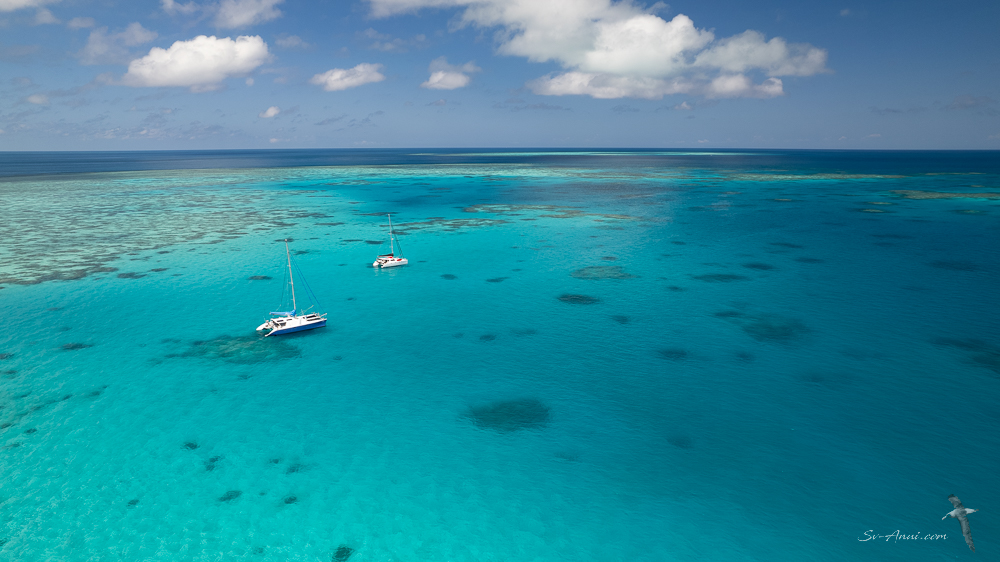
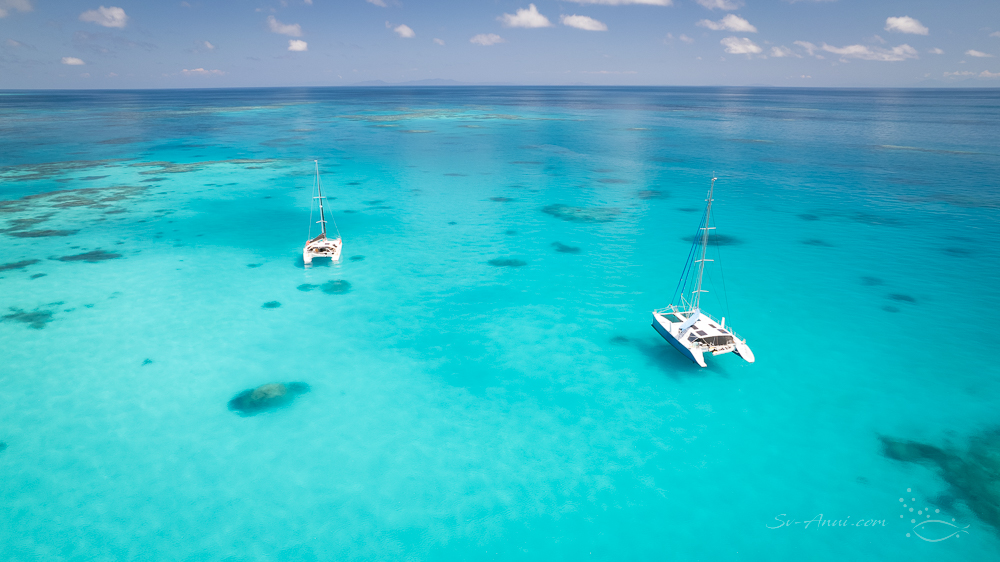
With all the reef hopping we do, it is getting harder to find spots we have not been to. There are many, many reefs along the Great Barrier Reef, but the ones that offer what we are looking for in a comfortable anchorage are not that numerous! We study the satellite maps for reefs which are horseshoe shaped, with a patch of aqua water less than 8m in depth over sand and with 100m of swing room clear of bommies… oh and not too stressful to meander our way in!
Kelso Reef

Kelso Reef, 35nm east of Lucinda, offered what we were looking for. It is a kind of horseshoe about 3nm in length, and there is a smaller reef with a sand cay 2nm south of it – Little Kelso. Both are in a green zone, so no take whatsoever.
The access into the shallows was interesting and different to anywhere we had been before. We arrived there at extra low water. It was the unusual time of a Super Blue Moon, causing extreme range in tides. A mosaic of long, skinny bommies were totally exposed, breaking the surface of the ocean. From the boat, we could see the coral was alive, we could see colour as we snaked our way through. It looked promising!
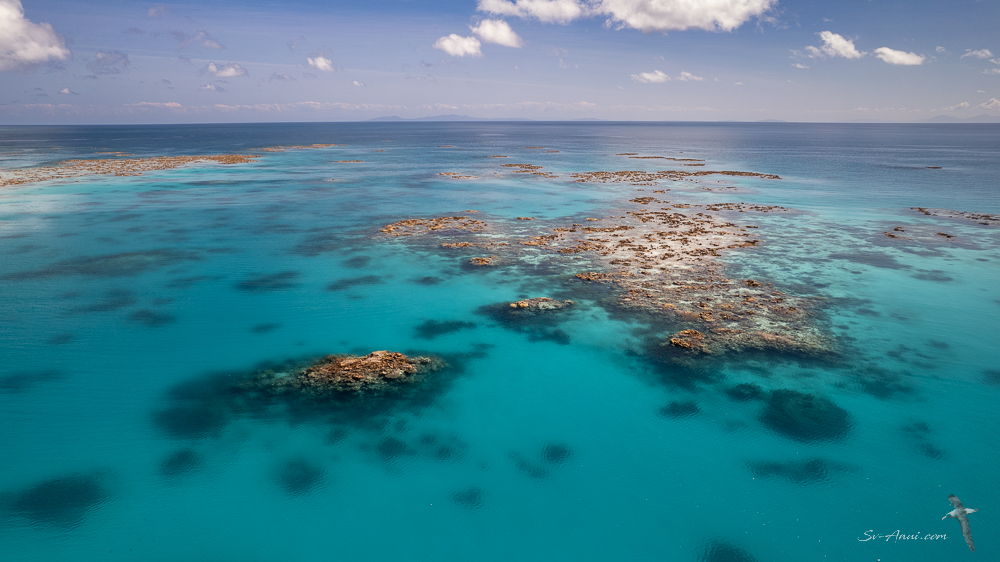
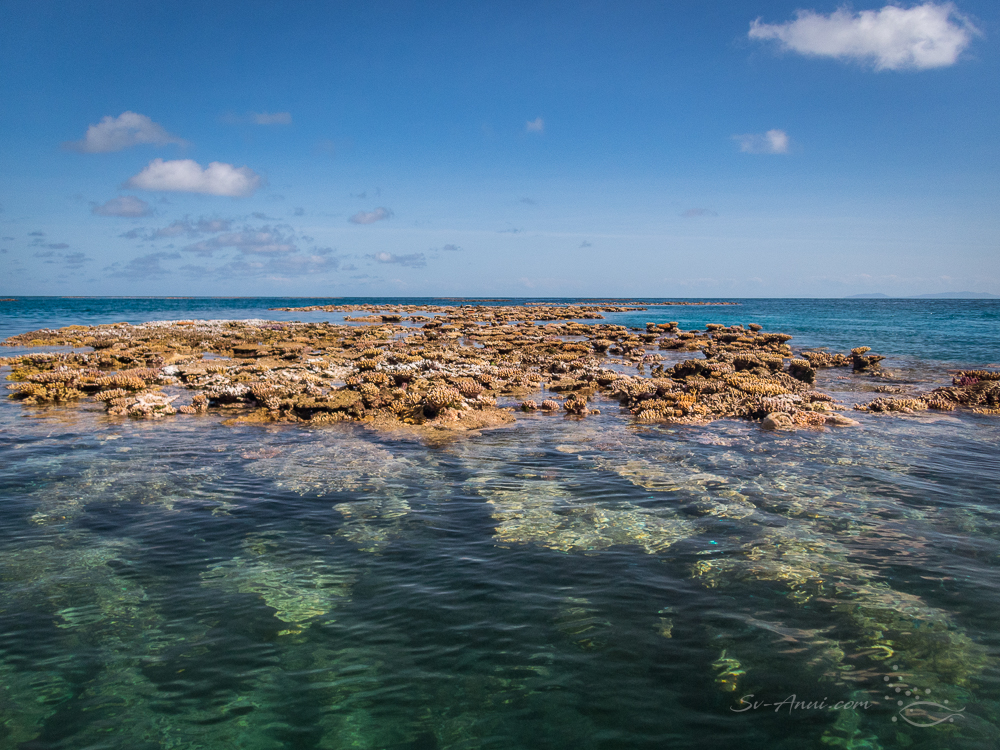
We checked the Australian Institute of Marine Science Reef Monitoring reports. As is often the case, it showed the coral cover was best on the exposed sides of the main reef. The Northern side had 30-50% cover, and the southern side 70-100% cover, a rare thing these days. You can guess where we went! The monitoring reports are a useful tool to increase your chances of seeing the best there is at those reefs which are surveyed regularly. We were hopeful Kelso would be an attractive site and it was… one of the best!
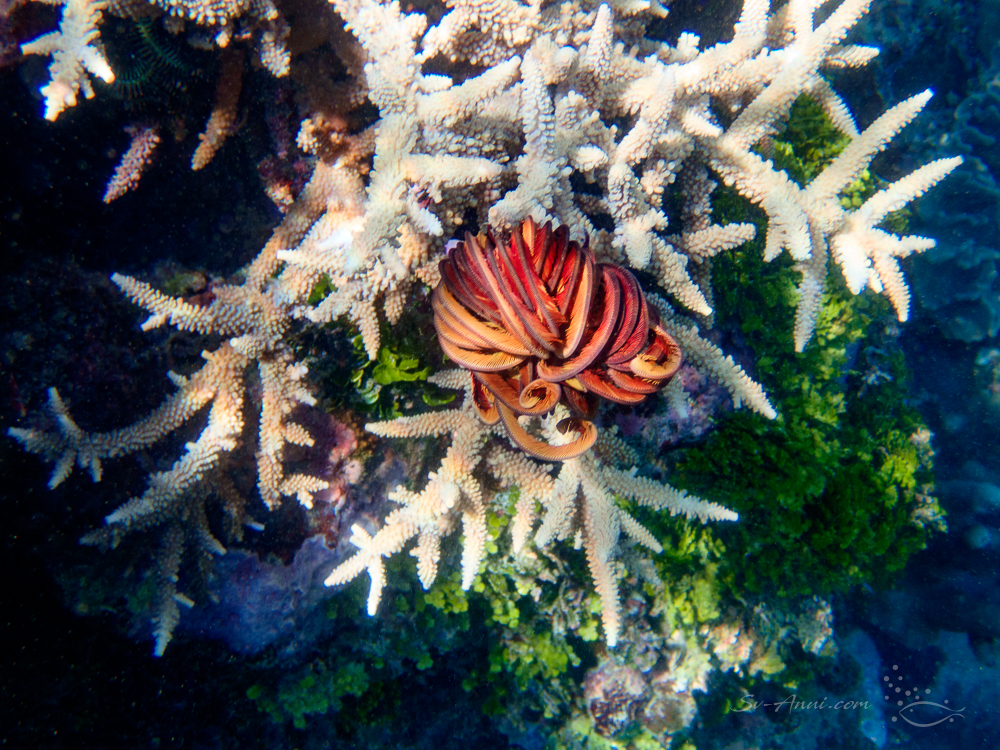
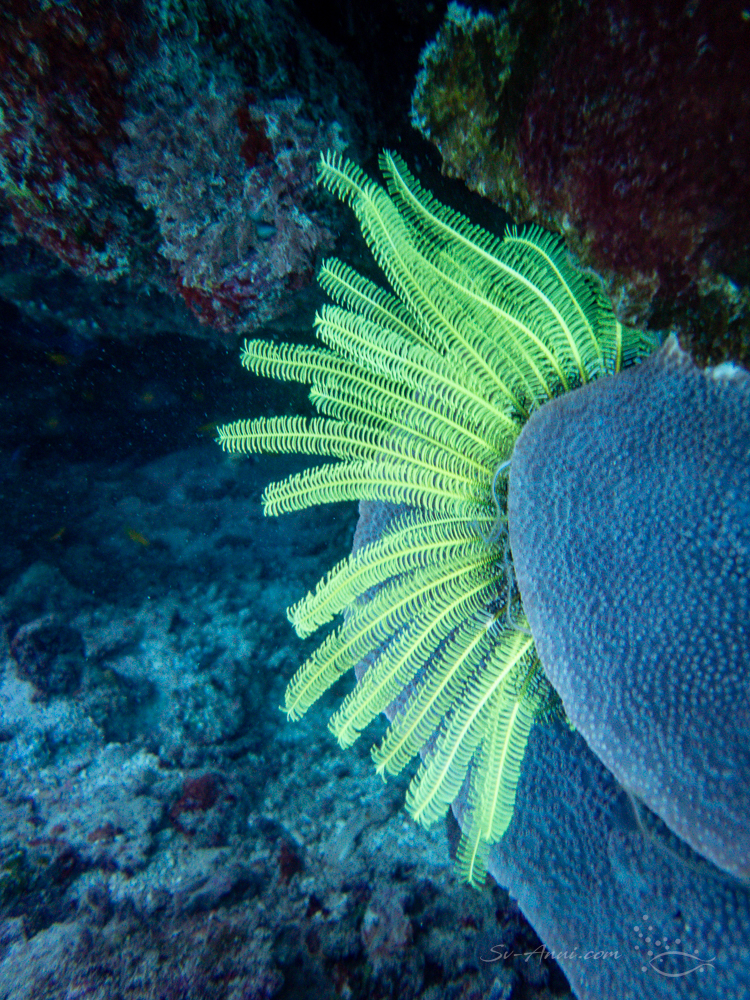
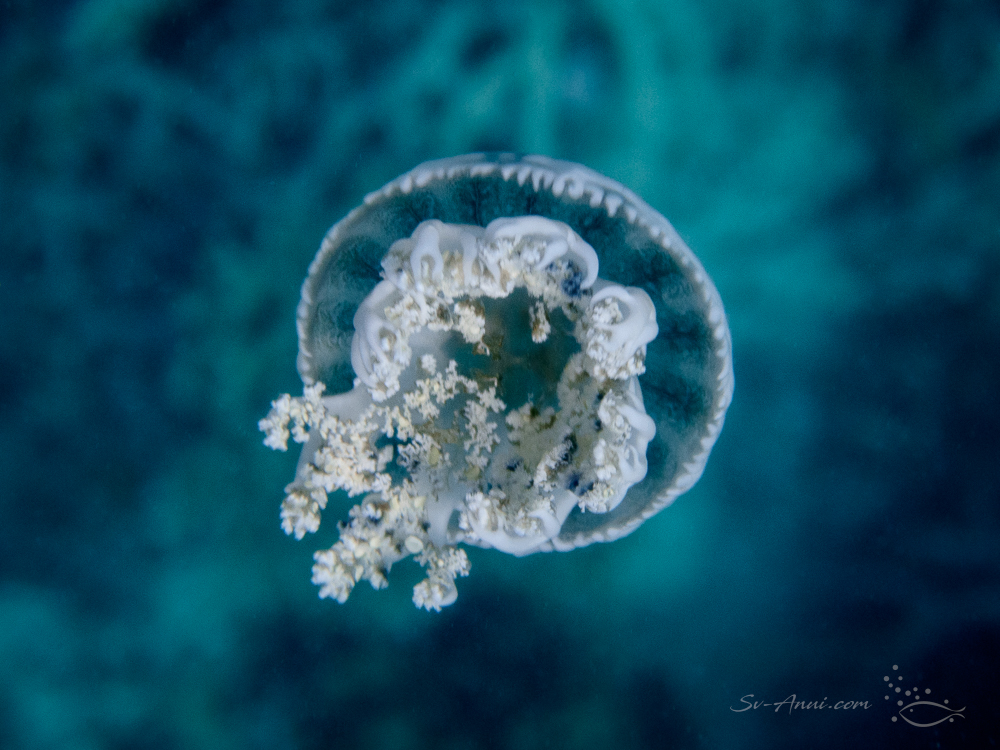
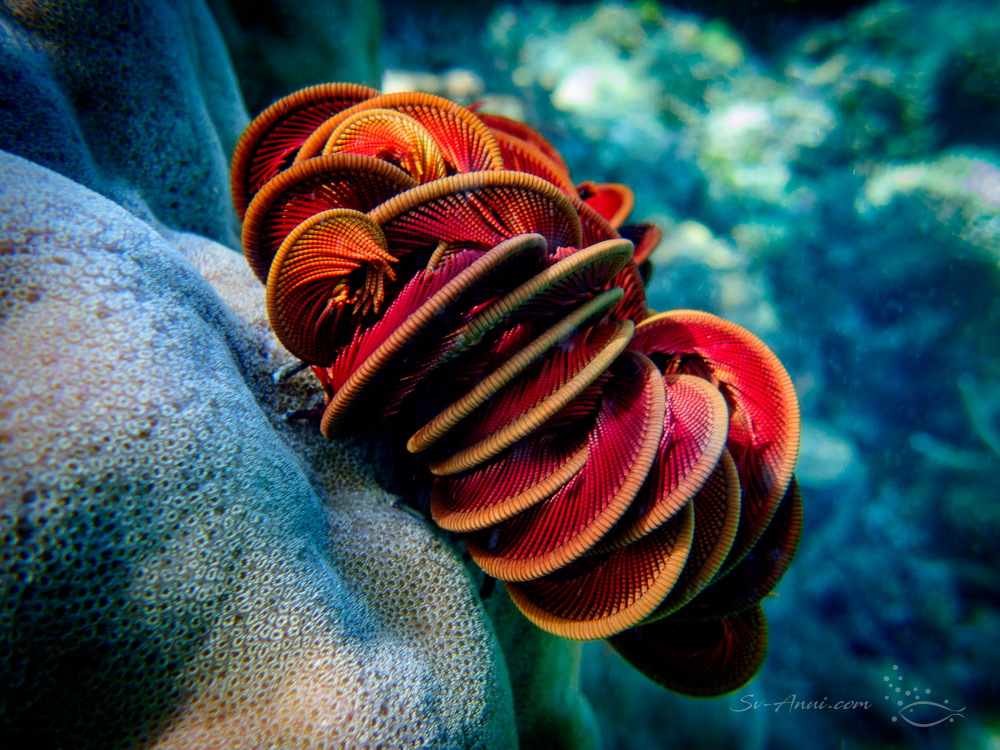
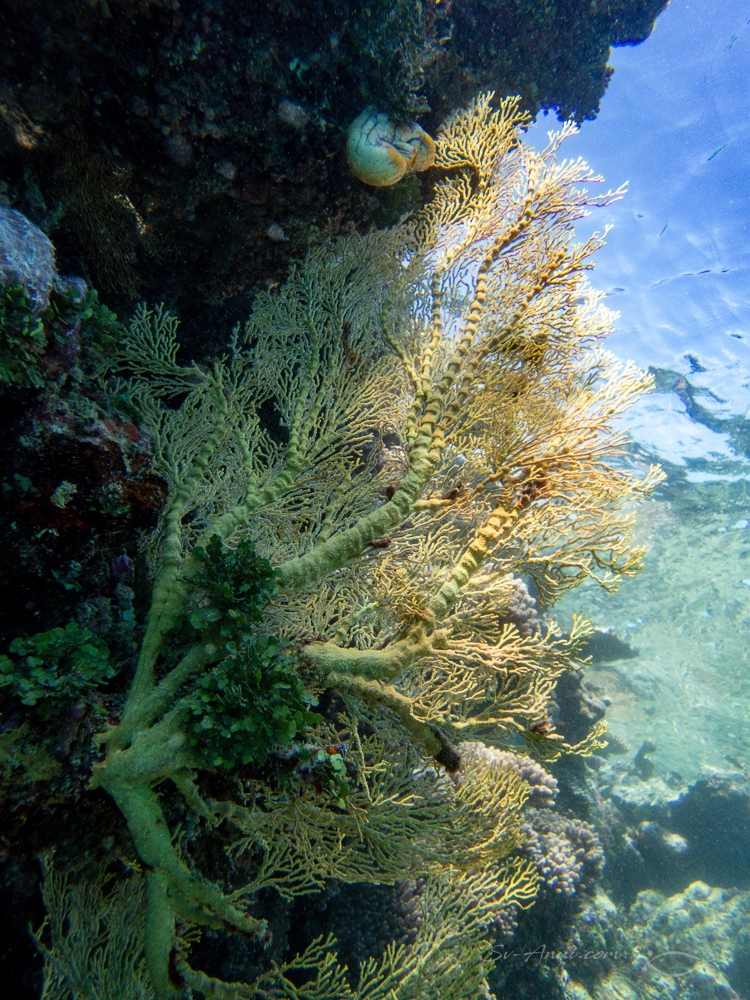
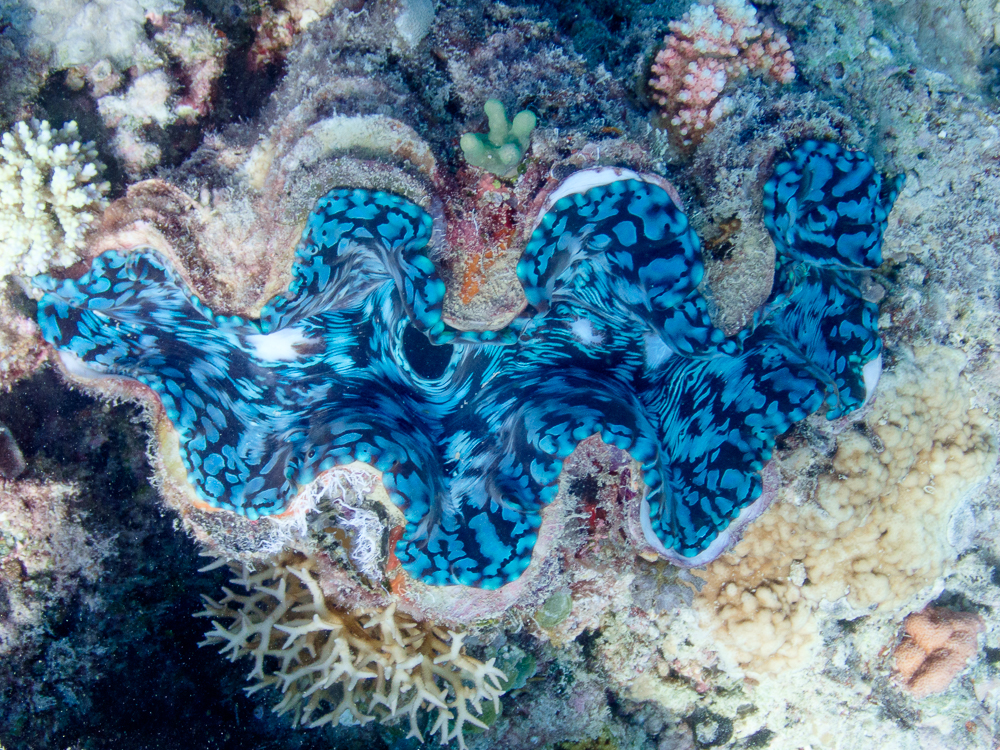
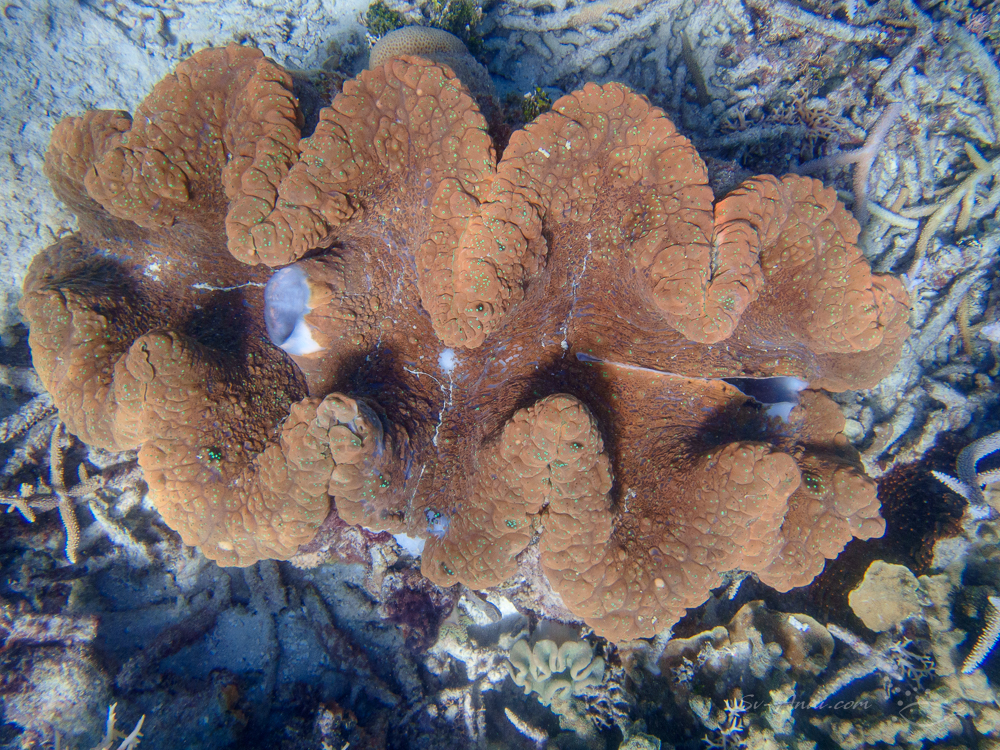
Our first snorkel was just off the bommies we came through at the southern end. Although the visibility was not ideal for wide angle photography with lots of backscatter, the marine life was great for close ups of beautiful critters. We saw a variety of filter feeders like the crinoids, tunicates, gorgonians, giant clams. There were clouds of pullers, even a little jellyfish pulsating its way down, all with a backdrop of colourful plate and branching coral. Being in a green zone, Wade could not spear so was taking photos too. All the galleries we are showing include both our images!



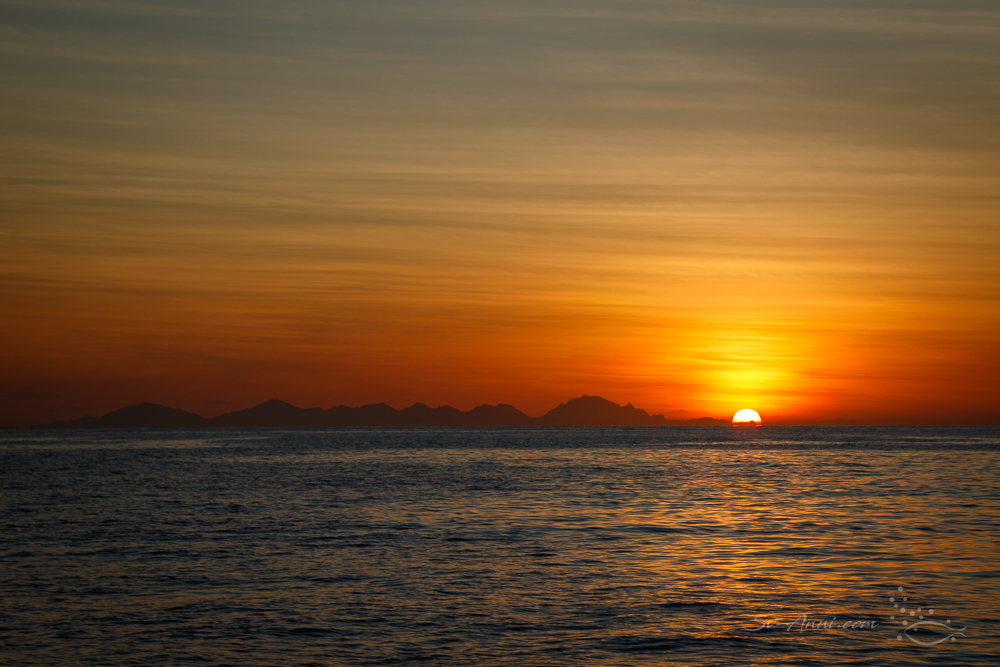
For our last day of winter we were blessed with a stunning sunset over Hinchinbrook Island and the Full Moon sparkling on the water as it rose.

Our friends Neville and Amanda on Bossa Nova joined us on the second day.
They had caught a beautiful Spanish Mackerel underway, had bought several kilos of prawns from a trawler to share, some fresh vegies for us… we were very excited by the prospect of having company, sharing a few feasts, and the girls were looking forward to indulging their underwater photography passion.
Our second dive was off the southern end of the reef on the exposed side, and we were very happy with our finds. So many interesting critters and seascapes in glassy water. So much so that we decided to stay for another day and explore further.
We overdosed on giant clams, spotting both the Maxima and Giga species, the biggest bi-valve molluscs with shells over a meter long and weighing about 250 kilograms. The beautiful crinoids with their feather-like arms were also a hot favourite.


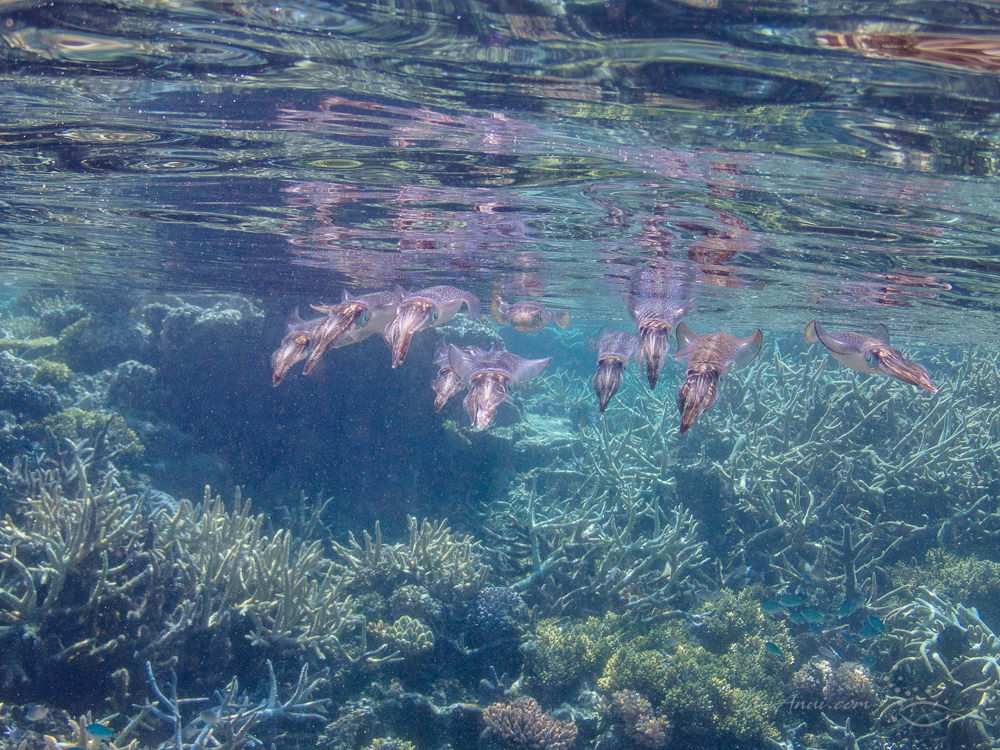
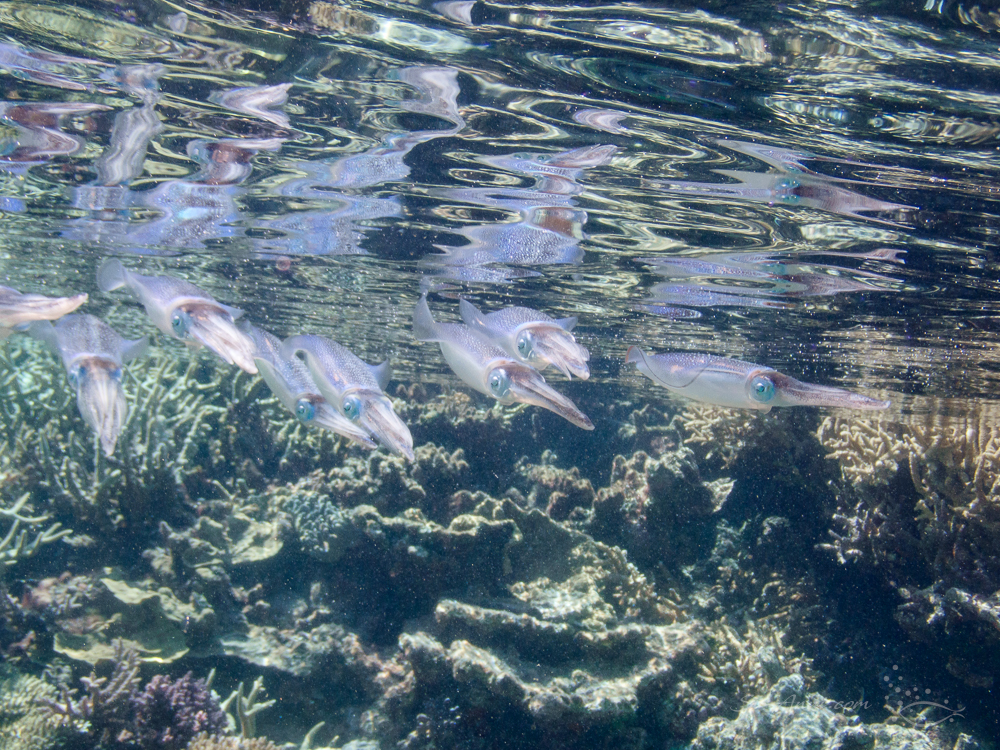
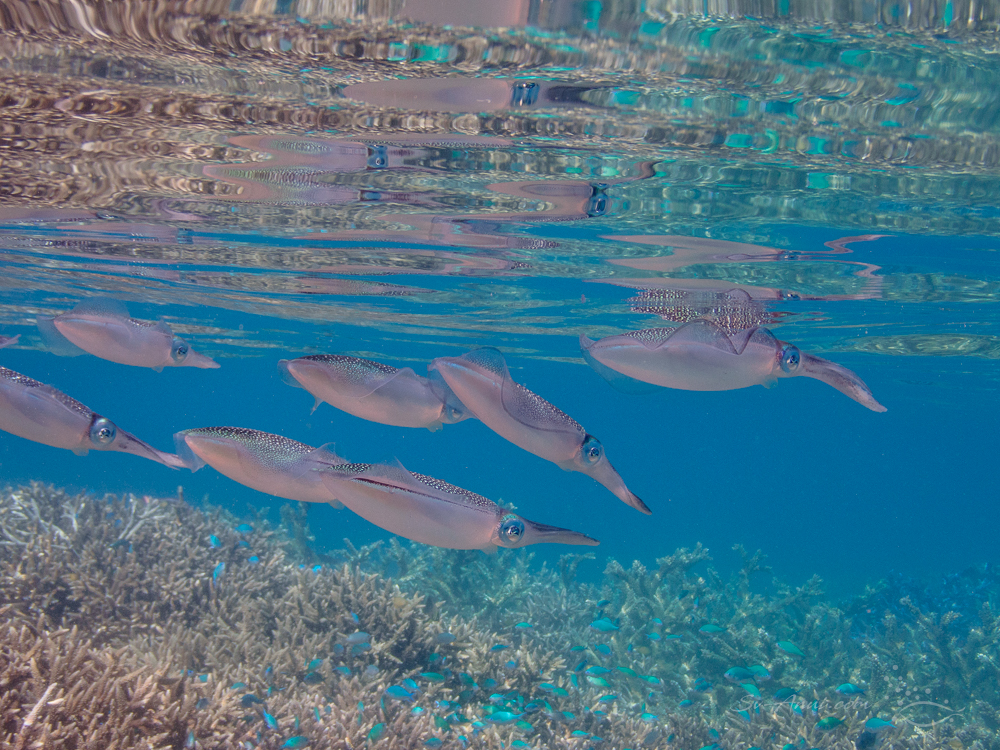
An inquisitive squad of squids – try and say that quickly – was great fun to photograph with their spotty mauve bodies reflected on the calm water surface. You wanted to get close; not so close they’d ink you, but near enough to see their big eyes, tentacles and colours.
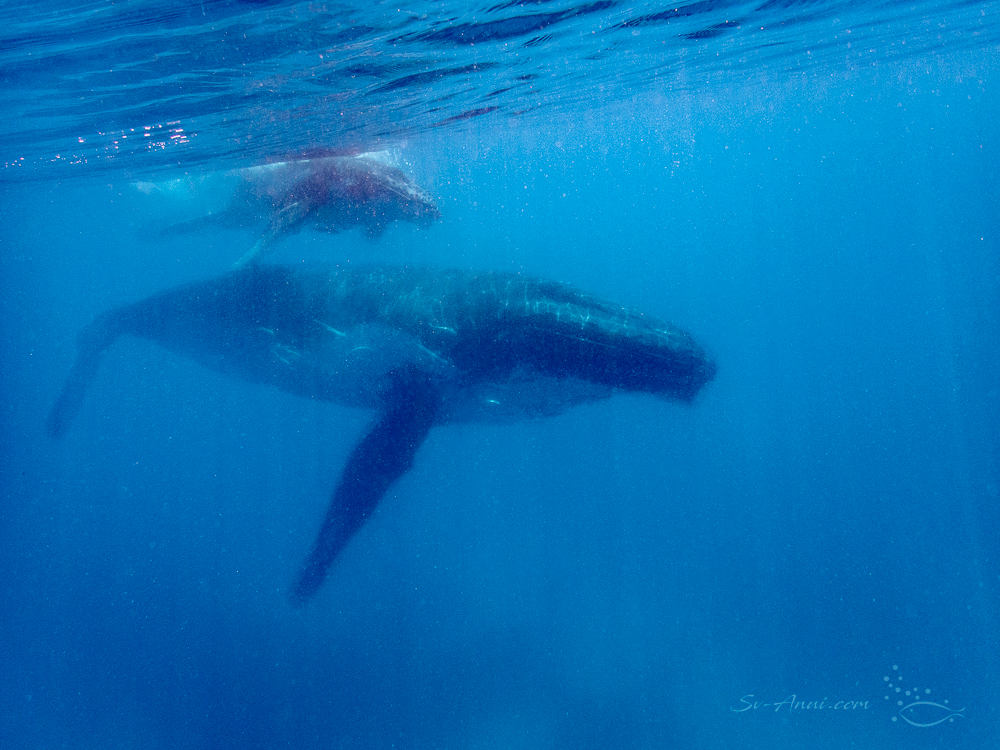
Our third dive was further along the exposed side of the reef but different again and rather eventful! A humpback whale and her calf were lulling about as we were heading to our snorkeling spot. We stopped the dinghy, switched off the engine and watched. The two were just resting. We glanced at each other and without a word both put our fins and mask on and gently lowered ourselves in the water, not making a wave nor a sound. A group of remoras immediately swam from the mum and baby to us. Then the pair slowly drifted towards us, so close we were back paddling to stay at a safe distance.
The photos are not great as the water clarity there was poor, but the excitement and wonder of seeing them so close and so trusting was hard to beat. We were granted nature’s most awe-inspiring experience: we swam with whales!

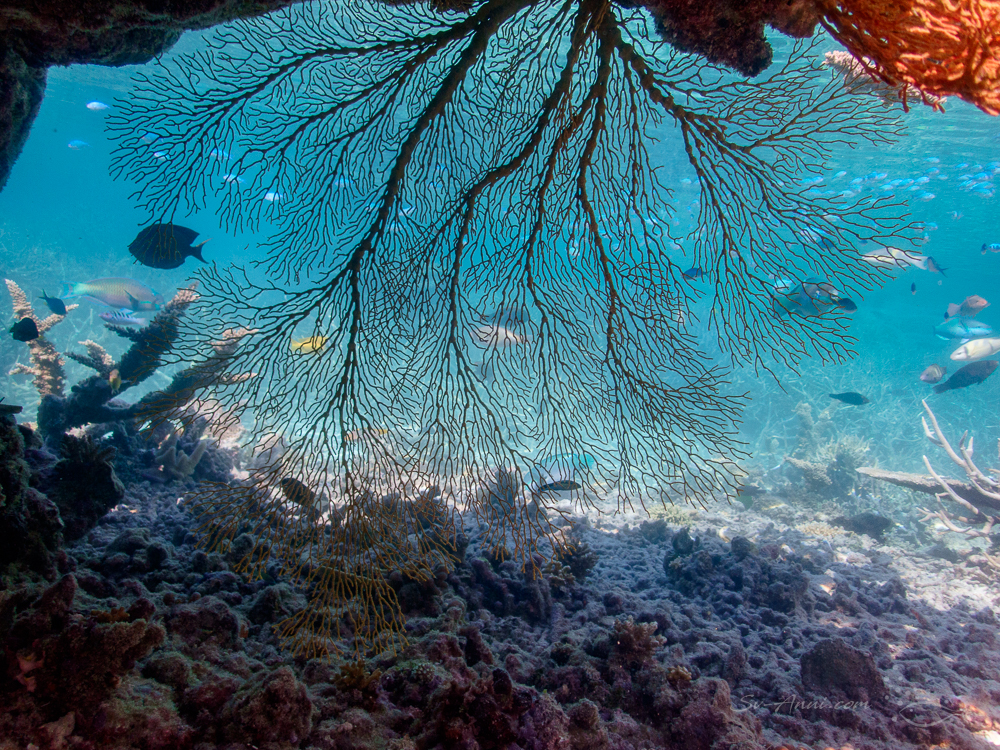
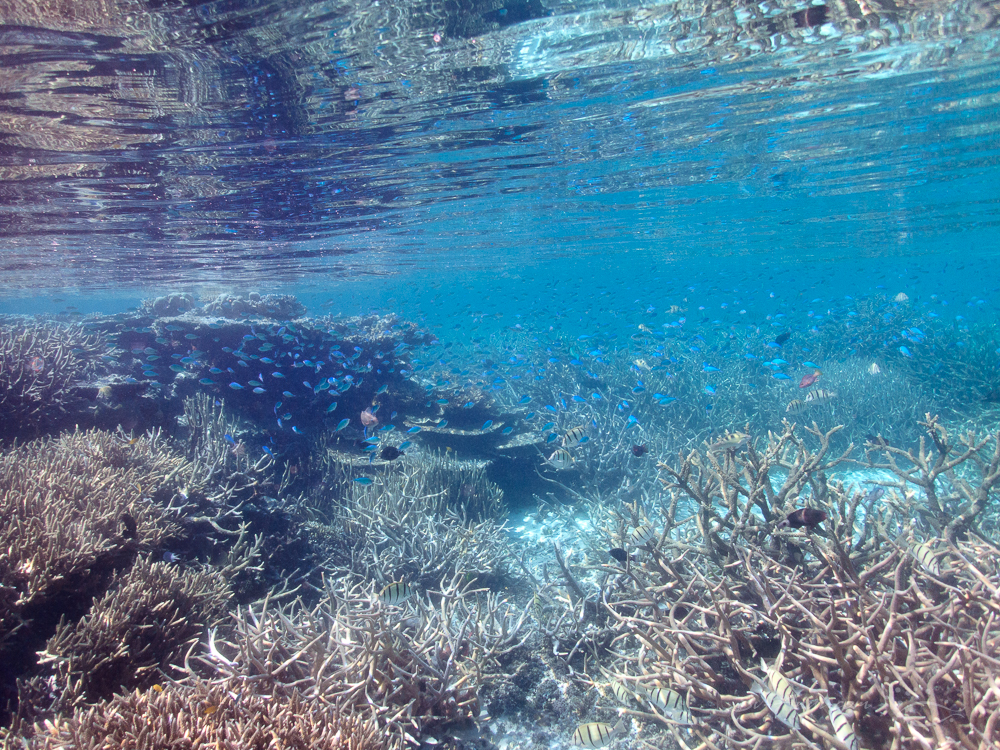
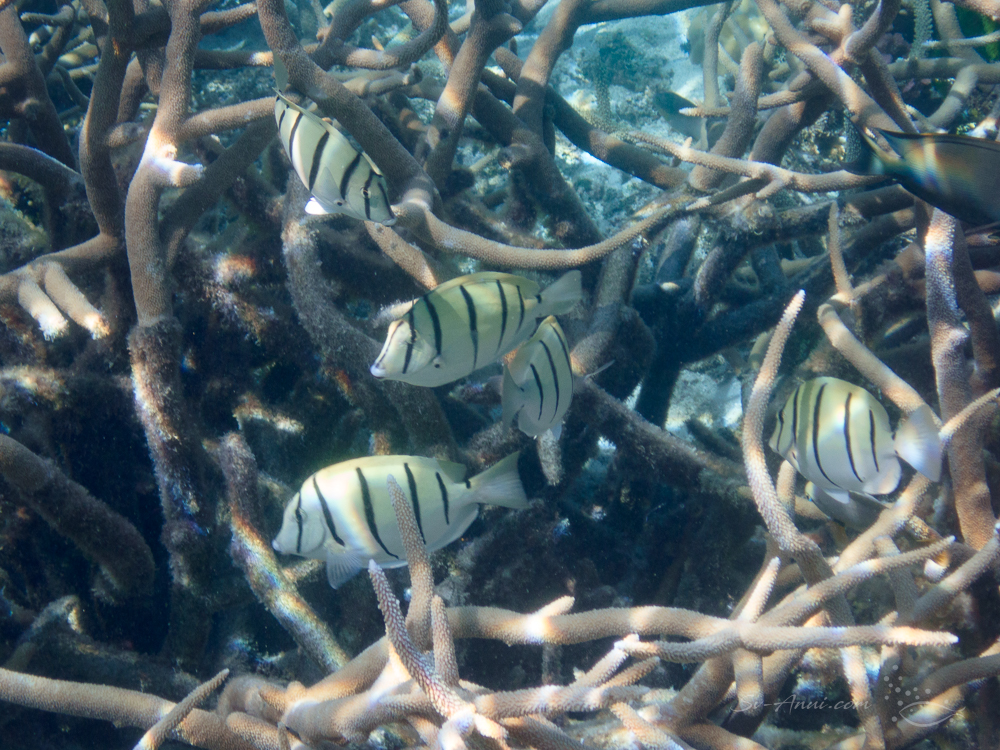
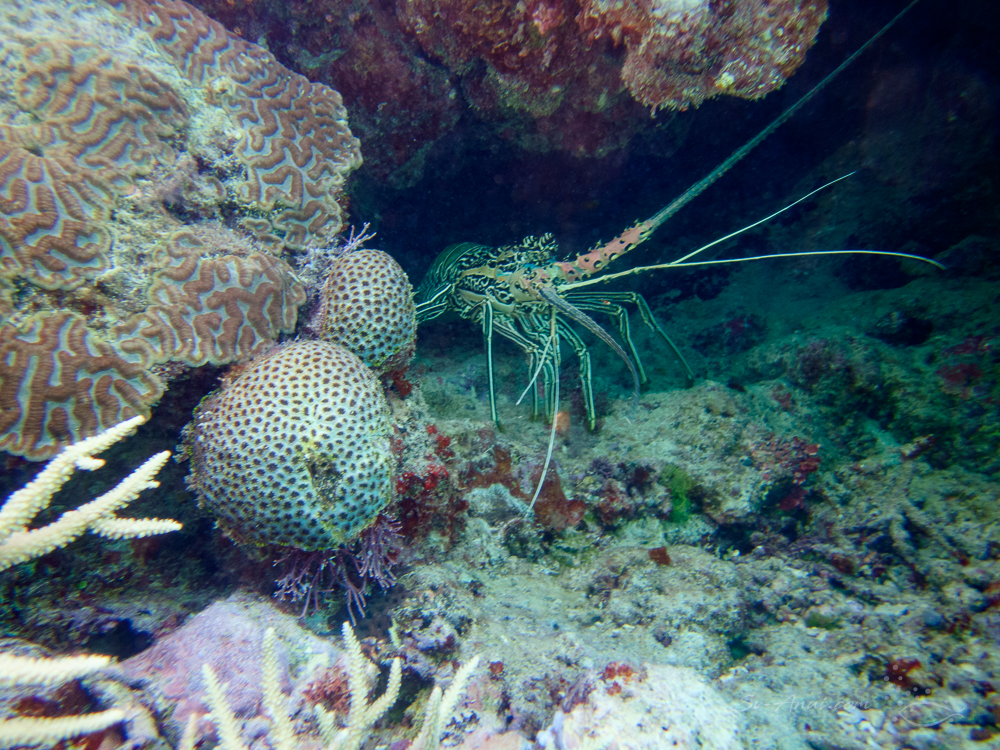
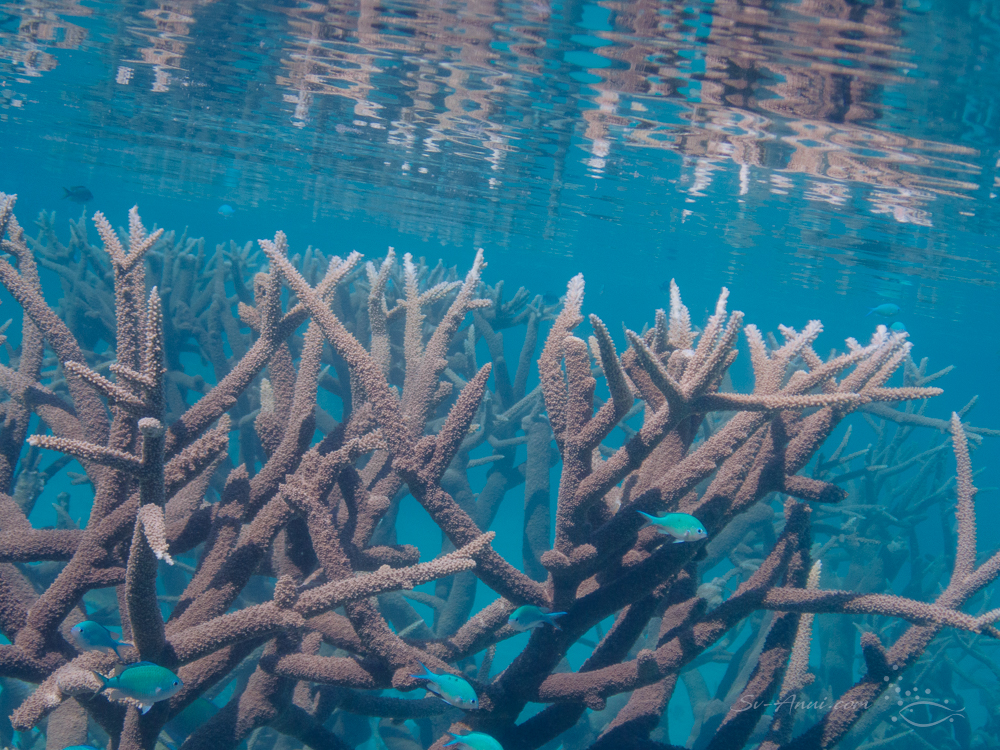
With the water a little cloudy for our snorkel, we chose to stay in the shallows where it was clearer. We found large plate corals and porites, thickets of Acropora and Montipora frequented by lots of small fish. We saw beautiful Gorgonians under ledges and in crevices, even a little family of blackback anemonefish. The area showed signs of storm damage in places, but the coral was in strong recovery mode, and the fish life abundant. Here is a selection of images showing the underwater seascape and its dwellers.




Duncan Reef
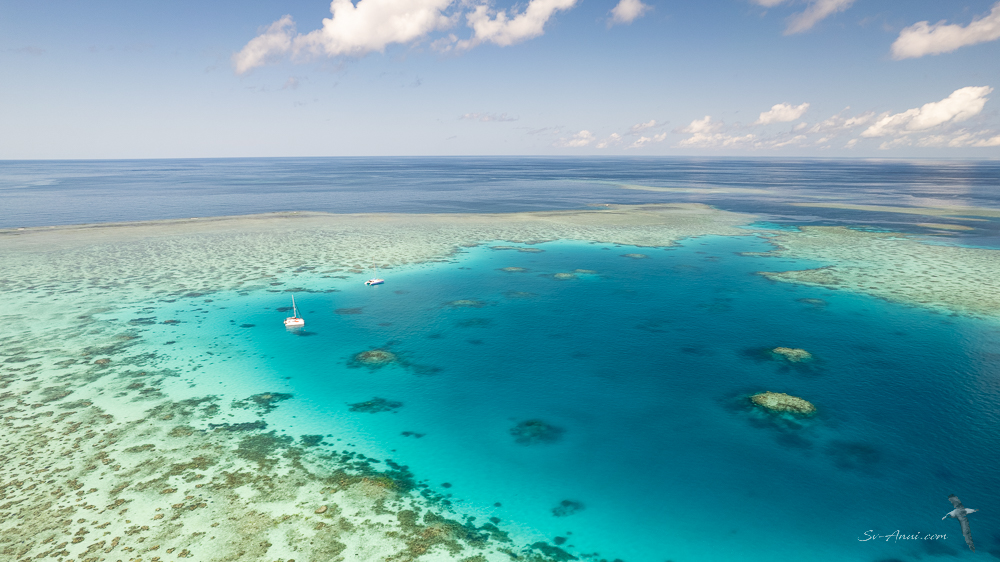
Thirty nautical miles further north was another reef we had not been to, also in a green zone. Duncan is horseshoe shaped, with a kind of hook at either side of the entrance to a deep lagoon. Its shape meant we would get protection from just about any wind direction, and particularly from the forecast northerlies.

It took us a while to find an anchoring spot we were comfortable with, dropping the pick only to lift it up again because there was always one or two bommies lurking too close! On the third attempt we settled on a spot a little deeper than we would have like, in 11 meters of water. Bossa Nova also had trouble finding their possie. But with totally calm conditions, we figured we would both be okay.
We had a quick snorkel at the entrance, the most promising area inside the lagoon other than the outside wall. The visibility was not great, but the coral was reasonable. Having been spoilt at Kelso, this first snorkel inside Duncan Reef did not wow us.
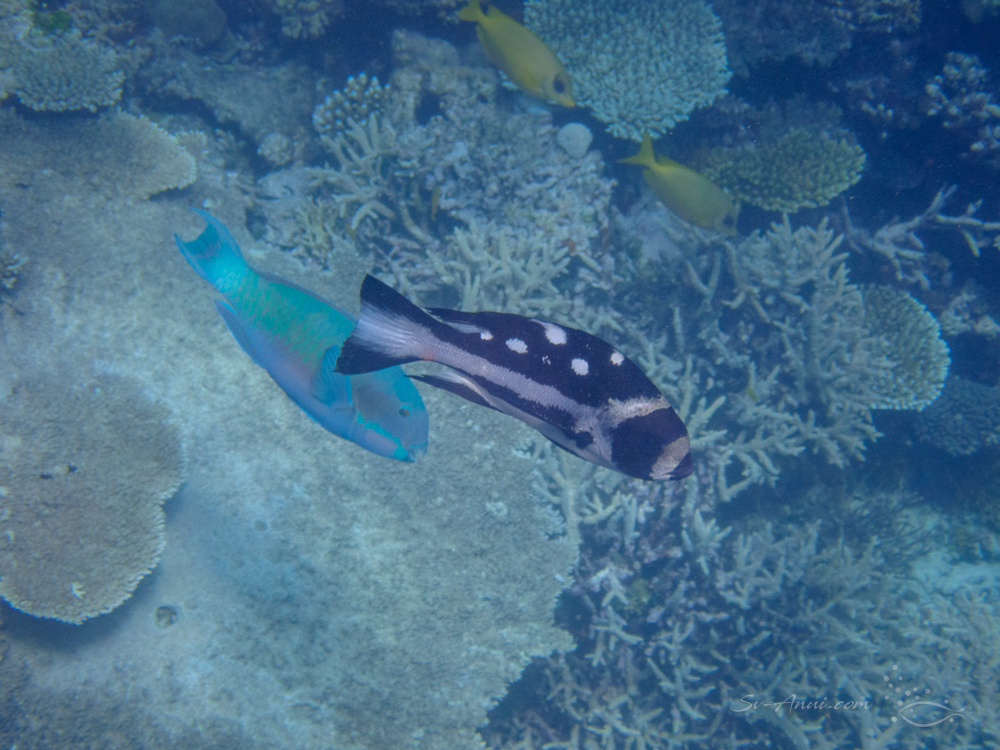
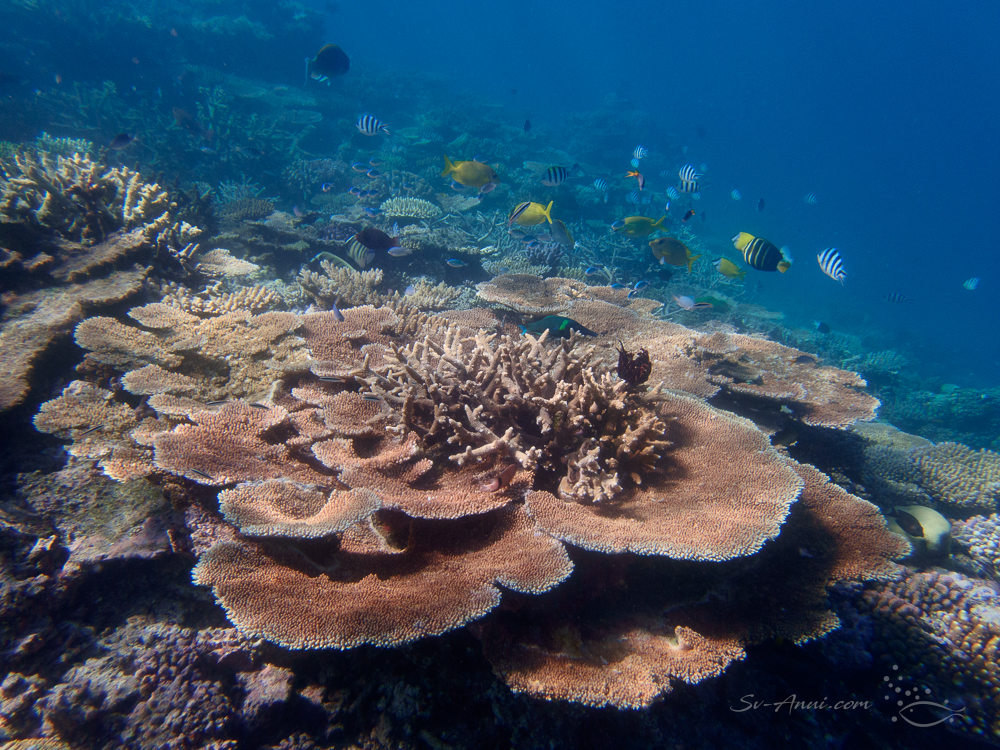
The next day we dinghied out of the lagoon. The outer wall was not very good so we went further out to snorkel the isolated bommies on the outside of Duncan Reef. The first attempt was short as Wade spotted a rather large shark, not your usual friendly reef shark. So we were all out of the water quick smart. But then we found another very large pinnacle a long way out, which was in excellent condition, with great coral life even over its top, plenty of colour and an abundance of fish. We put our fear of large sharks aside and did a full lap along its edge. We are so glad we persevered. Here is what we found most attractive:





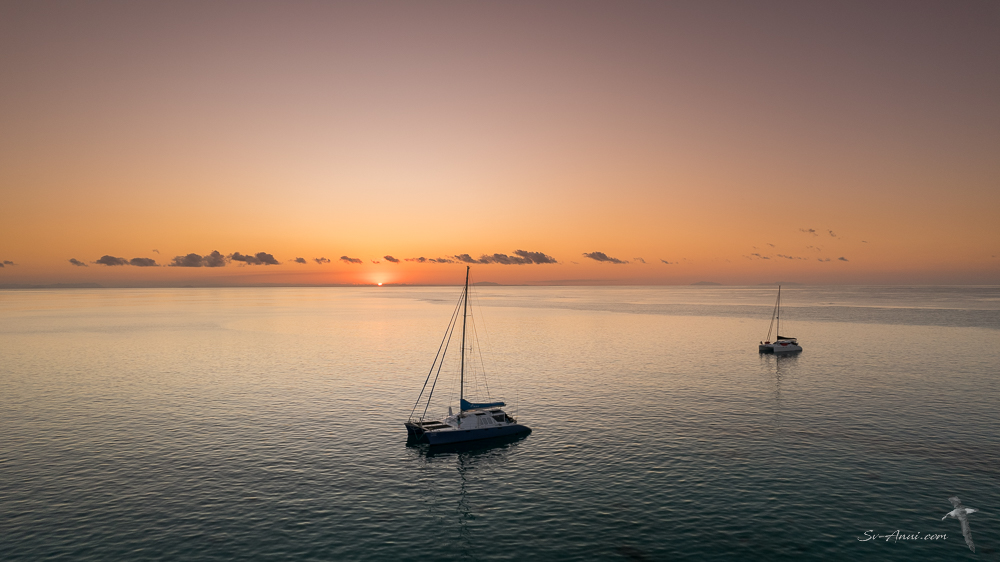
The day ended with a stunning glass out at sunset. No creaks and groans of the boat, no water slapping, not a breath of wind. It was quiet, still, blissful.
Although we visited one more reef together, familiar Walker Reef, our time at Kelso and Duncan Reefs with our friends was an absolute highlight. Shared adventures and discoveries are so enjoyable! After a week we parted company with Bossa Nova who had family commitments further south.
The calm conditions lasted for several more days and Anui continued to reef and island hop slowly northward… a tale for another post!


 Sv-Anui
I think all I can say to that is WOW!
Two very spectacular spots!
Amazingly beautiful!!!!
Hi Lindy, yes spectacular, healthy… a highlight.
No words for this! Just spectacular Chris & Wade.
Yes, two of the best!
How fantastic to see such colour and variety and then throw in a swim with whales-super special.
Hi Ann, we have had a fantastic time, so glad we were there for the calm and super moon period! Now heading back to Cairns in the rain!
An immense thank you for sharing – for taking us along . . . Besides all else I think we all need some beauty in our lives at the moment . . . These photos are unreal . . . 1
Thanks for the feedback, Eha… always nice to get your reactions. I thought I had included too many photos, but maybe not. It is really hard to be selective when you are overwhelmed with beauty, colour and variety!
Oh my gosh, just WOW! The life down there is otherworldly to me, both beautiful and scary! I wouldn’t have the guts to go down there. Thank you for sharing this beauty, guys! ❤️🇦🇺
Hi John, we on the other hand, can’t get enough of this underwater world! Glad you enjoyed the photos.
I noticed and I appreciate your photographic skills! 🥰
Great post Chris. We shared a lovely week out there. Kelso and Duncan were the pick, especially Kelso. Enjoy your next adventures further north. Let’s hope this upcoming weather pattern doesn’t last too long. We are back in Airlie. My blog post is next!
Thanks Amanda, privileged times together. We are on our way to Fitzroy Is then Cairns next week. Lots to do and big clean up…
PS. Forgot to say … a clever title!
Wow and double wow! looks like you’ve captured a whole bunch of alien life forms! So much beauty! Go team! {You might want to check on the collective noun for squid 😉 }
Hiya Elgar… there was lots to see! Two options re the collective noun for squid: a shoal or a squad… we like squad better!
I reckon you might want to make up a collective noun for a group of cruising catamarans ….. what about ‘flotillette’ , ‘breeeze’ or ‘bevy’? The potential is endless!
A Glaring is what we used when we had 3 travelling together, a collective noun for cats. We liked that name because glaring is what we did when some other boat appeared!
As you know we are not big on large groups; we like it better we just two… so what can you come up with for a pair of cats?
Immediate thought is a ‘purr’ of cats ….. kind of like the play on words (pair of cats?) I can see how a ‘glaring’ works, we do that when people want to set their tent up next to ours in a half empty camping ground.
Purr is perfect! Yes exactly the same with anchoring…
I loved the colours in this post – so different. both the coral and the fish. it was a good find for you all to enjoy. Glad you were watching our for those bities. Great to swim with the whales as well.
Hi Sue, yes that week was such a highlight: great company, healthy, varied and colourful reefs, no stress.