Another voyage successfully completed: our 3 months adventure in Tasmanian Waters is over! We are on our way back to Queensland.
Woohoo, we have looped the loop! We were gone for thirteen weeks, the whole time around latitude 40o South, enjoying diverse weather conditions, striking scenery and covering approximately 1400 nautical miles, or about 2600kms.
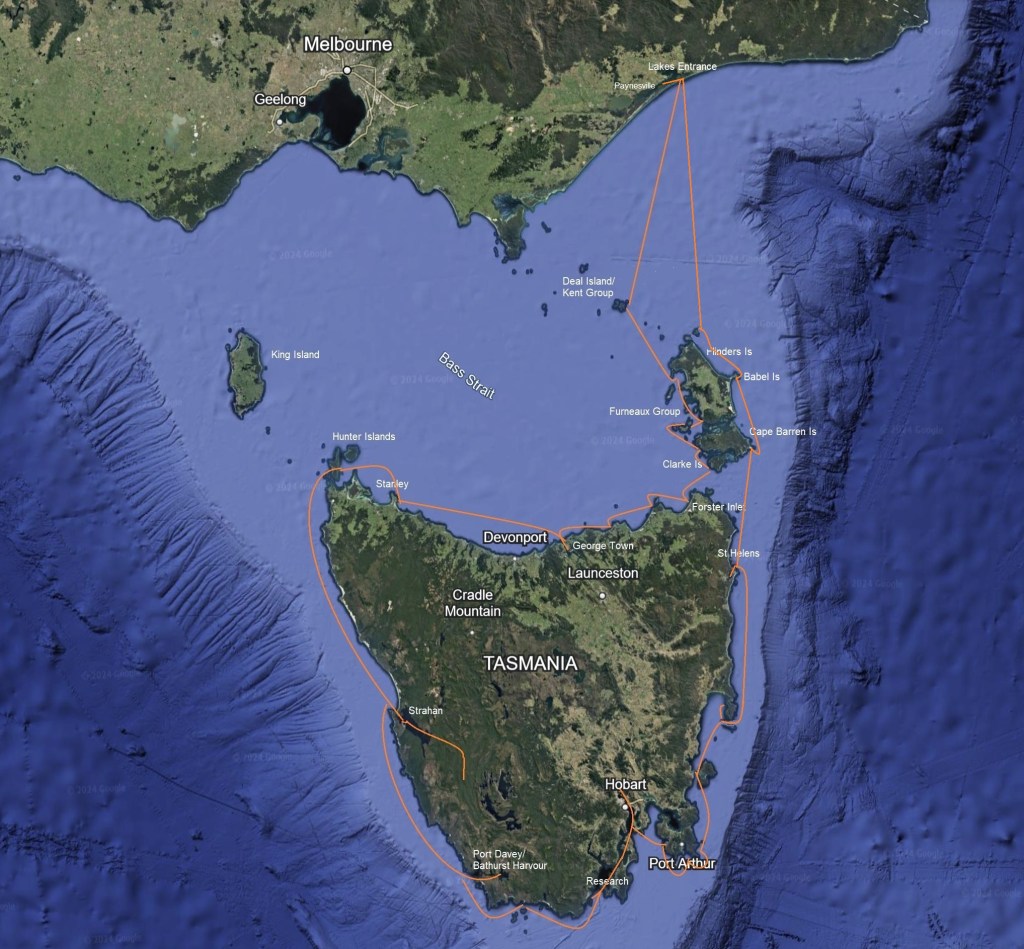
We did find Tasmania a lot more crowded than it used to be when these were our cruising grounds. Ten to twenty years ago it had not been ‘discovered’ yet! The growth of tourism and yachting is very noticeable. The advent of satellite communication has also made explorations much, much easier, regardless of your level of experience. But we will be back again because these waters are different, varied and photogenic!
But let’s look back at this last week.
Last Tasmanian anchorage: Outer Sister Island
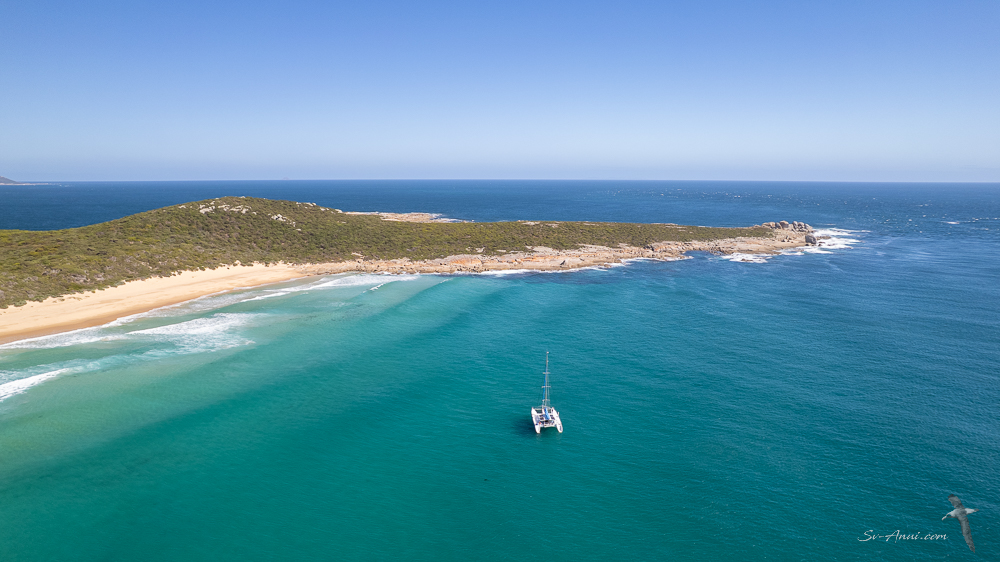
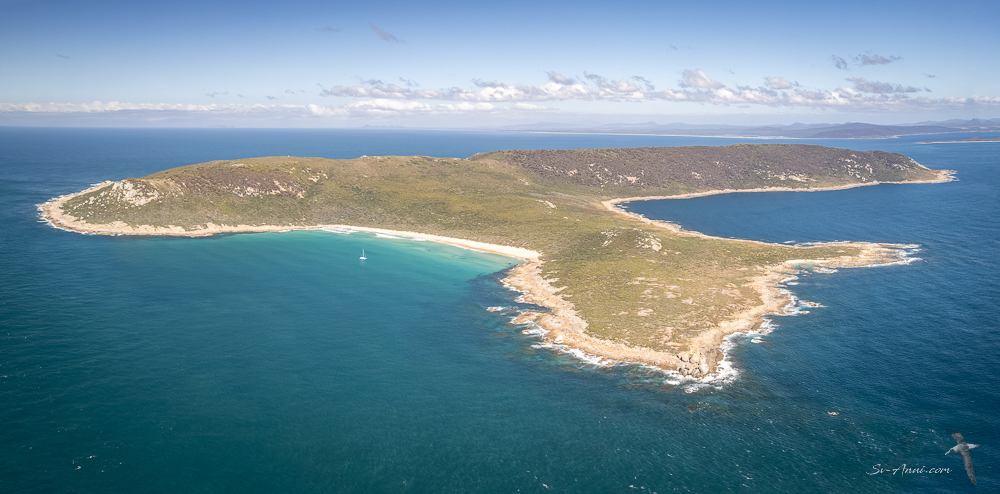
At the very northern tip of Flinders Island are two small isles called The Sisters – the Inner and Outer Sister. Our last Tasmanian stop was at the Outer Sister.
You do feel quite exposed on this granite and dolerite island on the edge of Bass Strait. Our anchorage was on the eastern side, giving protection from the SW winds, but it was not free from swell. In fact the waves were rolling in and feathering, not suitable for a dinghy trip ashore – welcome to ocean anchorages! When we think back to previous visits, the Sisters never offered totally calm conditions, just a welcome stop before or after an overnighter!


Bass Strait Crossing
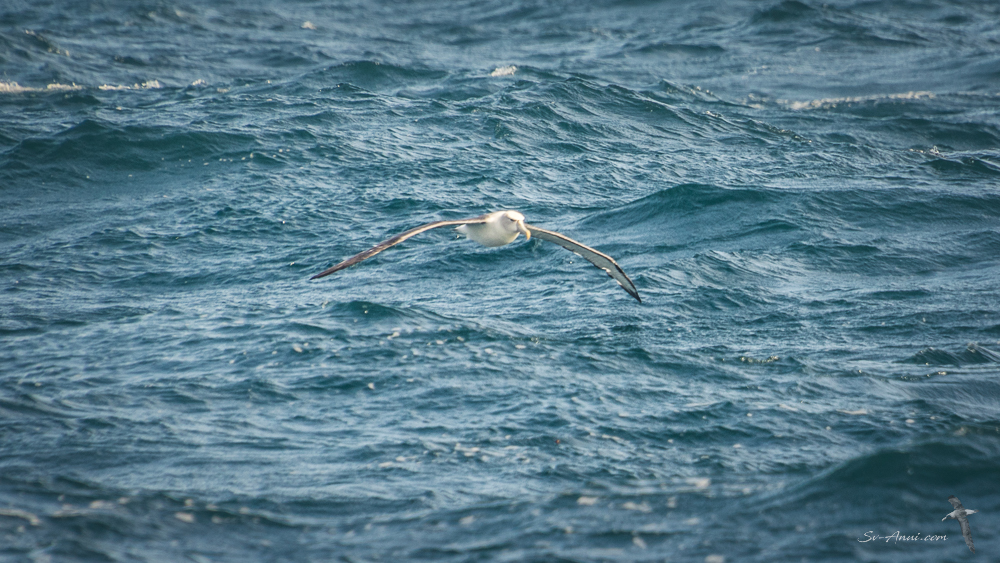
We started our last passage for the entire voyage in the early afternoon on Saturday to reach our Gippsland Lakes destination in good time for the bar crossing. As soon as we upped anchor at the Outer Sister, it was ON: 20-25knot wind, 2m swell on the beam. We had two reefs in the main, a rolled up jib, were averaging 9 or 10 knots speed and it was boisterous – which also means lots of albatrosses about! Unfortunately this is the only photo we managed, such were the conditions in daylight. By the time it calmed down enough not to get a drenched camera, it was dark!
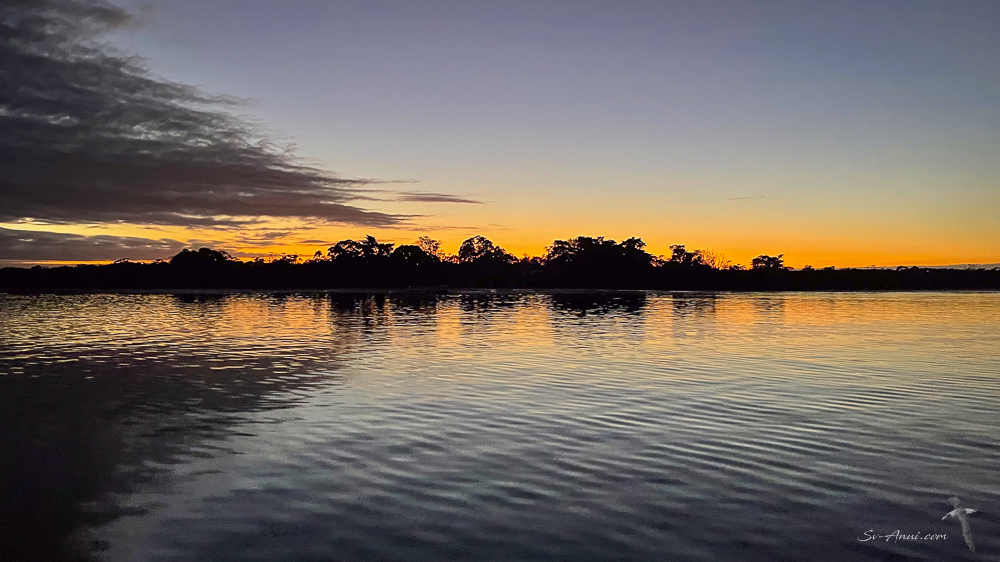
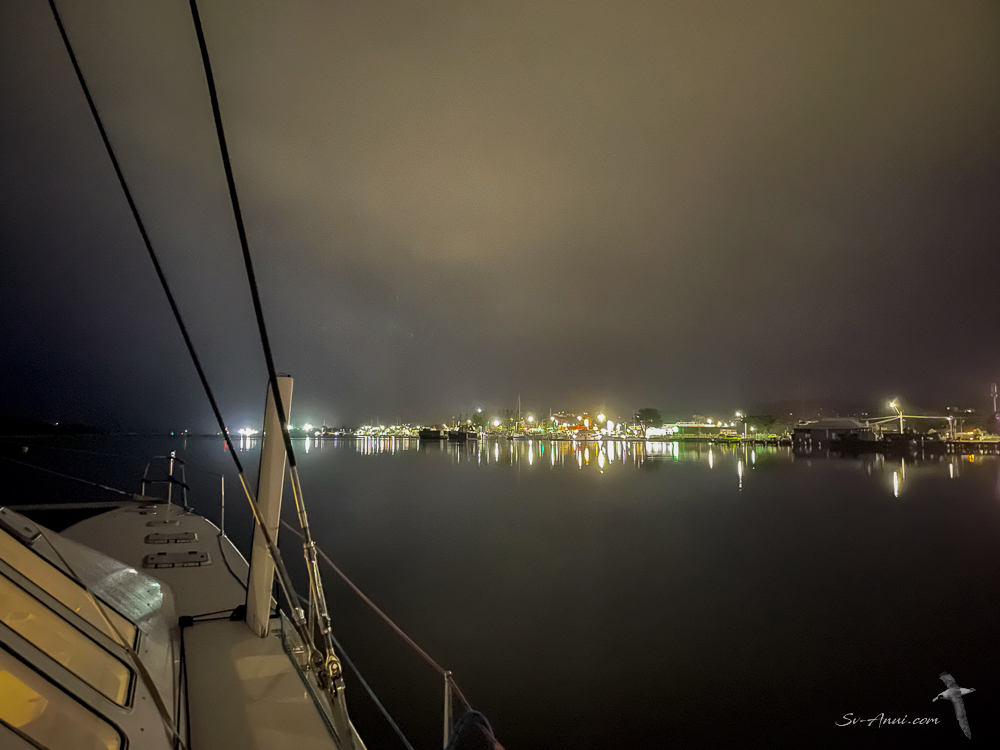
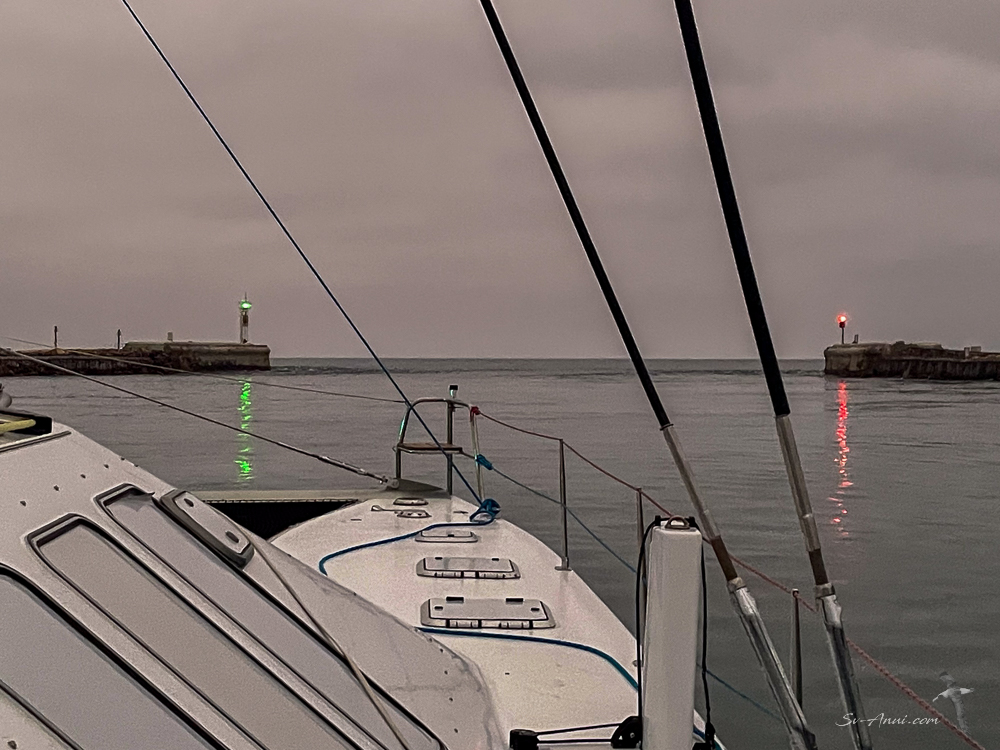
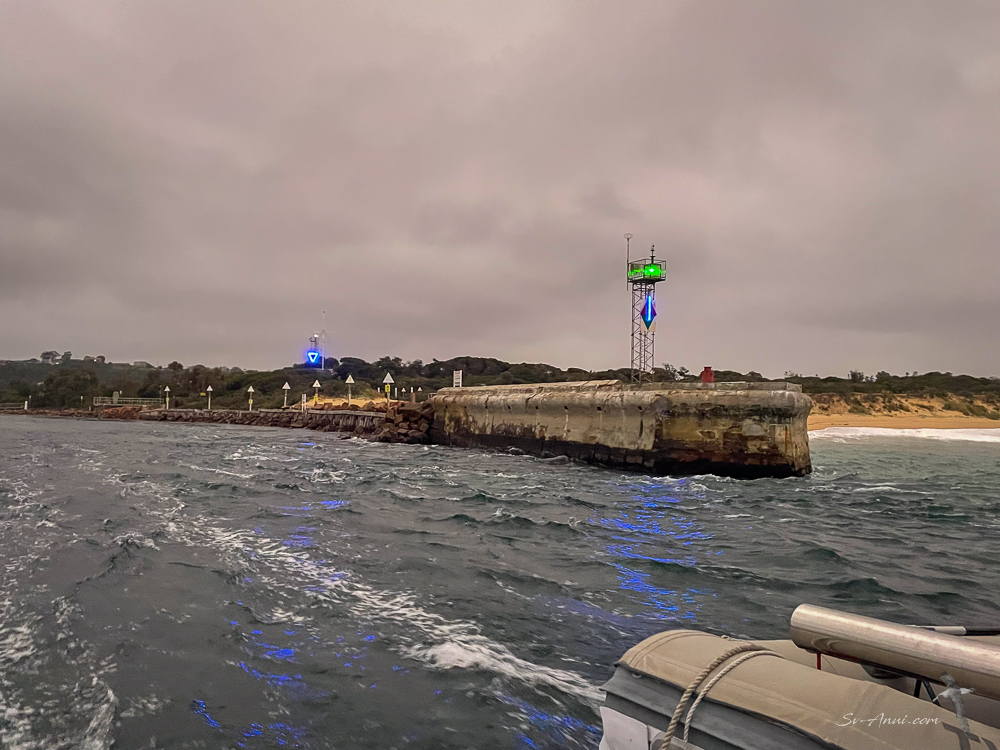
We had a great sail for about 12 hours, then as the wind died down, we motor sailed the last few hours till we arrived in front of The Entrance. We got through the notorious bar at 5.30am in darkness but low wind and no swell. The hardest part was not so much the entrance at night as the approach is well lit up, but the squiggly, shallow, narrow meander through the Reeve Channel in darkness and fog once in! It does not matter how many times we have come in or out through that stretch of water, we both needed to keep a keen eye out, each on one side of the boat calling out the channel markers, training wall and other vessels! Once past The Narrows, the tension dropped, the fog lifted, first light came, and it was all straight forward from then on. Everybody was up for dawn which happened just past Metung a bit after 7.00am. It never ceases to amaze us how calm and flat the Lakes are after a Bass Strait crossing!


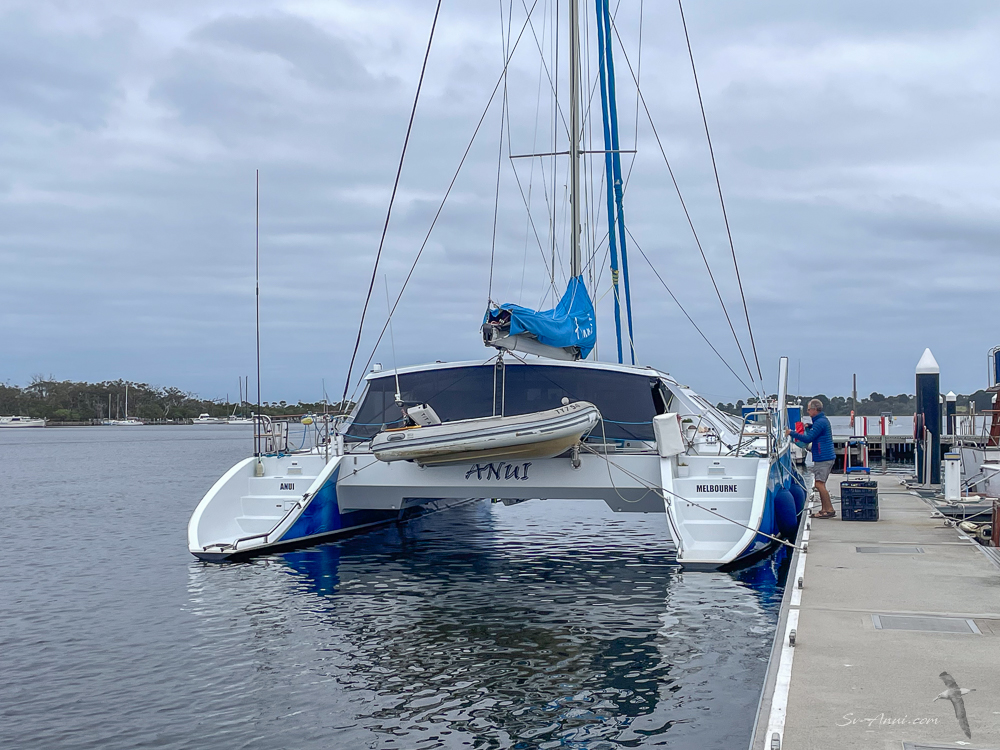
By 8am, Chris brought the boat along the floating jetty at our favourite spot in front of Paynesville. It took another half hour to fiddle with the mooring lines and for the skipper to declare he was happy!
It was the first Bass Strait crossing for Maree and Murray, and we think the 26th for us! Every crossing is different. We have experienced complete glass outs, rock and rolly passages, slow and steady ones, fast rollicking sails, but never scary ones… You won’t find us in the middle of Bass Strait if the weather conditions are not favorable. This one was a reasonably good one.
Our guests got to experience their first ocean passage and the longest under sail; they lost sight of land, went with the unsettled motion, saw more dolphins and albatrosses, snoozed when they could, snacked, read, witnessed the beautiful Milky Way in the evening and survived an overnight sail! Wade and Chris managed the watches during the night, Murray had a turn at midnight for a couple of hours with Wade at the ready in the saloon, and he came back up to witness our arrival at the Lakes. Maree managed to sleep through it all but joined us in the cockpit for sunrise.
The night of our arrival, we celebrated the completion of our voyage and the end of a one-month cruise for Maree and Murray. We have kept a journal of our entire voyage and will share this with you in a forthcoming post once it is ready for publication.
Maree and Murray went home the next day. For us it was time to tidy up our salty boat, fix a few things, do a big load of laundry, re-provision and then… no, not rest… head back out again since we had a weather window to exit the Lakes and start our trip north at dawn on Wednesday 26th March.
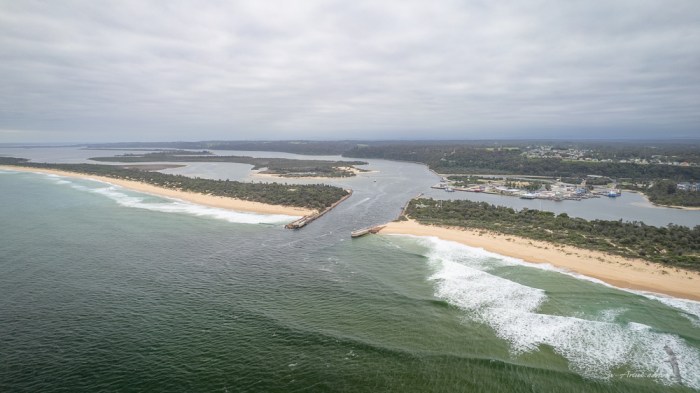
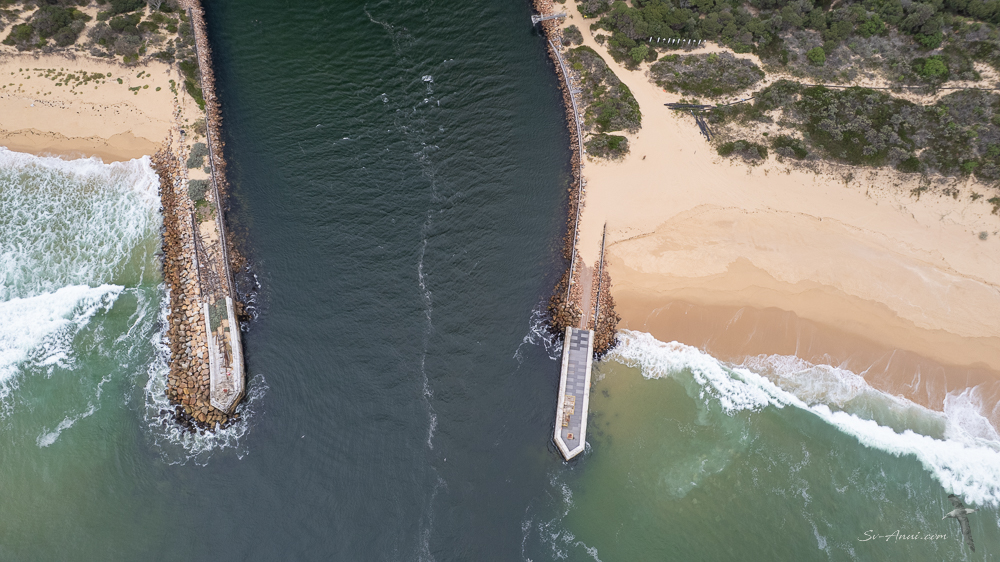
Just for interest, we sent the drone up to take shots of the entrance while we were moored in the Cunningham Arm in front of the Lakes Entrance township, so you can see what it looks like from above.

And here are a few photos of our departure the next morning:
What is next?
Unfortunately we are on a bit of a schedule with important medical appointments in Southport, Queensland, by the third week of April. So we are moving fast and have just completed another big passage. We don’t much like overnighters, but they are needed sometimes, and you do cover large distances quickly. As we post this, we are floating quietly at Jervis Bay, having sailed 260nm (481 kms) in one long 36 hour passage, just before the northerlies stopped us in our tracks.
For more on this and our Jervis Bay activities, join us next Friday. There might be some unusual underwater wildlife for you to see!


 Sv-Anui
Wow! What a fabulous trip you guys have had, I’m happy that you are safe! Thanks for sharing the very beautiful photos. The entrance into that channel looks a bit tight and scary to me! 😂
Hi John, glad you liked the photos and stories. Because the Gippsland Lakes were our home port for many years, we got to know the entrance well but like any bar it can be daunting.
Indeed, I wouldn’t try it with a boat the size of Anui! I grew up driving 19/20 foot speedboats in Michigan. Have a great weekend!
You probably had a lot more control on a speed boat. Anui can wallow a bit in the swell and we have to be on the ball to correct and anticipate!
That makes perfect sense to me, your navigation skills are wonderful! The trickiest thing about those speed boats was getting the boat back into the boathouse. The water would rush out then wash back in quickly as the hull entered the slip. I spent a lot of time on Lake Huron too in later years. One of our great Lakes. That was fun but very tricky when the waves were up. My boat was only 19 feet and had a 4.3 litre V-6. Plenty of power.
Congratulations on another successful loop of Tassie…. And hopefully gentle SE breeze for the passage north.
Thanks Graham, Enjoy your last few days in the Lakes and sorry again we did not get to catch up in person. We have made it to Jervis Bay just in time to hide for some nasty weather!
Oh Lordie Chris – I am finishing my morning coffee very much sitting down and you have me breathless! What a journey and you are practically ‘down the road’ from me at the moment! Was it really three months – of wonderment and beauty, and so much learning, for which hugs and a huge ‘thank you’! Just one question – when do you sleep trying to make a large inanimate boat ‘do’ the ‘right thing’ in oft unkind waters? Only the two of you?
Hiya Eha – yap 3 months from the Lakes and back… Your question re overnight sails is a good one! Anui is always on auto pilot once underway, day or night so we set up a route and she runs along it. We are constantly on the look out but don’t have to be at the wheel all the time. At night we take two hour shifts – one of us is up on watch while the other sort of sleeps. Every 15 minutes you have to do a visual check from the cockpit of the sails and adjust if needed, other boats, check all the instruments for speed, wind, direction, coast, AIS (Automatic Identification System) and take whatever action is needed. It is hard with just two, and having a third person only helps when they are experienced. But when you sail or motor night and day you cover huge distances quickly so it is handy!
Thank you Chris for your long answer which methinks will so help other landlubber readers. I had worked most of this out myself but did not know how much you could rely on the autopilot. The human side I can see as problematic at times as the 2-hour-off periods, I daresay, oft do not bring much rest. Headaches, infections, gyppy tummies, just plain worried nights . . . I guess you simply postpone a stretch if logic so dictates !
You often have very good questions, Eha and I was just thinking I should do a post on night sails.
The auto pilot is the most important instrument on board. Without it you are stuck at the wheel and from experience we can tell you our concentration and ability to follow a compass course manually is lousy!
Some sailors do longer watches, 3 or 4 hours, but you just do what works for you. Off watch is often just a rest… it’s noisy with the sound of wind and waves and bangs, there is a lot of movement too, but when you are tired enough you just crash! This is why we tend to do a day, a night and a day, then anchor and recover, rather than multiple nights. But on a larger passage there is no choice… you can’t anchor in the middle of the ocean! And yes if too rough, we don’t go!