After some 10 days in Cairns, we enjoyed a small break in the wind – four days of below 15 knots before it returned to 20+. It was time to escape the midges and have some fun at the reef, delighting in colourful treasures at Michaelmas Reef!
It was windier than forecast as we left Cairns – over 22 knots – so as we often do, we got out, raised the sails with two reefs in the main and worked out where we could point! In the blowy conditions Michaelmas Reef was our best option – good angle to the wind and protection once there. You get shelter from the sand cays and layers of reef: Michaelmas itself and Arlington behind it, therefore less swell.

Our first day and night was in front of the vegetated cay at the western end of the reef, tied to a public mooring.
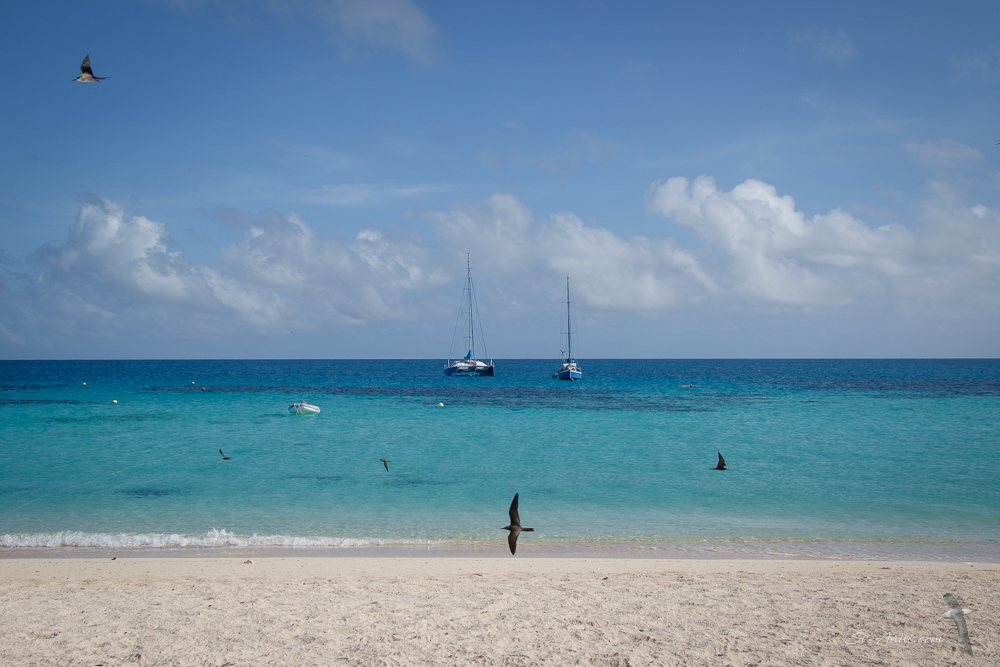
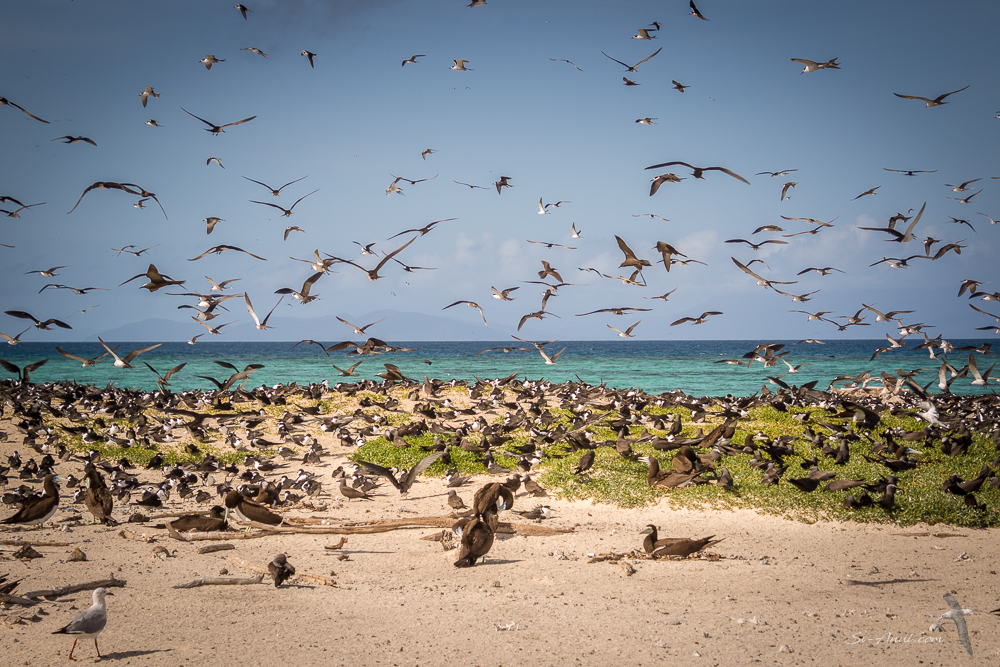
The sky over the cay was dark with flying birds and the noise was unbelievable. The western cay is a bird sanctuary with a large seabird population, in particular boobies, terns and noddies. How they all fly in close proximity without colliding is a wonder!

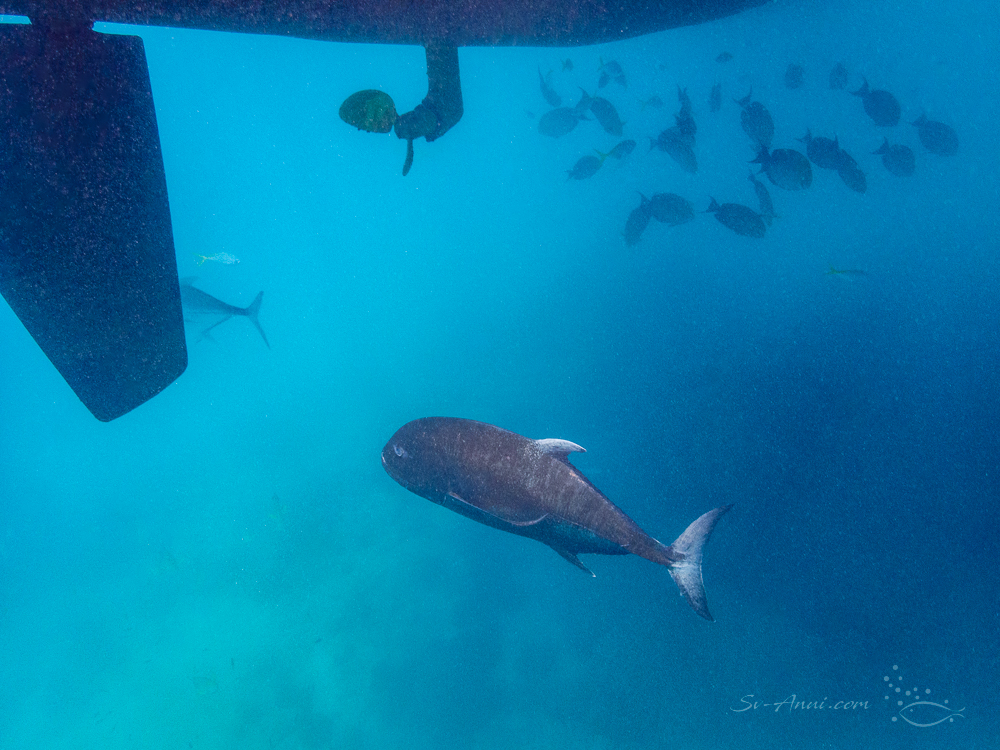
Under our hulls it was nearly as busy. We had the welcoming committee: giant trevallies, batfish, surgeonfish, fusiliers … The GTs were quite inquisitive. Although the water clarity was not great, it was fun to interact with them.


The next day, the conditions had lightened so we moved further east along the reef, a first for us. We anchored in front of another little cay, away from commercial operators with their loads of tourists and from other boats… much better! Here are some aerial shots.

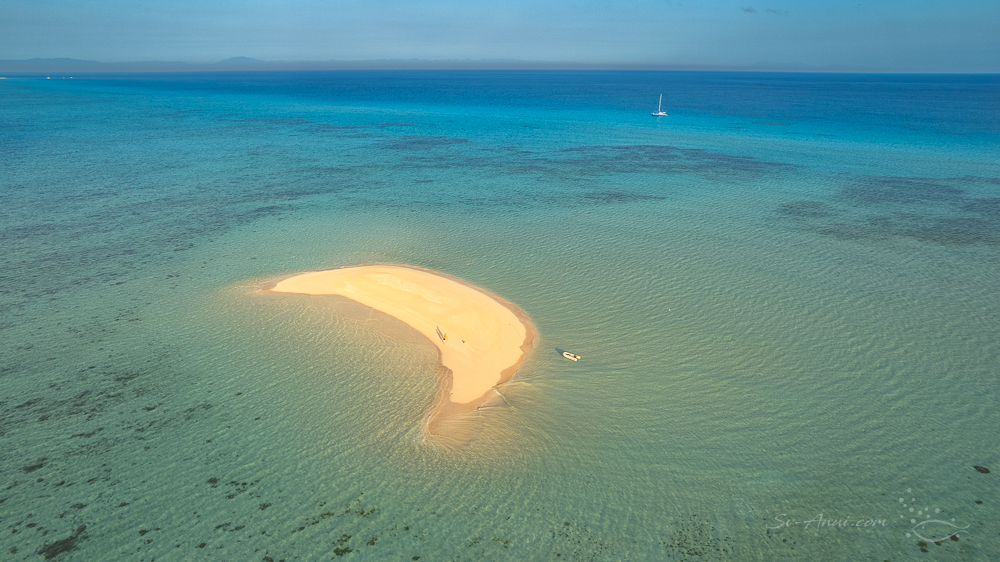
We stayed there for three days, enjoying the solitude, space and new location. But what was most enjoyable was snorkeling off the many bommies behind the boat in the deeper water – the green patches in the aerial below. It is quite fun and varied. You do a lap of one pinnacle, then move to another, and another, till you get tired or cold. The further out we went, the clearer the water, deeper the pinnacles and better the marine life.


Colourful Trio
The best thing about diving around the isolated bommies was seeing magnificent examples of our favourites: feather stars, gorgonian sea fans and carnation corals. So this is what we are sharing with you today.
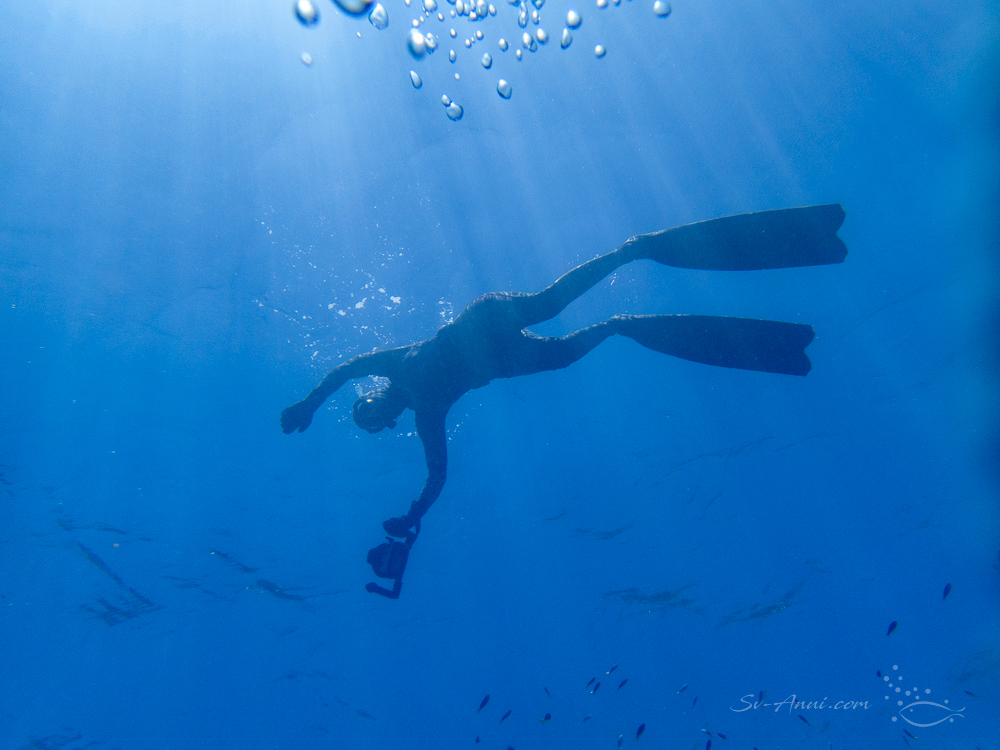
Both of us were photographing, since Michaelmas Reef is in a green zone and Wade could not spear. It is always interesting to see what we both come up with, even when photographing the same creature.
We have taken so many underwater photographs over the years that the challenge these days is to capture the beauty of our subjects at different angles to make it interesting for ourselves and our viewers.
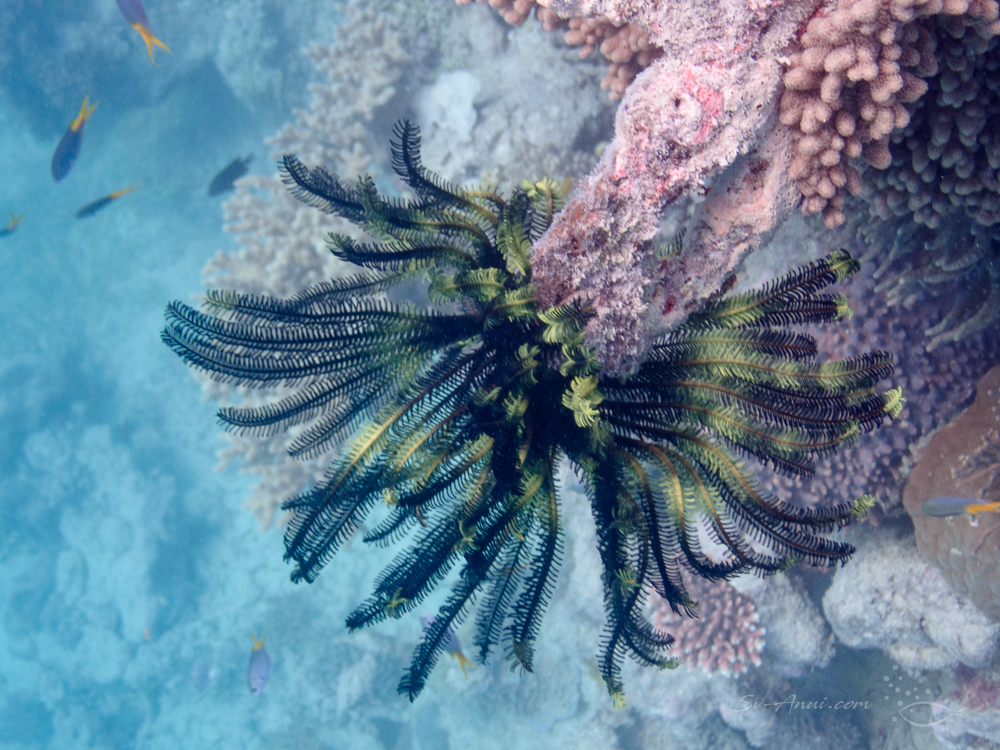
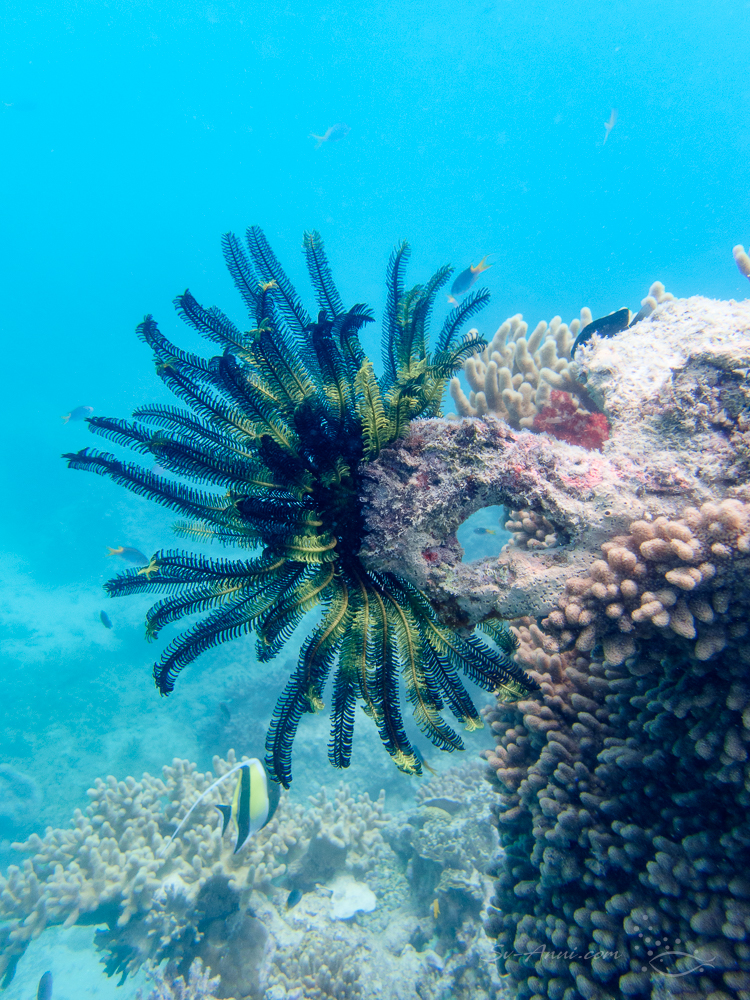
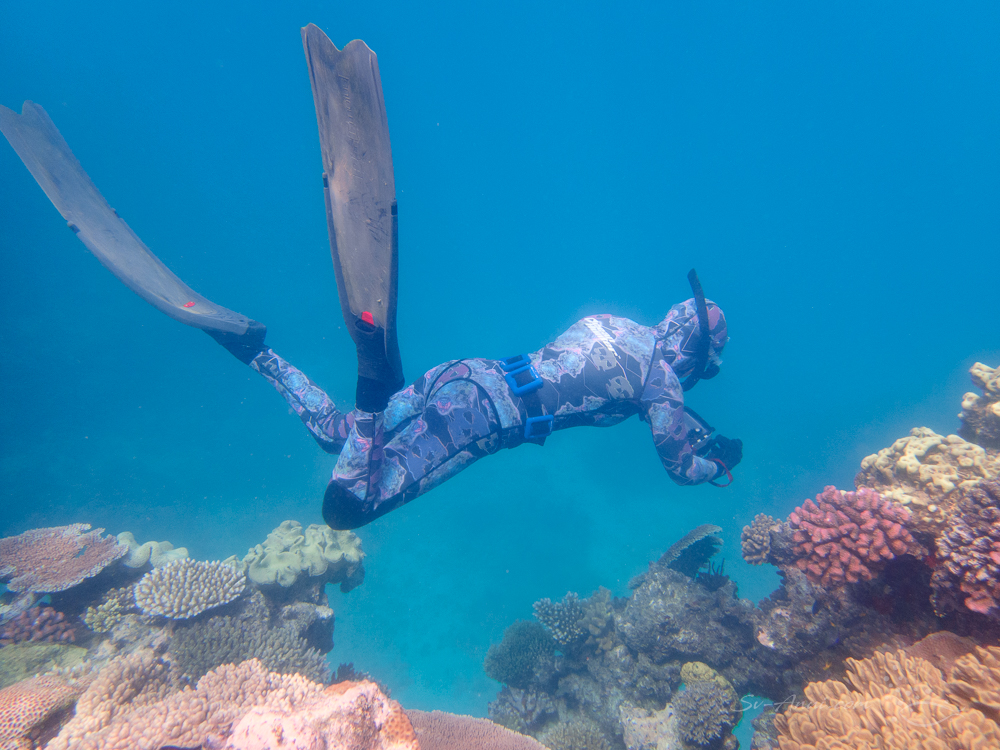
Let’s start with the Feather Stars – Crinoids. They are passive suspension feeders, filtering plankton and small particles of detritus from the sea water flowing past them with their feather-like arms. They are echinoderms related to starfish, sea urchins, and brittle stars. They come in different shades: green, black, red, orange, burgundy and sometimes combinations of two colours. The ones which attracted our attention were different in colour and with an unusual attachment to the reef. Here is a slide show. Wade even took a photo of Chris taking the shots!



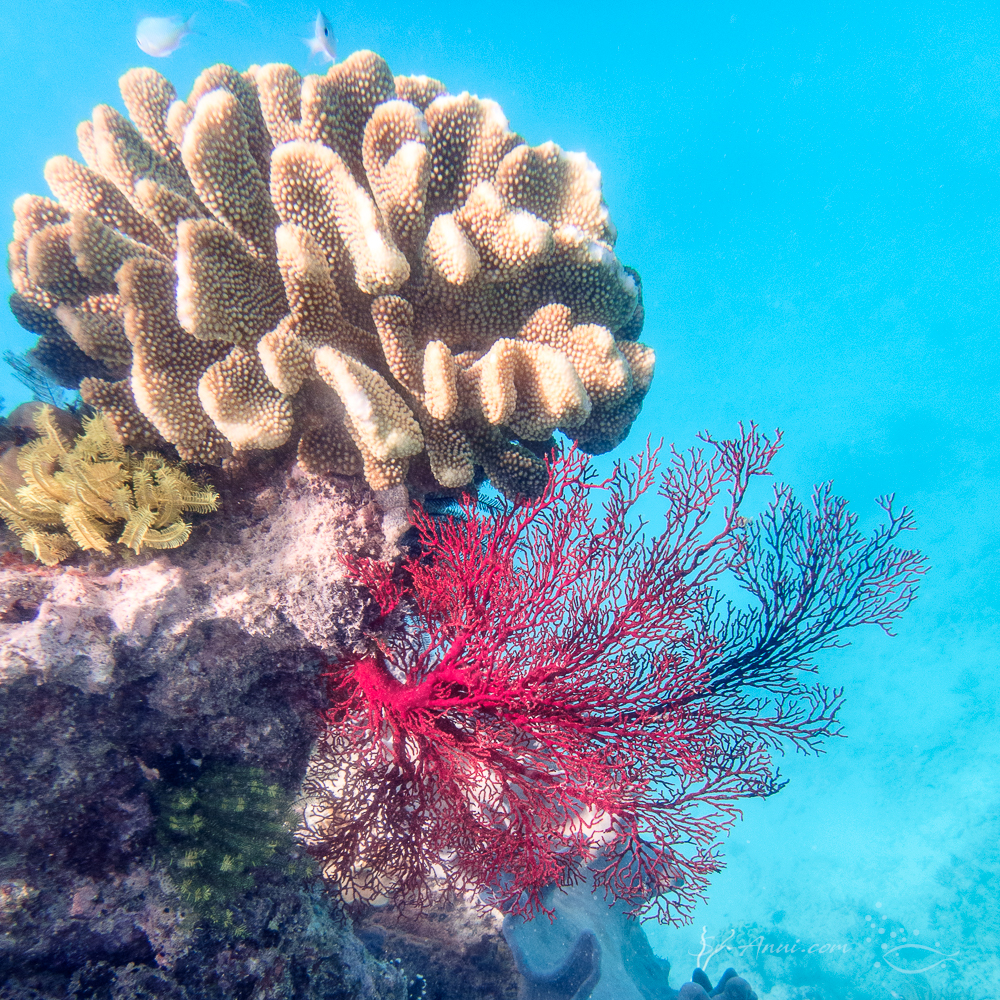
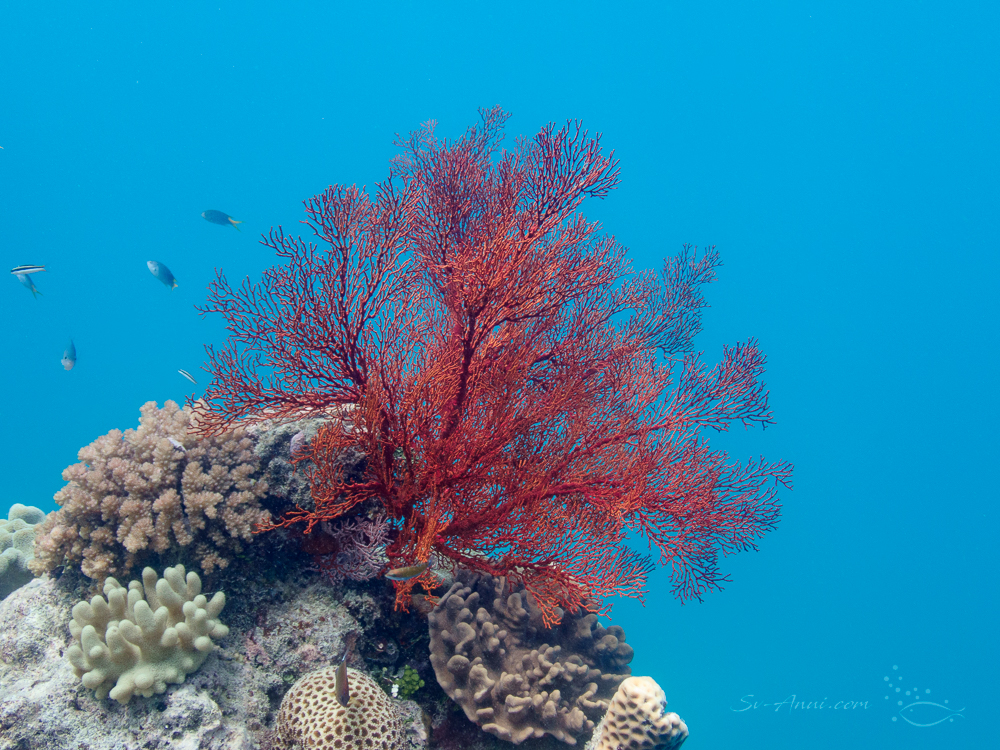
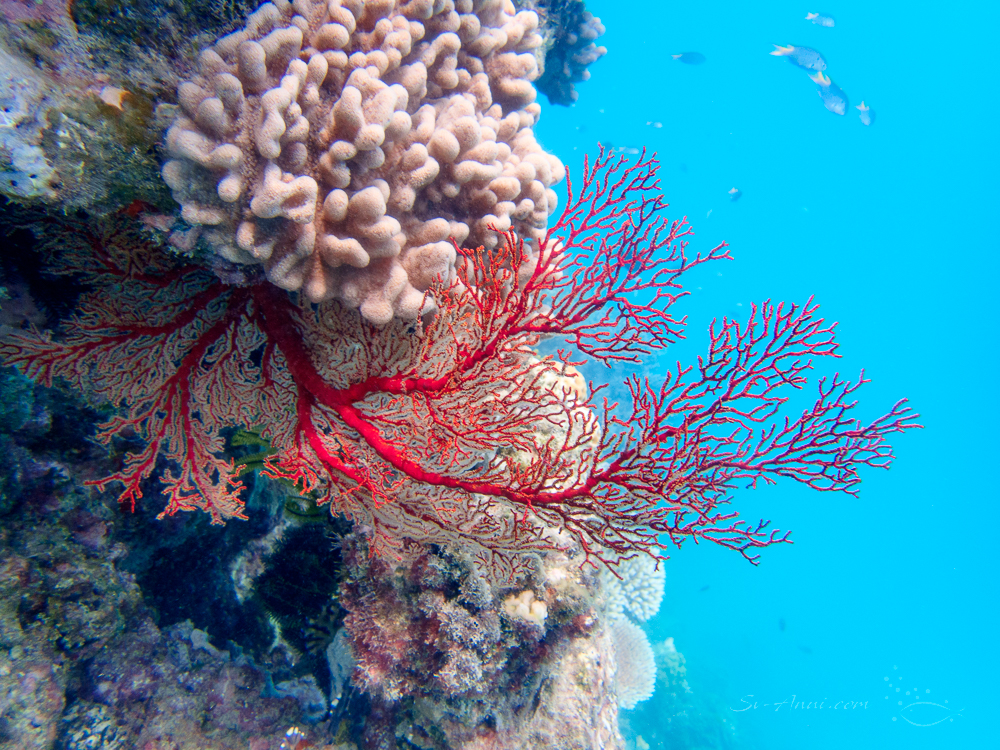
Next, let’s talk about the Gorgonian Sea Fans – Alcyonacea. They can be small or very large, bigger than us, and when you spot one, you will often find more as they form colonies. Red, orange, pink are the most common colours we see. They may look like plants with their beautiful branching structure, but they are animals. They can also provide shelter for other marine life. A few of the gorgonians we saw hosted a crinoid… two favourites for the price of one!
Gorgonian Sea Fans typically are in deeper water, facing the current to capture the flowing zooplankton they feed on. As snorkelers on a single breath of air, you have the challenge of diving down to capture their lacy arms and the beautiful surrounding soft corals. You want to get close enough to see the details, but not so close you chop off the end of the branches as you frame the image. And of course, all this happens while managing your breath and buoyancy so you stay down for long enough. On our last dive at Michaelmas Reef we hit the jackpot: we went to a large coral pinnacle with a multitude of large sea fans about eight meters down. It was exhausting but rewarding work! We have put our best images in a slide show. The first photograph is a prime example of the environment and the richness of colour we were lucky enough to observe.
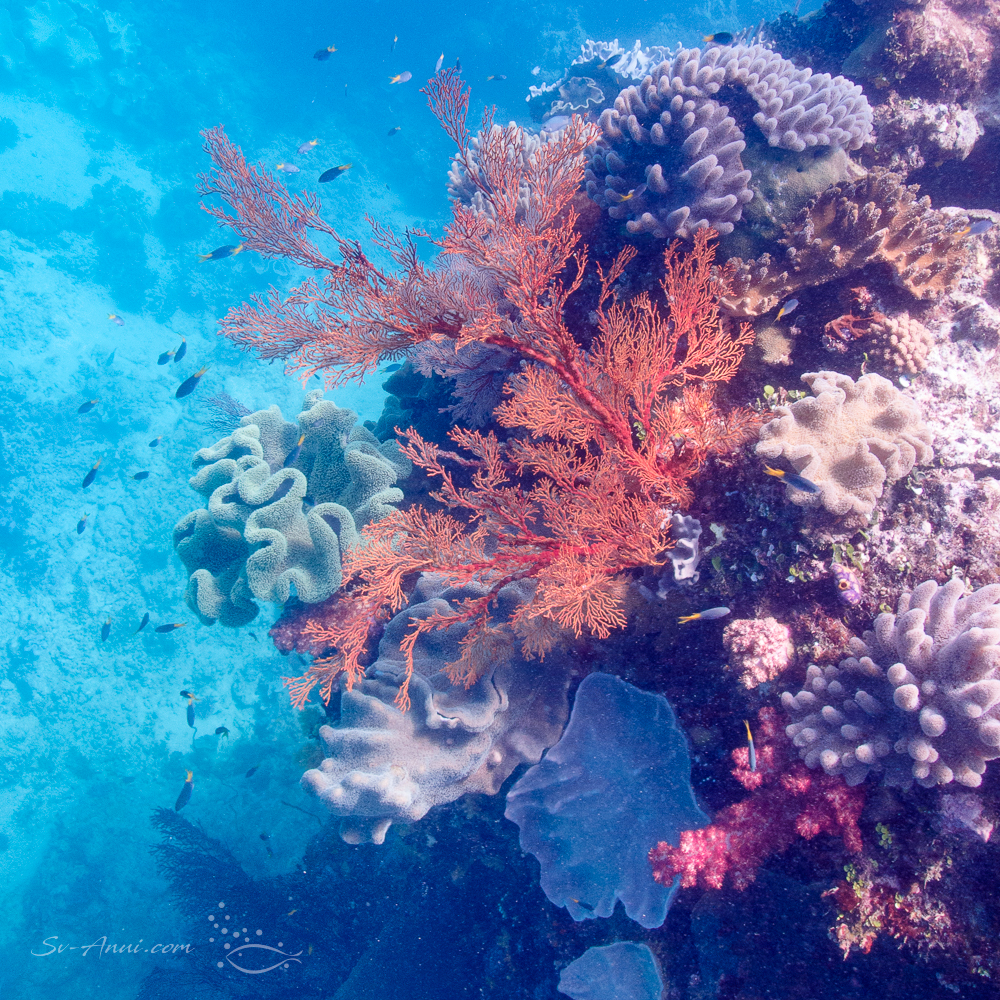




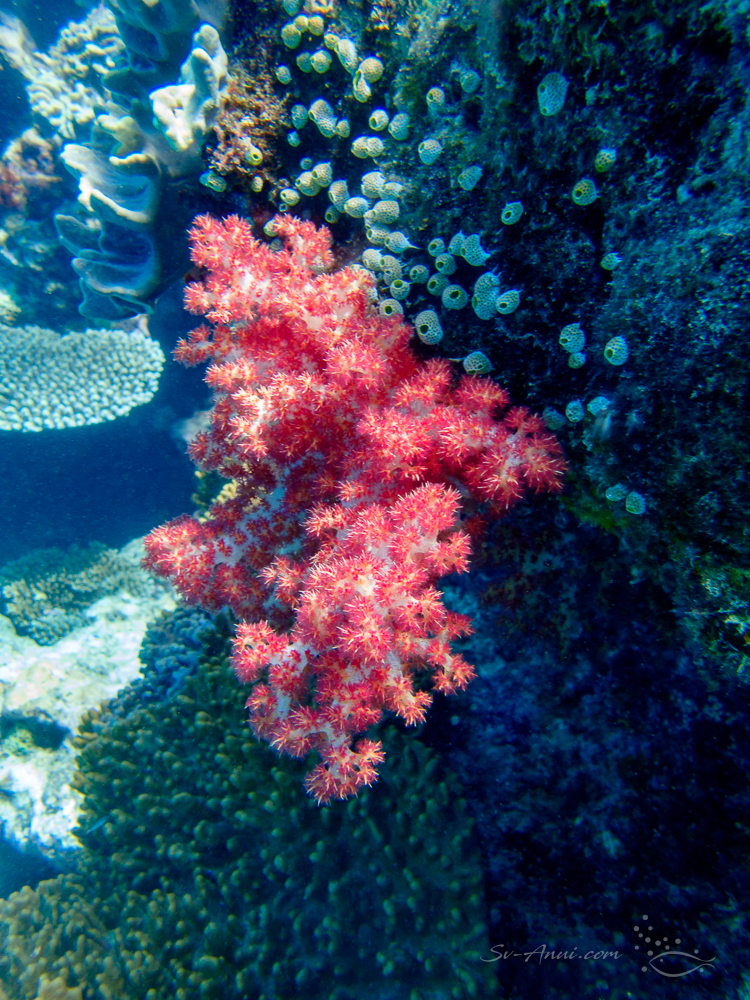
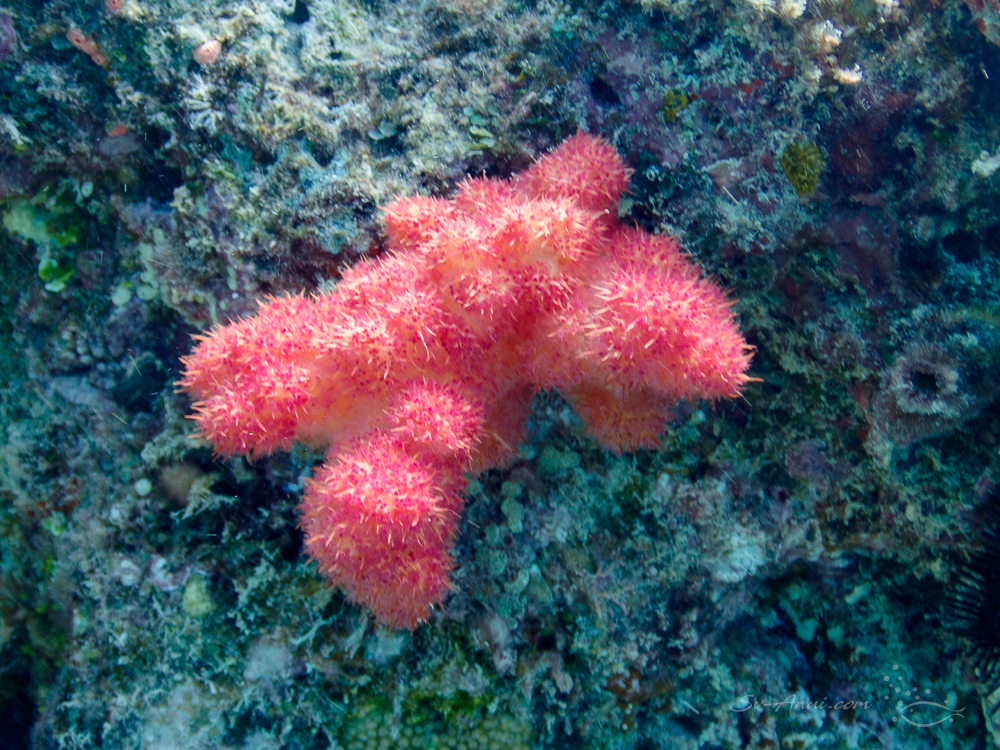
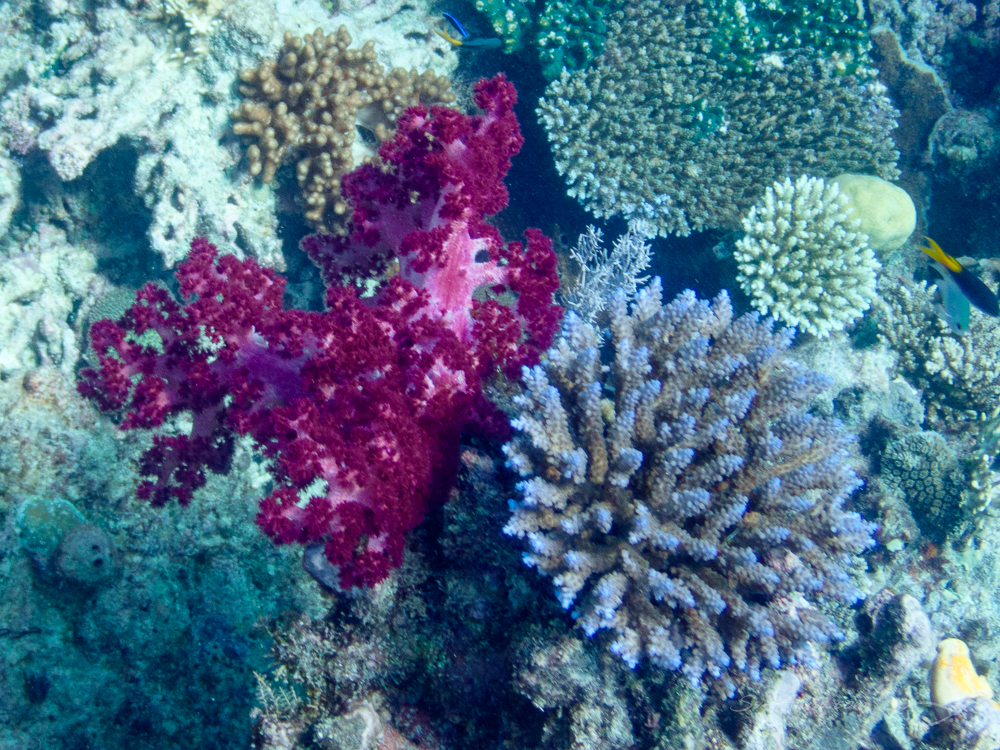
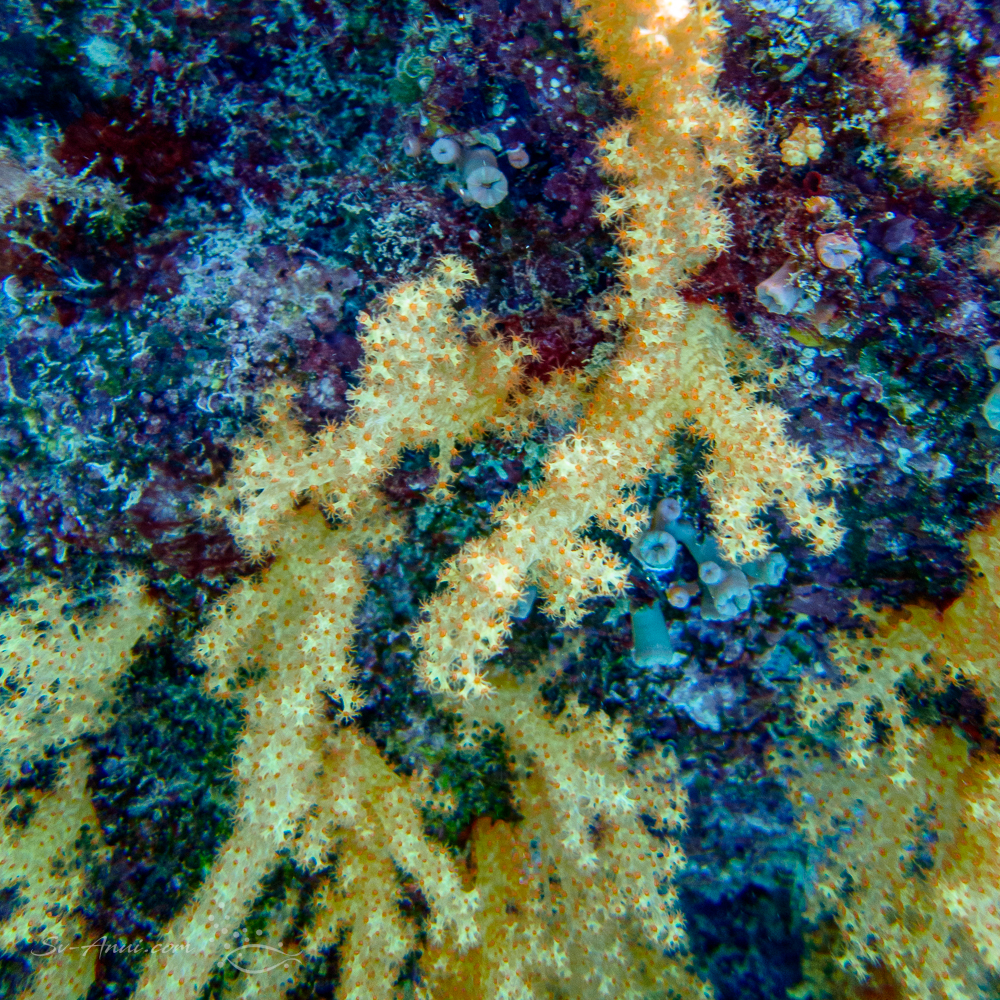
Third in our favourite marine life trio: the Carnation Corals – Dendronephthya. These filter feeders are one of the most exotic-looking soft corals of the tropical reefs, in shades of soft pink, magenta, yellow, orange, bright red or purple. The stalks can also have a combination of colours. The carnation corals are either tree-like or grow in clumps. Upright stalks have branches with bushy groupings of polyps at the ends, looking like bunches of flowers. These were on the reef walls and under overhangs. They feed mainly on phytoplankton. Here are a few examples:


We hope you enjoyed this display of captivating marine treasures. Do let us know in the comments and if you have questions feel free to ask.
Where to next?
The calmer conditions were short lived, and we had to come back to shore. The weather has been strange this year. Long periods of very strong SE don’t augur well for an easy return south. The Bureau of Meteorology is talking about a late onset of the monsoon season. We were originally hoping to get further north past Lizard Island but do not want to risk getting stuck there and then having to rush back south for our scheduled haulout. So we have moved to Plan B, as you do! We returned to Cairns to wait out another bout of strong wind and rain, re-provision, take our Bengie to the vet for a dental checkup, and we are now getting ready to head south. It does not mean the end of the fun and discovery though. We have our eyes on several reefs and islands along the way, and a possible return to the Northern Swain Reefs.
Stay tuned for your next dose of escapism somewhere off the North Queensland coast!


 Sv-Anui
Oh my gosh, guys! I am always so amazed at the incredible beauty of what lies beneath the surface among these beautiful reefs! Thanks for sharing, I hope you have more adventures before Anui’s haulout! 😊🇦🇺
Hi John, it was a great find… glad you enjoyed the images. Plenty more to explore before the end of November!
I sure did, and always do. I look forward to your next round of beautiful photos! ❤️
Another magical escape away from the rat race. Love the colours and delicacy of the trio of favourites. They look so fragile.
Morning Ann! Probably the most fragile are the Gorgonians. The others are soft and bendy!
Fabulous photos and such informative commentary – thank you! The colours of the reefs are just gorgeous and the majority of us don’t ever see this beautiful underwater life. The wind has certainly been dictating our activities here too. Not much fun being blown about on our bikes either. Hopefully we get a better run of weather soon!
Thanks Jan… it was a feast for the eyes and a new spot for us. And yes it would not be much fun on the bike on windy days. Everybody is complaining about the odd weather. We are hoping we can soon escape Cairns and be in our way.
Beautiful light in that early morning cay image. Great shot! Yes … the never ending wind!
Yes, we have decided it is time to turn around – a few days of calmer conditions here after the weekend. We will start our zig zags between reef and coast south.
Oh, love the bird photos – huge amount of noise and ‘poo’ I daresay! Another silly question . . . how do you come by your underwater knowledge? – take photos and then compare with what is on line . . . ? Best for the journey south – hope you do no have to search for too many ‘safe harbours’
Hi Eha, we have a few reference books on board about corals and marine life plus a few years of experience researching. The team at Eye On The reef is also very helpful when we get puzzled by something we don’t recognise.
Thank you for ‘Eye on the Reef’ – have visited and shall be back! Fascinating !
Yes it is a useful app and they also run courses.
What a post, firstly the birds – wow. Then the coral, the colours were magnificent, you both did a great job of photographing. I hope on your way south you get better wind conditions.
Thanks for the enjoyment of your trip this week
Lovely to get your impressions, Sue. We hope we soon can get out of cairns too!
Amazing bird life and stunning colours of the underwater veg!
Had a little chuckle at your report that you got out of the water at times cos it got too cold. I was chatting to a Scottish mate of mine yesterday, and he talked about ‘wild swimming’ in Scotland (Ocean and Lochs). I’ve tried Scottish waters but each time only for about 10 secs! Reckon it’s normally about 10 deg if you’re lucky!
Interesting topic, the relativity of temps in different climates ….
Happy sailing!
Hi Elgar, yes the water temperature is interesting… 22 at the moment where we are and it will get warmer as we head towards summer. I reckon we will get a shock when we get down to Tassie. Thicker wetsuits purchased in preparation!
Tassie ocean temp would be a bit like near Glasgow. I remember surfing on the east coast as a teenager, could only last for 1/2 an hour. Nice thick wetsuits, you’ll be right!
Yes, 12 or 13 degrees if we are lucky. We have equipped ourselves and the boat in advance. Diesel heater is installed and tested. We have had snow on deck at Port Davey in the remote SW in summer so we know how chilly things can get. After six years in North Queensland we might have gone soft and will freeze!
Love seeing these treats.
Treats indeed, thanks Sherry!
Saturday lunchtime – Chris, just watched the news to hear a fishing boat with two men in it has just been upended by a whale in the Sydney waters with unfortunate results – police warning those celebrating the Long Weekend on water to be v careful. In your years living on ocean blue have you ever been worried by any getting too close ?
Yes we have. When you travel on their migration path they can be a problem – beautiful but you have to keep a watch. Coming up the coast in VIC, NSW & southern QLD in June to August, and south between September and October one of us is always on watch for them. If doing an overnighter it’s a good idea to have an engine on, even if it is just ticking along just to make sure they can hear you.
Check out this post from a couple of months ago… these were as far north as they generally get – just north of the Whitsundays and offshore!
I suspect these guys weren’t watching and ran into one at full speed!
Thank you SO much – I did not mean to take up your time but thought others might be interested also. I seemed to remember the photos now resent (sorry I did not check myself !!!) but not the full facts. This incident was seen by other boats but they were too far to see the exact happening or be able to assist more quickly. Sad . . .