A weather window has allowed us to escape again for another loop around the Southern Great Barrier Reef, this time with a special purpose in mind, although not quite what we had originally planned.
We had great hopes that we would spend this period of favourable weather with friends at the Swain Reefs, but it was not to be… not yet anyway. They had on-going engine issues. Ah the joys of boat maintenance: you make a plan, then another, then you go and do something else! Since we were already sailing to our agreed meeting point at Lady Musgrave when we heard about their troubles, we changed our plans too. Wade was not keen on heading out on our lonesome – it is always better with a buddy for companionship and safety.
First: Boat Maintenance
As it turned out we ended up having multiple maintenance issues of our own to sort out. So it was just as well we were not too far offshore!
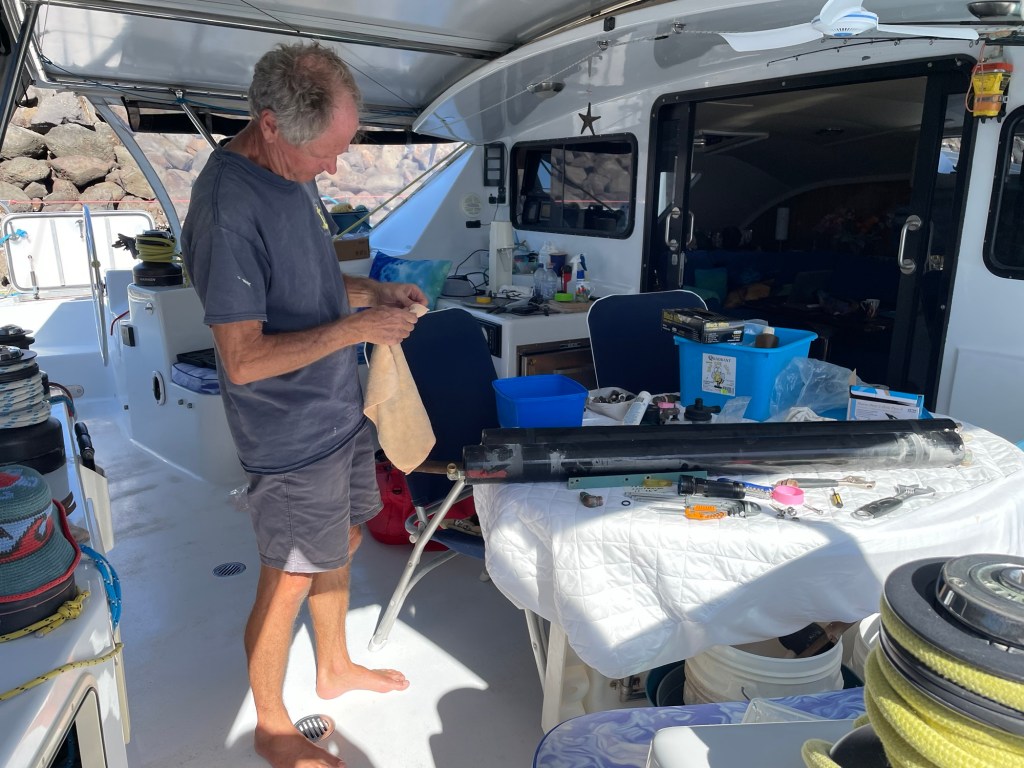
We discovered our big alternator which charges the house battery was no longer working, the water maker was not desalinating even though we had installed two new membranes, then the anchor winch would not switch on as we were trying to anchor at Fairfax Reef, and lastly we lost our connection to the NKE instruments (auto pilot, wind, depth and speed through the water)! It has been incredibly frustrating and disheartening and we are both well and truly over all these hassles.
We went about fixing each of the gremlins: Wade cleaned up all the connections to the alternator and somehow got it working again. We had not realized there was a small O ring inside the end cap of the cylinders for the water maker as well as the two big ones on the outside; once in, it made all the difference. The anchor winch needed a new fuse. The NKE gear was the stubborn problem, and we had to get in touch with Steve Cody, our NKE guru, to diagnose and help fix at a distance, which he did on a Sunday night, all praise to him!
We can now charge our house battery, make fresh water, operate the anchor winch electrically, and all our instruments are operating. We wonder what next maintenance bomb will descend on us. Our sense of freedom and self-sufficiency is always fragile! The reality of life afloat is that it is rare when a week goes by without us needing to fix something.
Eye On The Reef Program
Before starting this trip, we reconnected with Chris Jones, head of Eye on the Reef (EotR) which is the official monitoring and assessment program for the Great Barrier Reef. Marine Park staff and tourism operators conduct the monitoring and reef visitors can also contribute. Most yachties are familiar with the zoning and sighting elements of the program, but maybe not with other aspects. Following an email exchange, CJ encouraged us to conduct Rapid Reef Monitoring Surveys to collect information about marine ecosystems. We were trained to do these surveys a while back and should formally conduct them during our reef hopping, but we have been slack. We needed to lift our game. It is useful to take photos and write posts or articles about the state of the reef, as we do regularly, but it is better to help with practical data collection.
As CJ wanted us to focus on the less frequently visited sites in our travels, he sent us a Google Earth Pro KML file for the Capricorn & Bunker Group and the Swain Reefs, a file format used to display geographic data.

Looking at this was enlightening. It showed where all the different types of surveys have been conducted over the past 12 months, when and by whom, also highlighting where no monitoring had been done. The Marine Park Authority can’t be everywhere at once and needs the help of volunteers to increase its reach. Another interesting aspect was realizing the amount of Crown of Thorn Starfish (COTS) culling that had recently been undertaken at both the Bunker Group and the Swain Reefs. COTS infestation as well as repeated bleaching certainly explains the terrible state of the coral at some of the reefs. When multiple stressors are at play, the reefs have decreased chances of recovery.
Want to get involved?
Any visitor of the Great Barrier Reef can contribute to its long-term protection by collecting data which is then used to understand the bigger picture and inform how the Reef is managed.
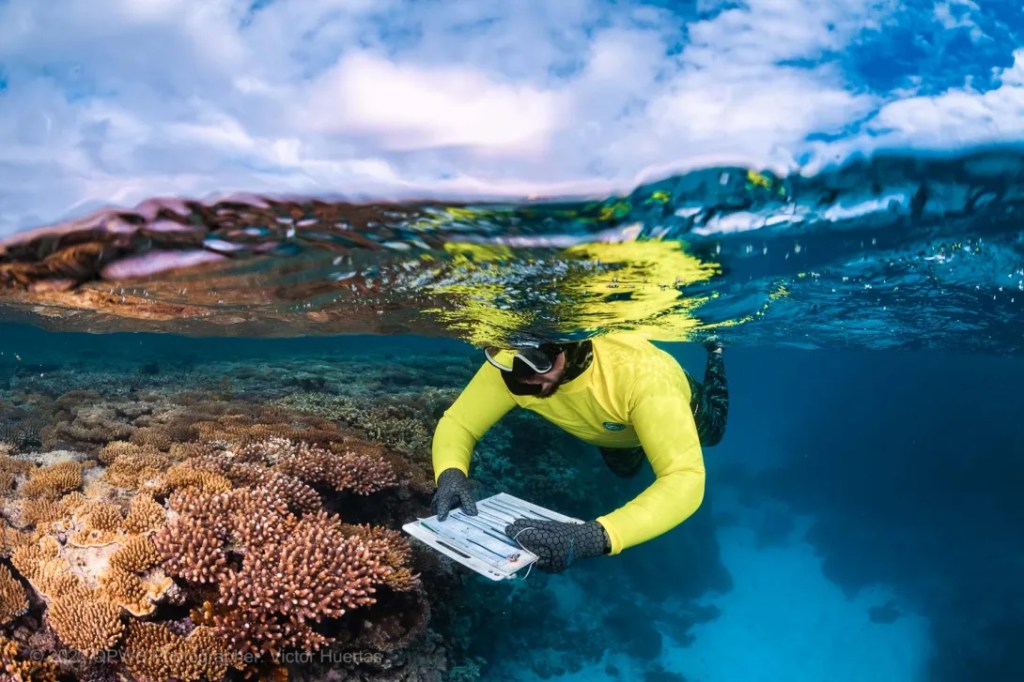
Those of you who regularly snorkel or dive at the reef might be interested in participating. The online training is free and informative and enables you to complete in-water surveys as a Citizen Scientist for the Marine Park, using their Rapid Monitoring slate to record your observations. Here is the link and a PDF of the slate. https://eotr.gbrmpa.gov.au/
Rapid Monitoring Surveys in action
So this third Reef loop of ours for the season has become one with a special purpose. We have surveyed several reefs, starting on the outside of Lady Musgrave to refresh our memory. Our tour of duty this week included Fairfax, Hoskyn, Boult, and Wistari Reefs.
When classifying the benthos and estimating the percentage cover of the different organisms, we found it confronting to write down very low figures for live coral, whether hard or soft and high figures for bare coral rock and dead coral. The fish life was however quite good, particularly in green zones.
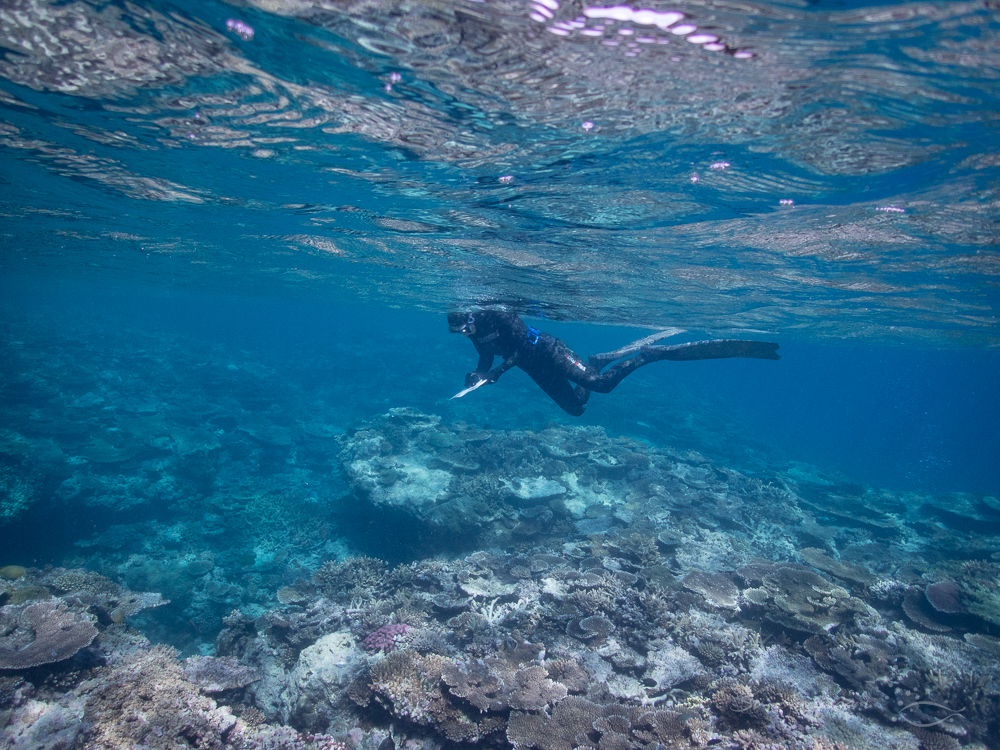

We are now a lot more diligent with the surveys, because GBR conservation and protection matters a lot to us.
Beyond the Surveys
Of course, it was not just all about the Reef Monitoring Surveys or boat maintenance!
At Lady Musgrave, we were lucky to swim with several Manta Rays in deep water on the outside of the reef. It is always a thrill as they are so big!


At Fairfax and Hoskyn, Chris captured a few interesting aerials of their cays and lagoon. Both reefs are protected. They are in a green zone and the islands are recognized as a Key Biodiversity Area due to their breeding populations of seabirds and their Green Sea Turtle rookeries, so they have restricted access. You can anchor and dive or snorkel, but should not go ashore. While we were there, we saw a couple of runabouts with their load of people wondering around, but it is best not to!

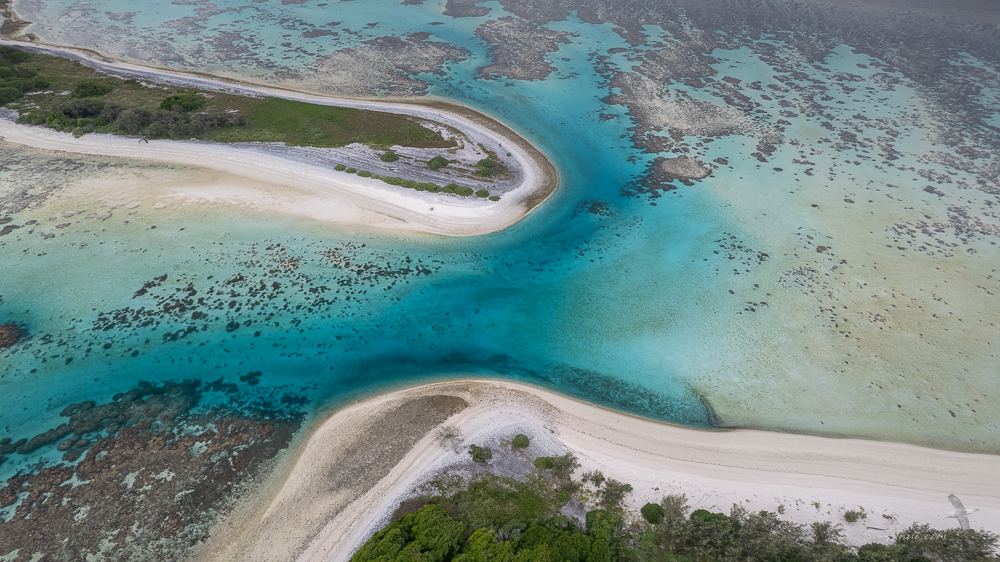

Here is Hoskyn and its two cays:
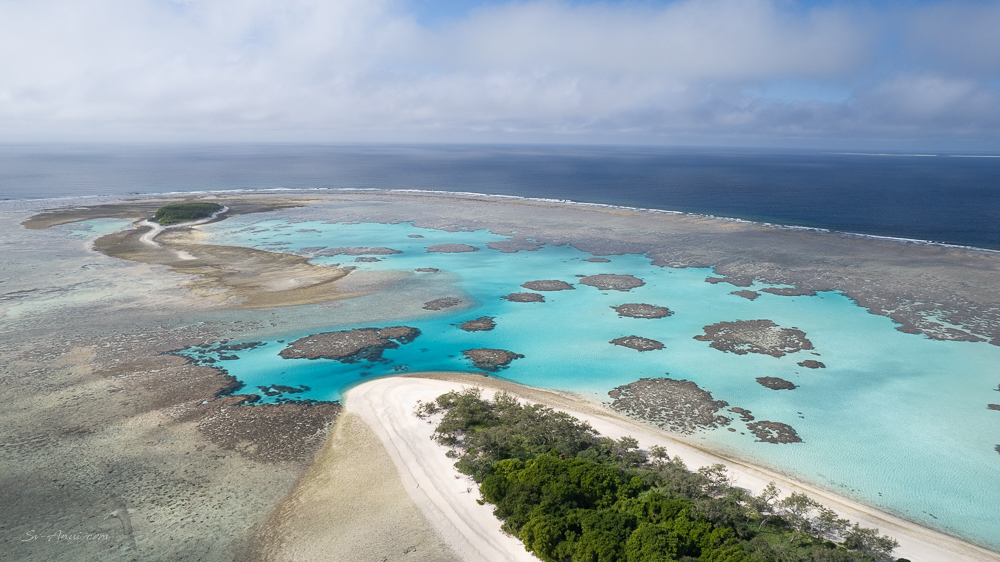
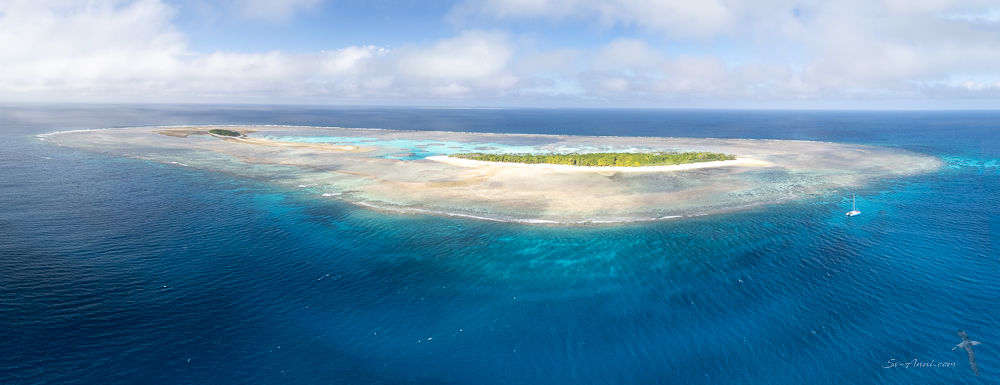
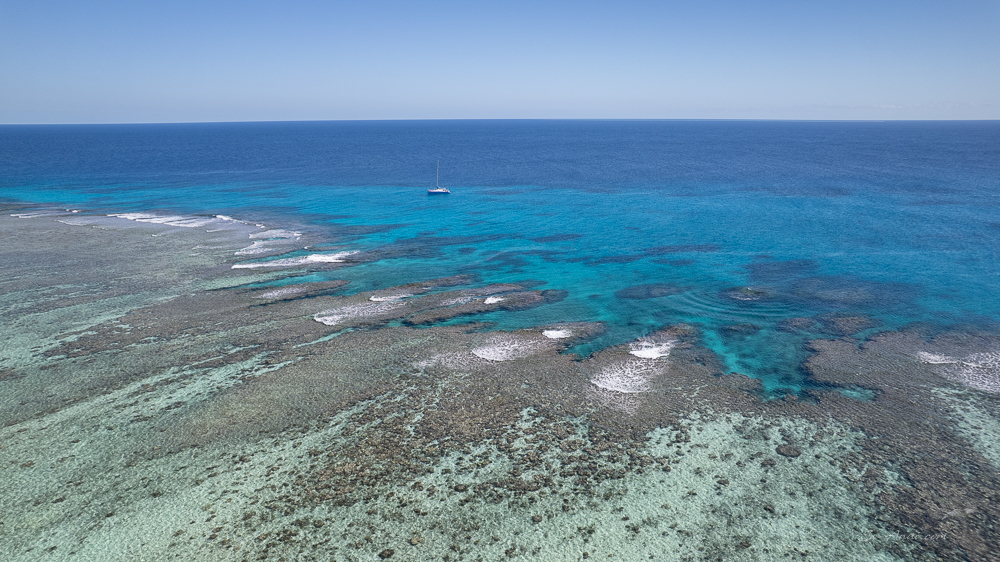
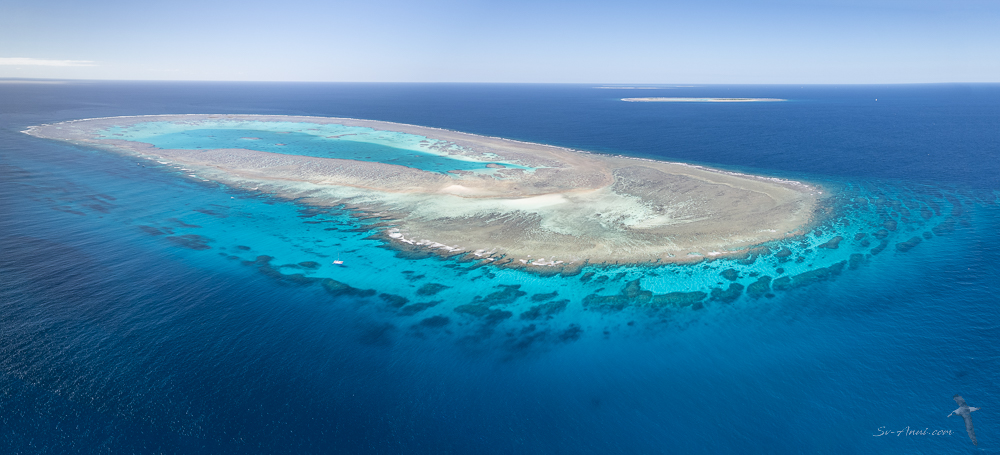
At Boult Reef, we had a longer snorkel to explore the gutters on the lee side of the kidney shaped reef and found it in reasonable condition. It had been seven years since our last visit so we were prepared mentally for the changes. This reef was one of the places recently targetted for COTS culling, particularly on the inside of its enclosed lagoon. We were pleasantly surprised with the variety of live coral, greater color and abundant fish life. Wade was hoping to spear us a trout, but they were either undersize or elusive!
Here are a few underwater shots:

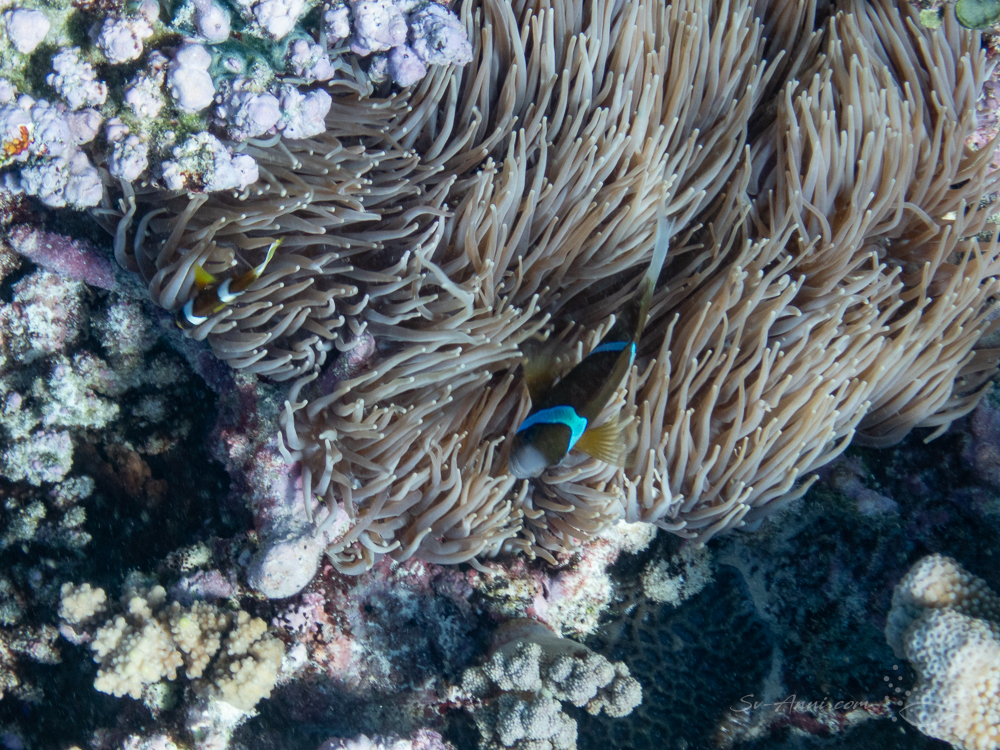
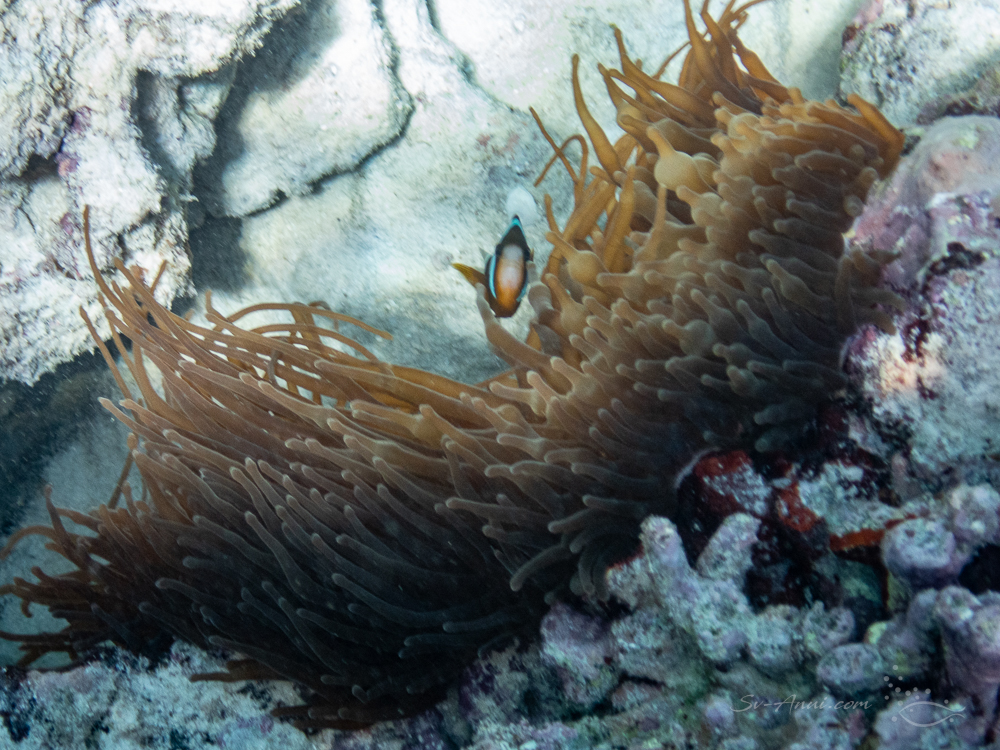


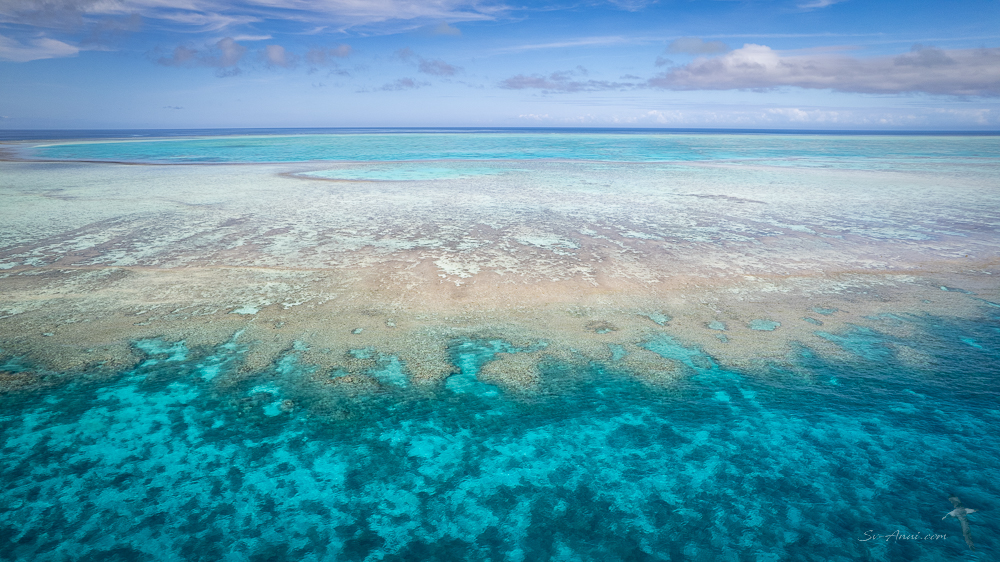
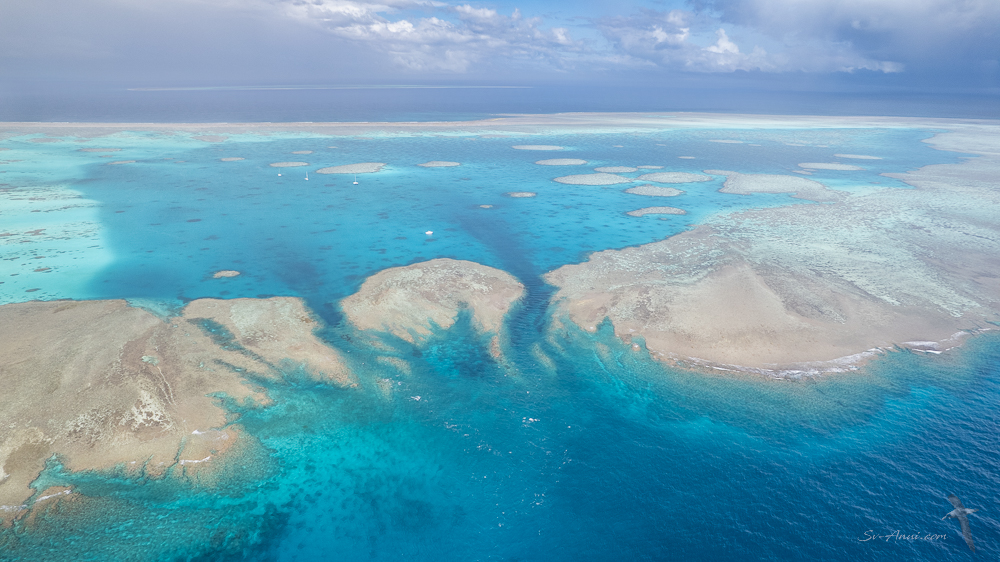
At Wistari we picked up a public mooring and sent the drone up to capture some of the textures of the reef flat at low tide.

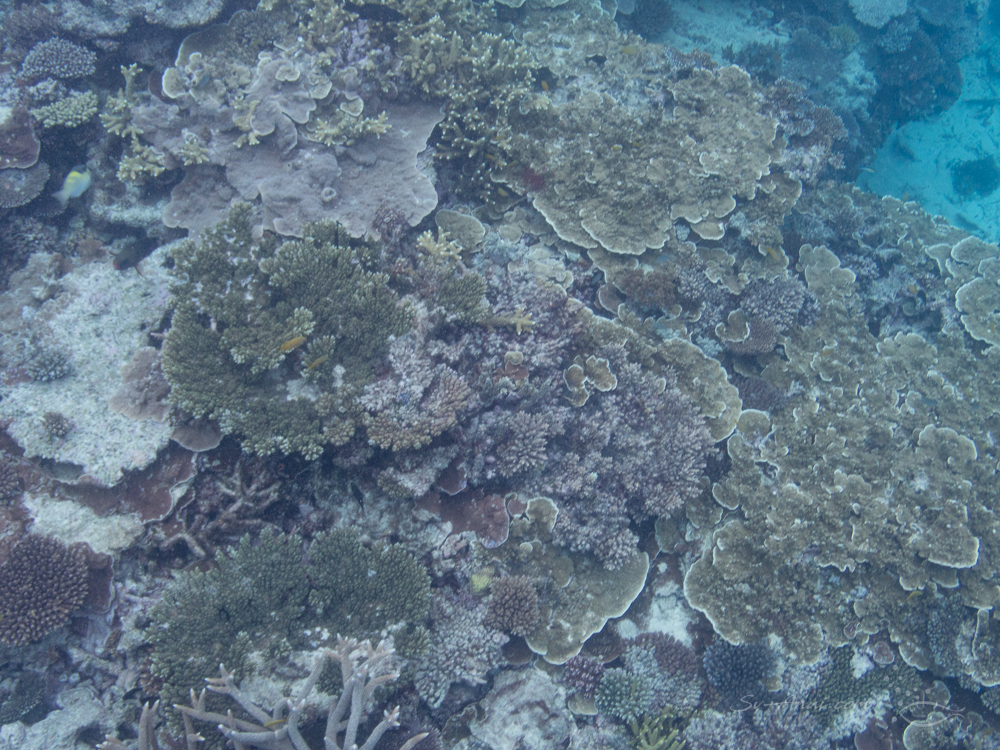
We snorkeled at the NW end of the reef, somewhere we had not been to before and found it in reasonable condition. Although there was a lot of past damage with lots of bare and crumbling patches, there was also a variety of live corals and lots of fish life, including the larger Maori Wrasses, schools of Batfish and Red Bass, as well as Cowtail Stingrays.


And our last snorkel for this week was a drift dive along the entire western edge of the Heron reef, right up to the northern tip. So much fish but we missed out on the Manta Rays! We’ll just have to try again.


And of course we flew the drone over there too! The entrance channel to the island is very murky and the tide was too low to swim around the wreck, so we gave the area a miss during our snorkel but it is quite a photogenic spot from the air.
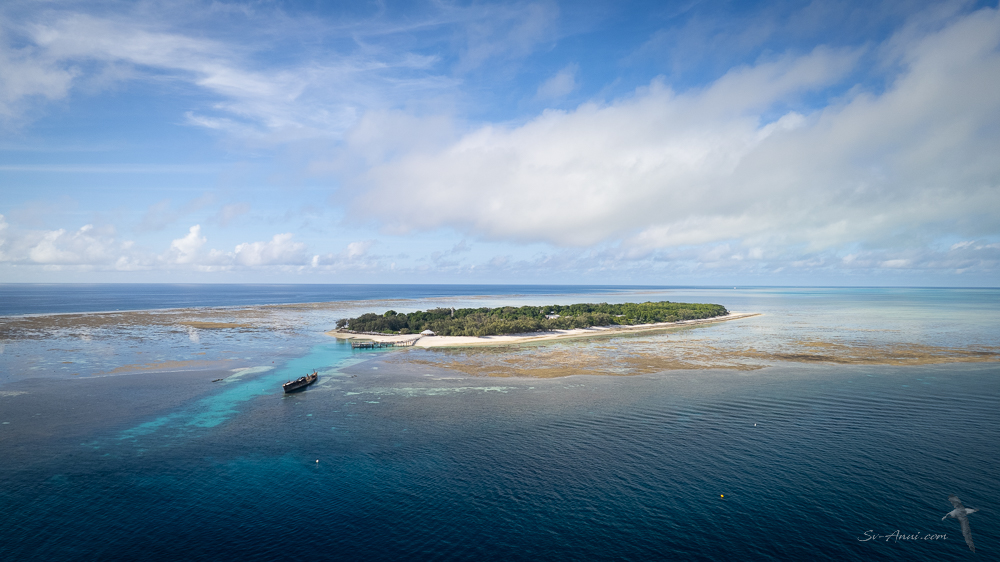


We are now sheltering at the Fitzroy lagoon for a couple of days of blowy and rainy weather, then will resume our reef hopping and surveys for a while longer, before getting back inshore.


 Sv-Anui
I so wish we were there with you! Such a great way of contributing to the overall knowledge of the state of the reef, especially at the lesser visited sites.
We’re still hoping to get at least one lap through the Swains but best I wait until the repairs are finished before I get optimistic again!
We miss you! Boat maintenance is dominating everything we do… that and the weather.
The reef surveys have given us a focus during this loop and the feedback from the GBRMPA team has been really positive and encouraging. We should have done that ages ago… now part of the routine whenever we snorkel at the less popular sites.
We will keep ‘going loopy’ so hopefully Roobi and Anui can buddy up soon.
oh I hope so!!
Miss you both too❤️
😘
A warm and interested hello this Friday morning. A scroll ooh’ing and aah’ing is not quite appropriate today. Thanks so much for a very informative post which will need quite a few reads to be understood as well as this landlubber can! Since practical problems arrived in a group of four I do hope the fixed matters stay fixed. The reef monitoring sounds very necessary and I do hope that a number of crews on the Reef for the winter season will make that a serious ‘chore’, housekeeping their habitat. Meanwhile interesting weekend homework for me . . .
Hello Eha, we too hope we can encourage other yachties to do something useful. The more ‘real time’ data is collected, the more chances of accurate reporting and timely action to protect the GBR, even though in our heart of hearts we think we have passed the point of no return. The reef is endangered whether our politicians acknowledge it or not.
Well done sorting out that morass of maintenance matters 😉 and here am I thinking I’m badly done by with a leaking diesel line connection!
Once again, we loved the pics 😀
Boat maintenance trumps car or home maintenance especially when multiple hassles appear at once! This last bout certainly stretched the patience.
great to be able to contribute to such an important project and be part of the community that care so much about your favourite playground. And there must be good karma coming your way so no more boat issues
Thanks Ann for saying hello. Good to do something useful… and the EotR guys have been super helpful. Not sure it will make a real difference to the outcome for the GBR though! As for the good karma counting towards trouble free boating, nah! 😊
Good on you Anui for taking this on & contributing to reef protection in such a practical way. You’ll both be very good at it too. Great post!
More volunteers needed, Amanda!