We are now a few weeks into our southern migration. We are not the only ones going south… so is the Great Barrier Reef, if you get our meaning!
Our descent south has been very much stop and start. We use whatever weather conditions we get to make southings. From the Percies where we left you two weeks ago, a short bout of easterlies brought us to the Keppel Isles, then light northerlies to the Southern Great Barrier Reef. We had not been this year, so were curious to see what it looked like after yet another round of coral bleaching and bad storms during our last summer. This visit to the Reef will be our last for quite a while, so in this post we share with you the degradation as well as the resilience we have witnessed.
Monkey Beach – Great Keppel Island
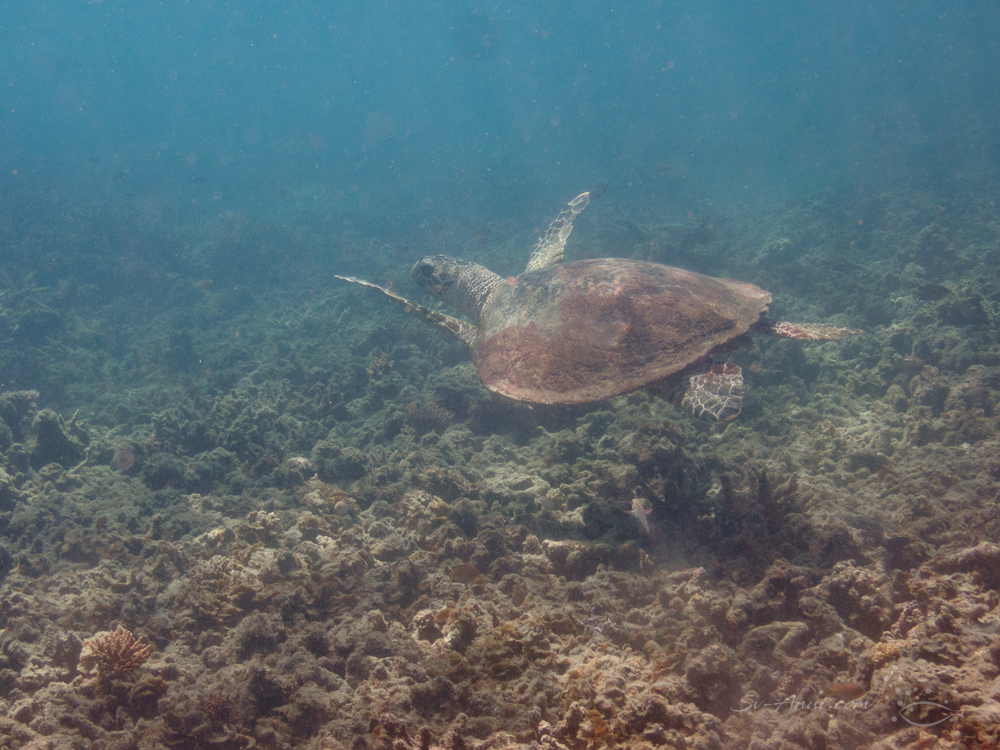
While hiding at the Keppels, we came to an old favourite: Monkey Beach at Great Keppel. It once harboured striking marine life. We used to take friends and family there to experience being surrounded by thousands of fish big and small, among colourful coral gardens. And now it is… just about dead. Although there were still a few fish and turtles, one can only wonder what they feed on. Monkey now has a mass of brown algae covering every inch of the fringing reef, courtesy of too many lethal heat waves.

Capricorn and Bunker Group
Next stop was the Capricorn & Bunker Group. We had been warned it was badly affected by the last round of bleaching. We can attest to that! We snorkeled at Fitzroy Reef and Lady Musgrave, once thriving reefs with extensive coral gardens. It was rather depressing. Repeated bleaching has this cascading effect on the reef communities, with a reduction in species richness. Everything suffers: the coral as well as the fish. We really had to look to find little bits of joy and it was hard to block out the devastation.
Fitzroy Reef
At Fitzroy Reef, there were still a few live colonies of Staghorns and Porites, evidence the reef is trying hard to survive, but the plate coral was dead – beyond the stage of being covered with algae, just grey skeletons.


Bleaching was also not limited to corals; we spotted sea anemones which had lost the colourful algae living in their tissue and had turned white. A bleached anemone and its dweller, in this case a Blackback Anemonefish, is a strangely beautiful but sad sight. This is not the first time this year that we have witnessed this. We saw it at the Swain Reefs too.


The anemone’s condition deteriorates after a bleaching event as it does not have the zooxanthellae to provide for its needs. Not only does it become totally white, but it drastically shrinks in size too. Its symbiotic dweller, the anemonefish also suffers. The white backdrop of a bleached anemone makes the anemonefish more conspicuous to predators. They are also less active, have less energy than fish in healthy anemones.
Lady Musgrave
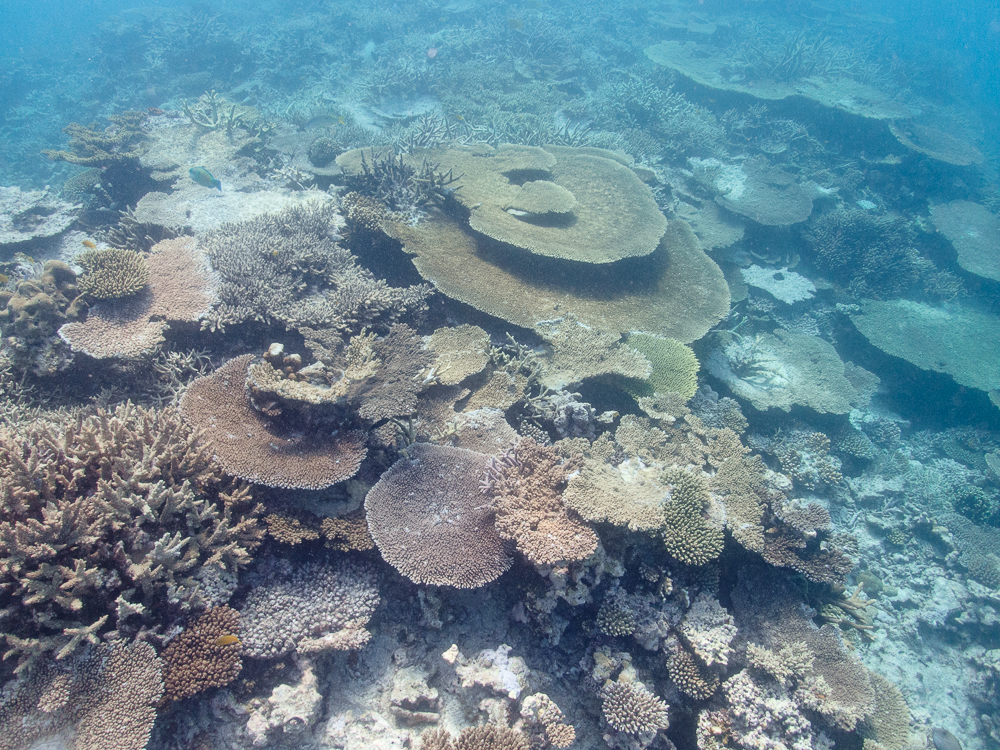
Gluttons for punishment, we tried several spots inside and outside the Lady Musgrave Lagoon. Inside at the eastern end, we found a lot of dead coral, some damaged by storms, others by bleaching.

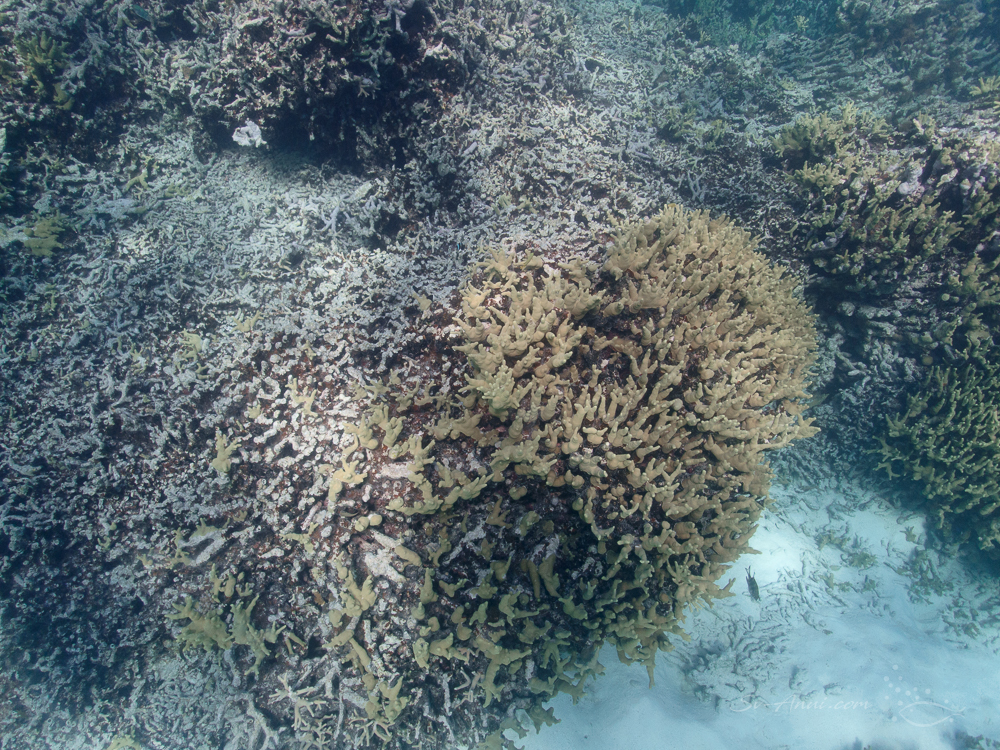
We managed to discover pockets where the branching species of Porites and Acropora were fighting back. You could see regrowth, but only of those two species and in very localised areas. The diversity was seriously reduced.
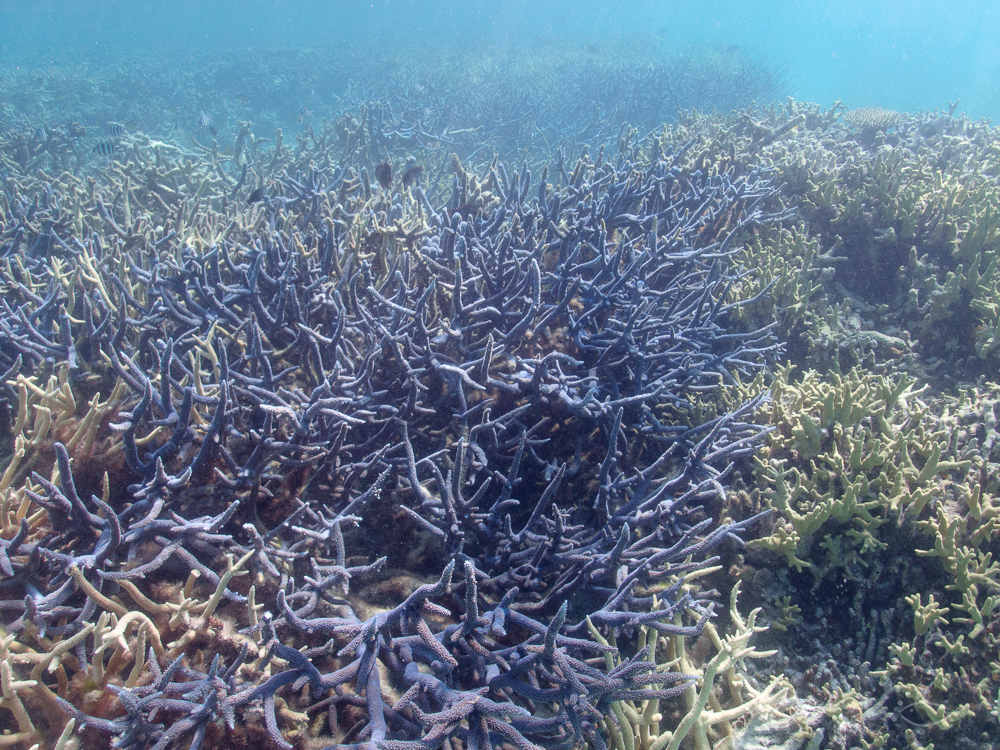

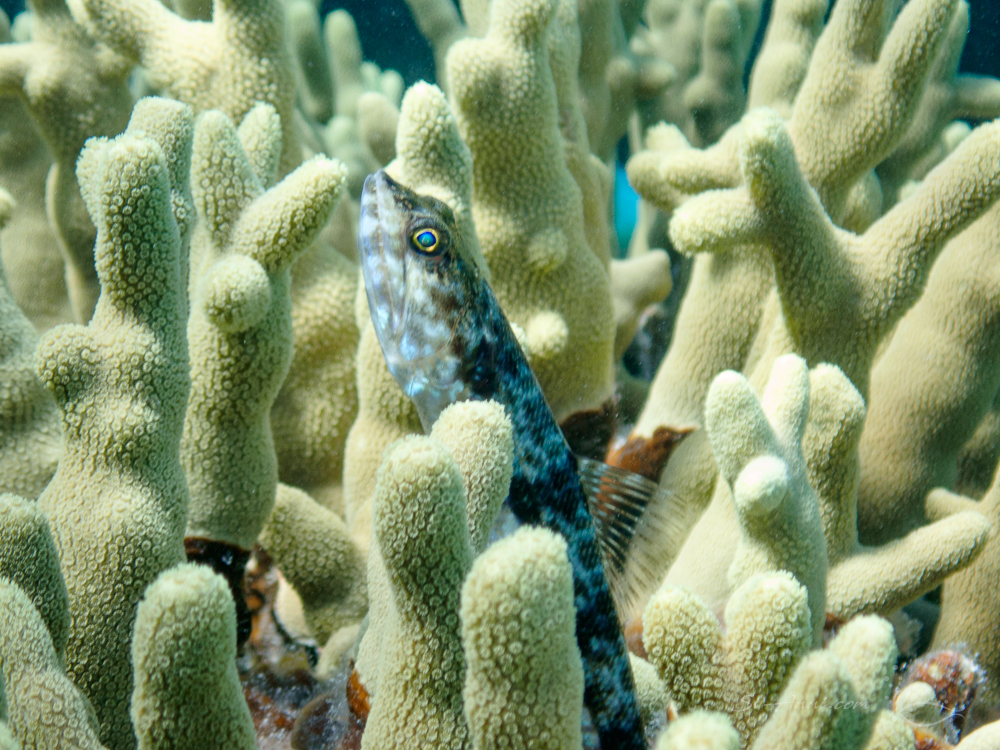
We also found groups of micro-atolls in the shallows. These are another type of Porites (lobata) forming huge structures that dwarf us. According to the Australian Institute of Marine Science these can be thousands of years old. The tops are typically bare, but the walls are resilient. When these die, the reef is in very deep trouble. Their walls were patchy but overall they were in reasonable condition. Around these tough mounds, other coral species were very damaged.
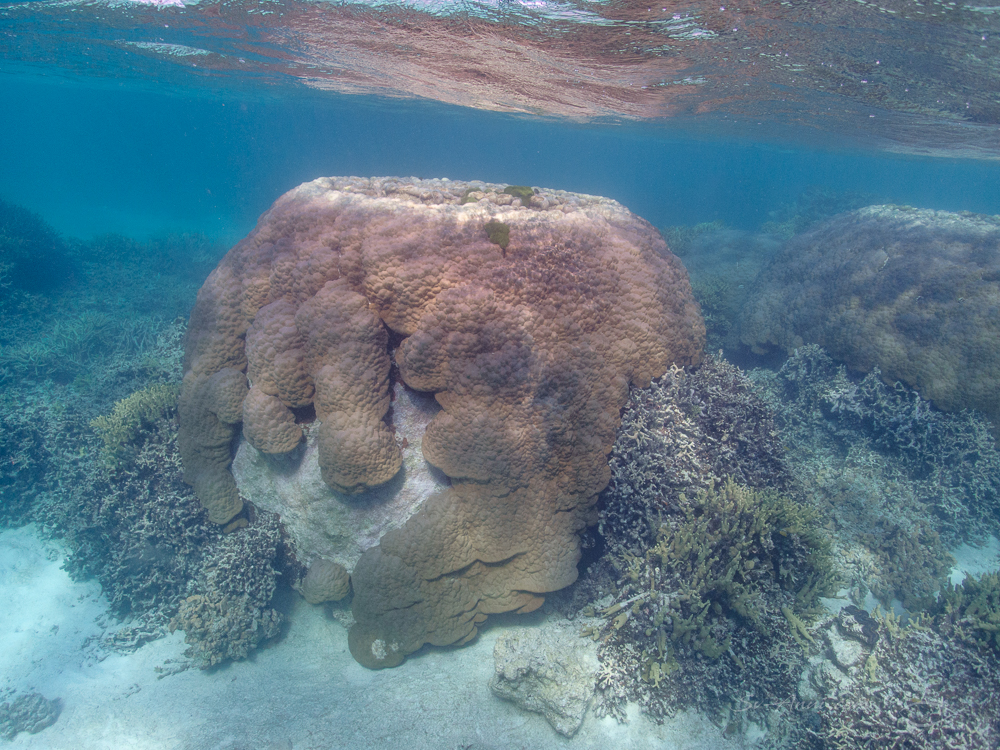
Chris followed a school of Goldlined Rabbitfish which led her around one of the big Porites to a snoozing Tawny Nurse Shark. It brought a smile to her face!


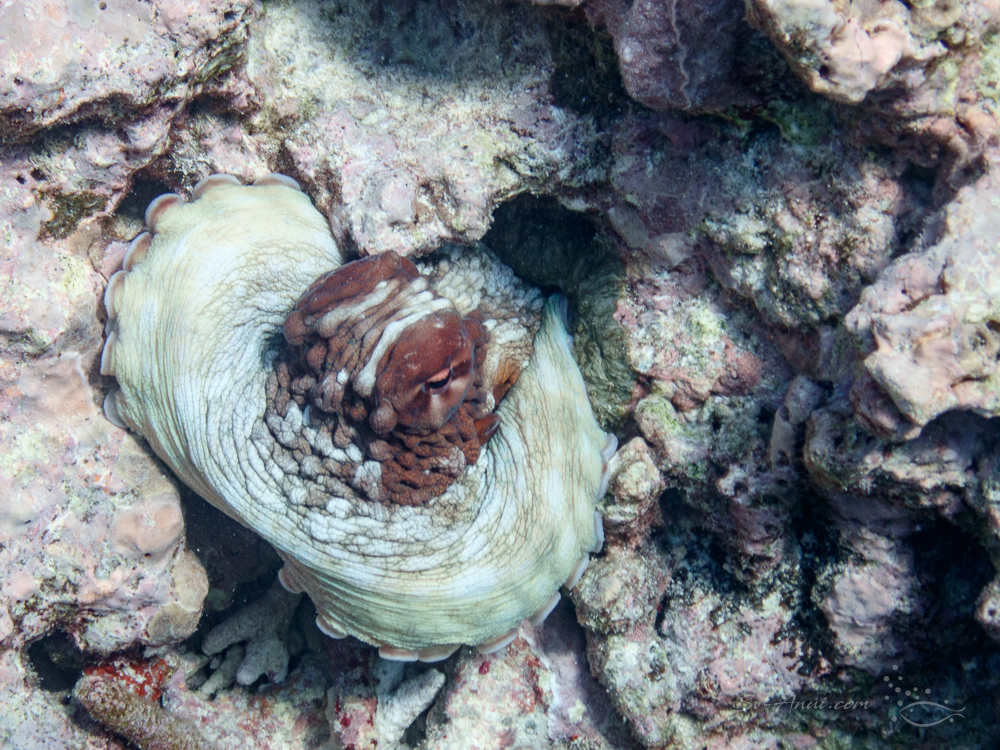
As is often the case, if you go on the exposed edge of reefs rather than inside a lagoon, the coral is in better nick, even if the visibility is ordinary, especially compared to the clarity of the water at the Coral Sea Atolls! This is how it looked on the outside rim of Lady Musgrave: very patchy, but the pick of a struggling reef, with a few fish patrolling the gutters. Wade even spotted a well camouflaged octopus.



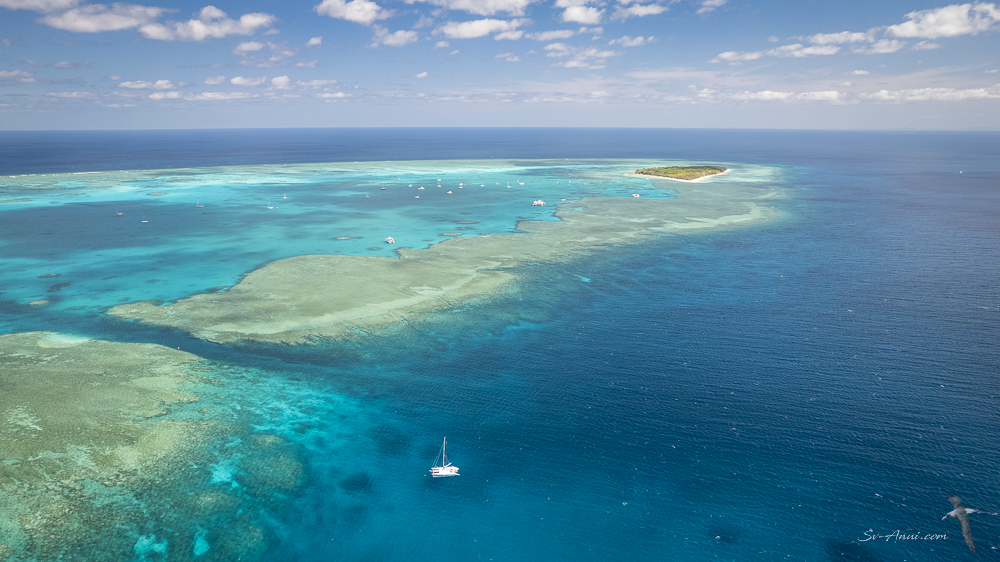
If you are not a diver, spearo or underwater photographer, you cannot see the degradation. All you experience when you come to these lagoons are beautiful, protected places to anchor in, with amazing graduations of colours. Here are Fitzroy Reef and Lady Musgrave from the air.


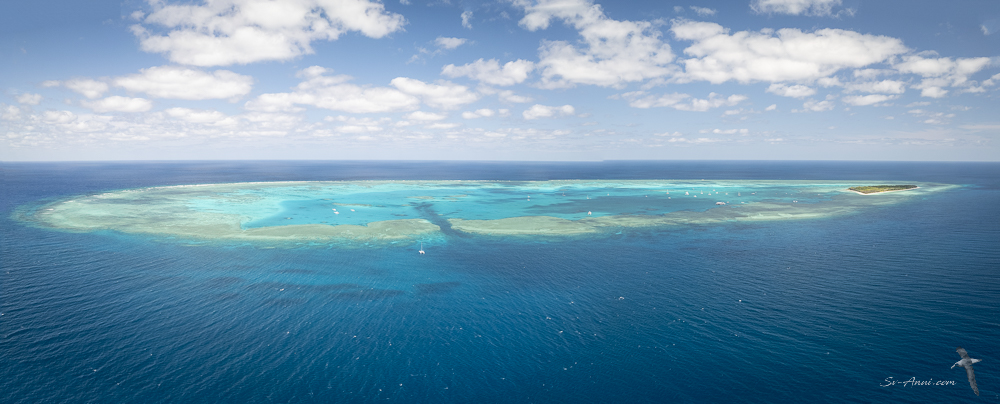
However when you venture under the surface you are left with the feeling that the reef is past the point of no return. You keep a faint hope, but it is like watching a dear friend die a slow death.
This is a low point in our cruising this year. We expected it would be. As we keep heading south, it is time to hit the reset button and find positive experiences to focus on! Talk to you next Friday, hopefully with some whale photos to make us all smile.


 Sv-Anui
Wow, how sad. I certainly can’t know exactly what I am looking at but some of the damage seems obvious to me, guys. I have heard of the beauty of these reefs all of my life, it’s very sad that they are dying now. Like you said, go find something much more positive! Safe travels, you two! 🙏🏻🇦🇺😎
Hi John, to people who have not seen a healthy reef, some of the shots would look ok and in others the damage would looks obvious. We have seen an escalation of the degradation year after year. It is upsetting. Wade did not want to dive there after the first couple of attempts, I ended up going by myself to take a few shots then it was time to move on!
I’m so sorry that this is happening to such a beautiful place, and that you two are so sad. Be positive. 👍🏻🙏🏻
What a quick and dramatic change. Devastating to see. Not looking good for the future with temperatures continuing to rise.
Hi Graham, it has been deteriorating for years, but we thinks it is accelerating now and a lot more widespread. Not that surprising given the repeated heat stress events… the coral has no time to recover. Hard to turn a blind eye!
Yes the southern reefs have really copped it with this last bleaching event. But as you say, there has been a slow degradation over the entire GBRMP over many years. You have helped me with an ID! The Tawny Nurse Shark. I spotted a very long & large tail amongst the Lodestone Reef shallows. Same place on two different visits. But I could only see the tail as its head was hiding in the coral. We are currently anchored in the stillest water at a coral cay reef further north this morning. The water is so clear & even with the birds screeching in the distance, it’s these serene moments out at the reef, that we love. We have found the further north we’ve gone, the less signs of bleaching. A snorkel is next!
Ah, my favourite shark! They are sedate and can behave like big puppies looking for a scratch! Enjoy the reefs in better nick. The coral has been very lacklustre for us this year but we have had other experiences. Enjoy your hops further north.
Yes, it is so sad to see and read of the continuing degradation of the Reef , coral and dependent life-forms.
We’d love to see you guys at Paynesville if possible on your way to Tassy, and/or
Hobart in February, if we make it to the Wooden Boat Show next year.
Hi Doug, yes it has been getting worse at the GBR year after year.
It will be good to have a change of scenery with the Tassie trip. We hope to pop in to the Lakes on the way down.
Thanks for this post Chris.
The following February 2022 article from The Conversation reports:
“Now, with models capable of examining temperature differences between coral reefs one kilometre apart, our team found that at 1.5°C of warming, which the world is predicted to reach in the early 2030s without drastic action to limit greenhouse gas emissions, 99% of the world’s reefs will experience heatwaves that are too frequent for them to recover.”
and
“Climate change is already degrading coral reefs globally. Now we know that protecting the last remaining temperature refuges will not work on its own. Slashing greenhouse gas emissions this decade is the best hope for saving what remains.”
https://theconversation.com/safe-havens-for-coral-reefs-will-be-almost-non-existent-at-1-5-c-of-global-warming-new-study-176084
Hi Murray, yes this is describing what we have been observing every day on the reef and the damage is accelerating.
Certainly is devastating to see with no immediate recovery.
Enjoy your journey south.
Cheers
Mick & Lyn
Yes, the reef gets worse every year and we doubt it can recover from these repeated assaults.
What a sad report. Your Monkey Beach observations from only a few years ago to today, are a poignant summary of the reef degradation. Like a tragic ending to a beautiful movie 😔 Fair winds guys!
Yes looking at pictures from previous years is sickening… we are on the slippery slope and there is no getting off it.
Comment receive from Sue Marlin
Great shark pics. the reef looks sad which is such a tragedy. Stay safe Sue
Hi Sue
Yes it is tragic. The southern reefs were hit hard.